Patient education

How tooth problems get diagnosed.

Before any treatment, an endodontist finds the real source of your pain. Here is how that works and what each test tells us.

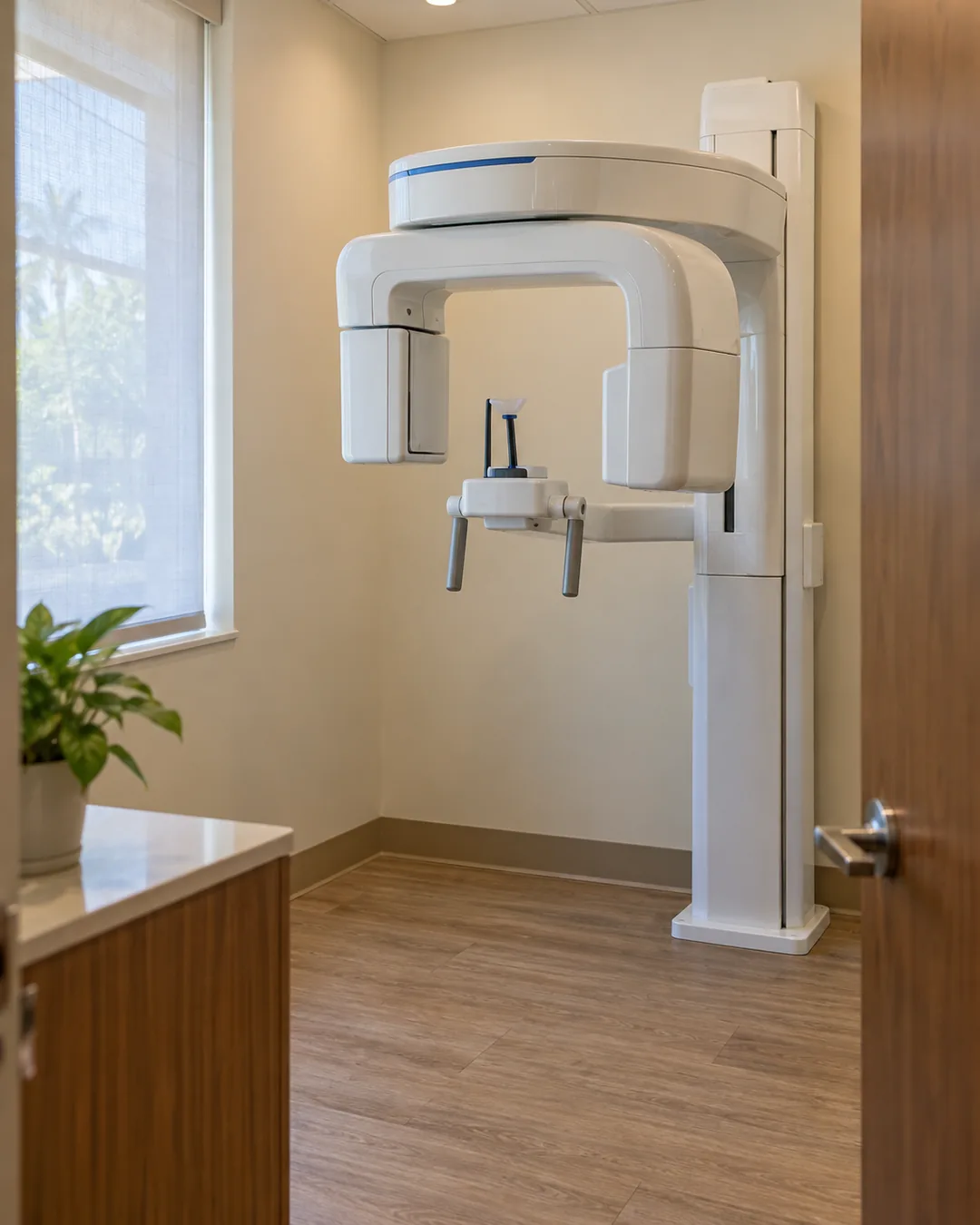
Endodontists diagnose tooth problems using three main tools: a focused clinical exam, pulp testing (a brief cold or electric test that shows whether the nerve is healthy), and CBCT (cone-beam CT) 3D imaging that reveals what a flat X-ray misses. Most evaluations are completed in a single visit, often with same-day imaging. If you have been told you need a root canal and want to be sure, a second opinion is welcome: the same tests confirm whether treatment is needed, and sometimes show that it is not.

Topics covered in this guide

  • How does an endodontist diagnose tooth pain?

  • What is a pulp vitality test and what does it show?

  • What can a CBCT scan find that a regular X-ray cannot?

  • Why does tooth pain sometimes point to a different tooth than the one that hurts?

  • What happens between the diagnosis and the start of treatment?
How Endodontists Diagnose Tooth Pain
Safety & Modern Tech

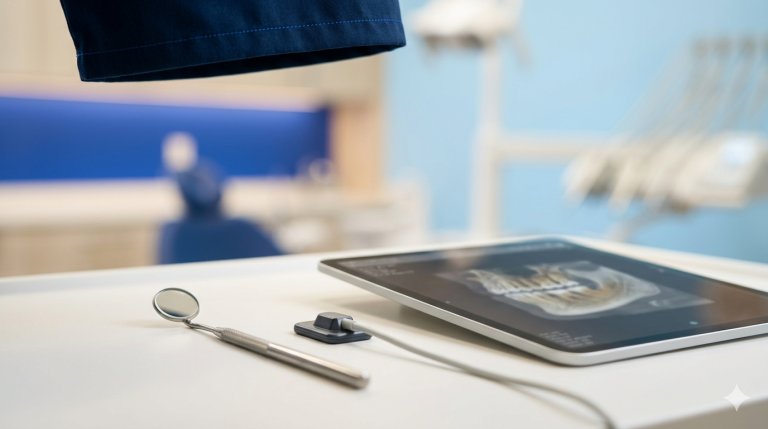
How Endodontists Diagnose Tooth Pain

How do endodontists diagnose tooth pain? Learn the systematic testing process, from cold and percussion testing to 3D CBCT imaging,…

Why Endodontists Are Specialists in Tooth Pain
About Endodontists

Why Endodontists Are Specialists in Tooth Pain

Why are endodontists specialists in tooth pain? Their training focuses exclusively on diagnosing and treating dental pain, including cases that…
What Is an Endodontist and When Should You See One?
About Endodontists

What Is an Endodontist and When Should You See One?

What is an endodontist? An endodontist is a dental specialist with 2-3 years of advanced training in root canals and…
What Is CBCT Imaging in Endodontics?
About Endodontists

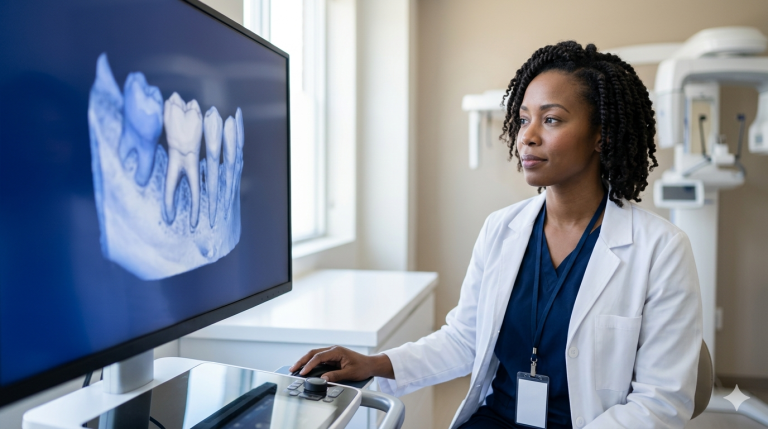
What Is CBCT Imaging in Endodontics?

What is CBCT imaging in endodontics? Cone-beam CT provides 3D views of root canals, cracks & infections that 2D X-rays…

Signs You Need a Root Canal
Root Canal Basics

Signs You Need a Root Canal

What are the signs you need a root canal? Severe tooth pain, prolonged sensitivity, swollen gums & darkening teeth are…
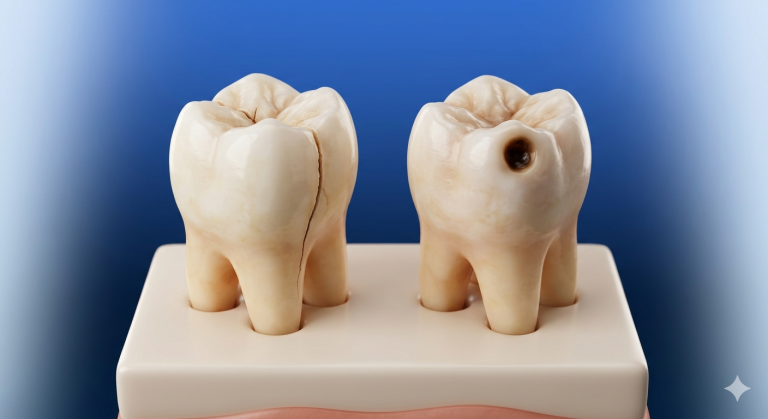
Cracked Tooth vs. Cavity: How to Tell the Difference
Cracked Teeth

Cracked Tooth vs. Cavity: How to Tell the Difference

Cracked tooth vs cavity, how do you tell them apart? Pain patterns, triggers, and X-ray findings differ significantly. Learn to…
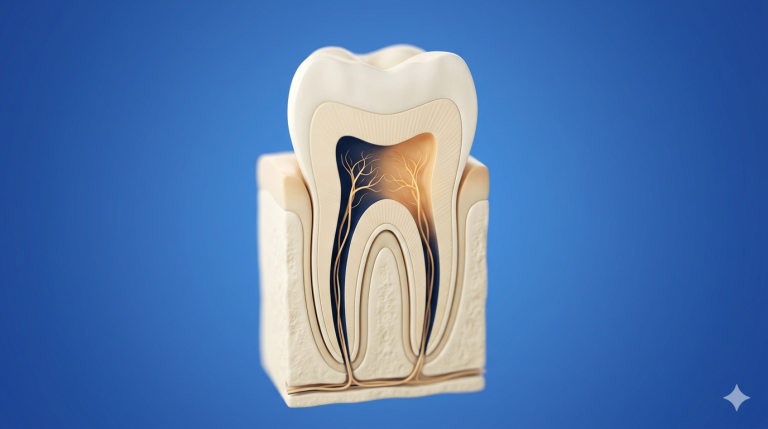
What Causes Tooth Nerve Pain?
Nerve Pain

What Causes Tooth Nerve Pain?

What causes tooth nerve pain? From exposed dentin (the layer of tooth beneath the hard enamel, softer and more sensitive,…
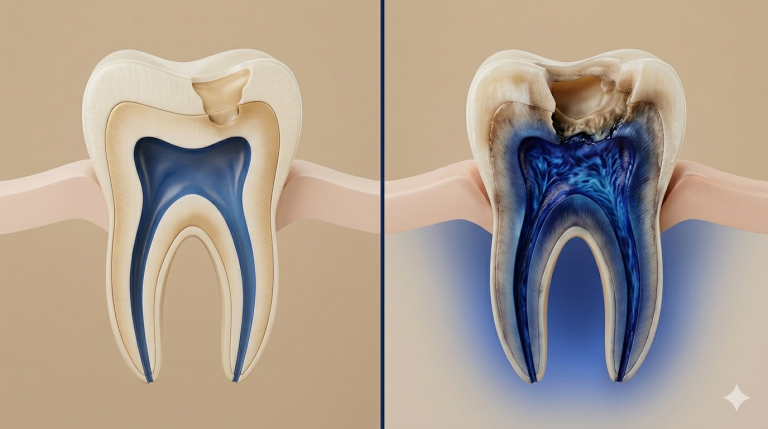
Tooth Sensitivity vs. Tooth Infection: How to Tell the Difference
Tooth Pain

Tooth Sensitivity vs. Tooth Infection: How to Tell the Difference

Is it tooth sensitivity or a tooth infection? Learn the key differences in symptoms, duration, and warning signs, and when…

Endodontist vs. General Dentist for Root Canals: What’s the Difference?
About Endodontists

Endodontist vs. General Dentist for Root Canals: What’s the Difference?

Endodontist vs general dentist for root canals, what's the difference? Learn why specialist training, advanced imaging & higher case volume…

Common questions about diagnosis

How does an endodontist find which tooth is causing my pain?

Pain can spread, so the sore spot is not always the source. An endodontist combines your history, a focused exam, gentle tapping and biting checks, and pulp testing to identify the exact tooth. 3D imaging confirms the finding before any treatment begins.

What is pulp testing?

Pulp testing checks whether the nerve inside a tooth is healthy, inflamed, or no longer alive. It usually involves a brief cold test or a small electric pulp test on the tooth and a few neighbors for comparison. The response helps confirm the diagnosis, and it takes only a few minutes.

What is CBCT imaging and why might I need it?

CBCT (a focused 3D X-ray) shows the tooth roots, canals, and surrounding bone in detail a flat X-ray cannot. Endodontists use it to find hidden canals, fractures, or infection. The scan is quick and uses a low, targeted dose of radiation.

Why see an endodontist instead of my general dentist for a diagnosis?

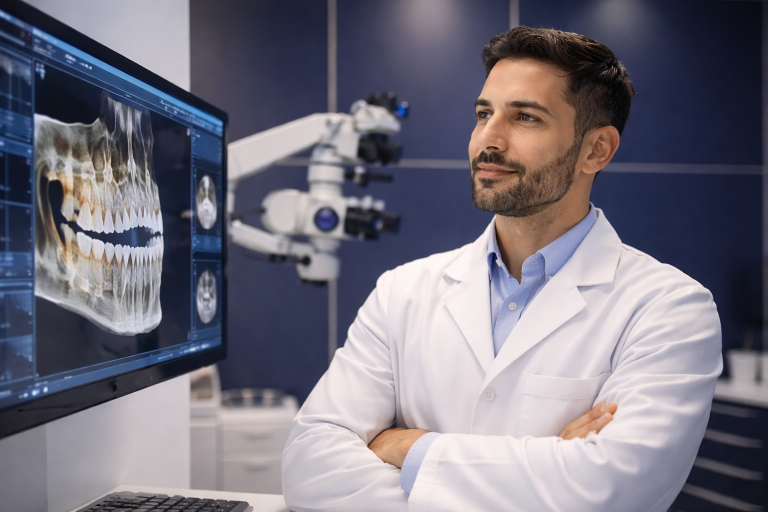
Endodontists are specialists in tooth pain and the inside of the tooth. They complete additional years of training focused on diagnosis and root canal treatment, and they use microscopes and 3D imaging daily. For a puzzling or lingering toothache, that focus often leads to a clearer answer.

Can a tooth hurt even if the X-ray looks normal?

Yes. Early nerve inflammation and small cracks do not always show on a standard X-ray. This is one reason endodontists rely on pulp testing and 3D imaging together. A normal flat X-ray does not rule out a problem that needs care.

How do you tell a cracked tooth from a cavity?

A cavity is decay that usually shows on an exam or X-ray, while a crack can be harder to see. Cracks often cause a sharp pain when you bite and release. An endodontist uses magnification, bite tests, and sometimes 3D imaging to tell them apart.

Does getting a diagnosis hurt?

A diagnostic visit is usually comfortable. The exam, cold test, and imaging are brief and noninvasive. If a tooth is already sensitive, let your provider know so they can work gently and keep you comfortable.

What happens after the diagnosis?

Your endodontist explains what they found, which tooth is involved, and your options in plain language. If treatment such as root canal therapy is needed, it can often begin the same day. If your tooth is healthy, they will tell you that too.

What does it mean when tooth pain "refers" to another area?

Tooth pain can radiate because nerve pathways overlap. An endodontist uses a systematic exam, tapping individual teeth and comparing pulp test responses, to isolate the actual source. It is one of the more common diagnostic challenges, and it is what specialist training is built for.

How long does a diagnostic visit take?

Most focused endodontic evaluations take 30 to 60 minutes, including imaging. If treatment can begin the same day, your provider will discuss that option after the exam.

How do I know if I need a root canal?

A root canal is needed when the pulp (the soft tissue inside your tooth) is infected or badly inflamed and cannot recover on its own. Common signs include lingering pain to hot or cold, pain when biting, a pimple-like bump on the gum, or a darkening tooth. An endodontist confirms it with a quick pulp test and, when needed, a 3D CBCT scan that shows what a flat X-ray can miss. Sometimes the test shows the tooth is healthy and no treatment is needed.

Should I get a second opinion before a root canal?

Yes, and you are welcome to. A second opinion from an endodontist (a specialist in the inside of the tooth) is a normal, sensible step. Because endodontists use pulp testing and 3D imaging every day, they can confirm whether a root canal is needed or point you to a simpler option if it is not. Most second-opinion visits are completed in one appointment.

Are there alternatives to a root canal?

It depends on the tooth. When the pulp is infected, the realistic choices are usually root canal therapy, which keeps your natural tooth, or removing the tooth and replacing it. Saving the natural tooth is almost always the better long-term outcome for chewing and bone health. Your endodontist explains the trade-offs in plain language so you can decide.

Will a second opinion delay treatment if my tooth is urgent?

No. If you have significant pain or swelling, you will be seen quickly. Same-day appointments are available at offices across Central Florida, and the evaluation and treatment can often happen in the same visit, so a second opinion does not have to mean waiting.

What should I bring to a second-opinion visit?

Bring any recent X-rays or notes from your referring dentist if you have them (we can also request them), a list of your symptoms and when they started, and your insurance card. Recent imaging helps, and we can take our own 3D scan if needed.

Not sure what is causing your pain?

Get a clear answer from a specialist.

Call any MFE location for a focused evaluation. Most visits include same-day imaging, so you leave knowing your next step.