Most people have heard of endodontists, usually in the context of needing a root canal. But endodontics is a much broader specialty than root canals alone, and understanding what endodontists are trained to do helps you know exactly when a referral to one is in your best interest.
At Mid-Florida Endodontics, our team of endodontic specialists has trained specifically in the diagnosis and treatment of tooth pain and pulp disease. Here is everything you need to know about what makes an endodontist different, and when you should see one.
Additional Years of Specialist Training
More Root Canals Per Week Than a GP
ADA-Recognized Dental Specialties
How Does Someone Become an Endodontist?
Undergraduate Degree (4 years)
Pre-dental coursework in biology, chemistry, and related sciences. Competitive GPA and DAT scores required for dental school admission.
Dental School. DMD or DDS (4 years)
Comprehensive training in all areas of dentistry. Graduates are qualified to practice as general dentists upon passing licensing exams.
Advanced Endodontic Residency (2-3 years)
A highly competitive post-graduate residency program, typically at a dental school or hospital, focused exclusively on endodontics. Training includes complex root canal cases, microsurgery, trauma management, dental pain diagnosis, and research. Residents complete hundreds of supervised cases before independent practice. This concentrated training, combined with a much higher weekly volume of root canal cases than a general dentist typically performs, is what builds an endodontist’s procedural depth, according to the American Association of Endodontists (AAE).1
Board Certification (Optional but Distinguished)
After residency, endodontists may pursue board certification through the American Board of Endodontology, a rigorous written, oral, and case-based examination that recognizes demonstrated clinical excellence. Board certification is a voluntary credential that signals a high level of expertise.
Continuing Education (Ongoing)
Endodontists participate in ongoing education through the American Association of Endodontists (AAE) and other professional organizations to stay current with advances in imaging, materials, techniques, and pain management.
What Does an Endodontist Treat?
- Root canal therapy removing infected or inflamed pulp tissue to save the natural tooth
- Root canal retreatment re-treating previously root canal treated teeth that have become reinfected
- Endodontic surgery (apicoectomy) surgical removal of infected root tip tissue when non-surgical treatment is insufficient. When non-surgical retreatment is not enough, endodontic microsurgery is a well-studied option with reported success rates in the range of roughly 68 to 88 percent, though outcomes are lower when periodontal attachment loss is also present.2
- Dental trauma management treating knocked-out teeth, root fractures, and luxation (when a tooth is displaced or pushed out of its normal position by an impact, but not fully knocked out) injuries
- Cracked tooth diagnosis and treatment advanced diagnostic testing to identify cracks invisible on standard X-rays
- Pulp capping protecting an exposed pulp to attempt to preserve pulp vitality (whether the living tissue inside the tooth is still healthy and functioning) in select cases
- Pain diagnosis identifying the source of complex, poorly-localized, or referred dental pain that defies simple diagnosis
- Internal bleaching lightening a darkened, previously root canal treated tooth from the inside
When Should You See a General Dentist vs. an Endodontist?
See Your General Dentist First
- Routine checkups and cleanings
- Cavities and simple fillings
- Crowns and bridges
- Mild, recent sensitivity after a new restoration
- Initial evaluation of tooth pain
- They may then refer you to an endodontist
See an Endodontist When:
- You need a root canal, especially a complex one
- Tooth pain is severe, unexplained, or hard to locate
- A root canal treated tooth is hurting again
- You’ve experienced dental trauma
- X-rays show a periapical (relating to the area surrounding the very tip of a tooth’s root) lesion (dark spot at root tip)
- You have a suspected cracked tooth
- A previous root canal was unsuccessful
Can I Contact an Endodontist Directly, or Do I Need a Referral?
In most cases, your general dentist will refer you to us, and that’s the path we recommend. Working through your GP ensures your care is coordinated from the start. For emergencies when you can’t reach your dentist, contact us directly and we’ll take it from there.
Why a referral from your general dentist is often recommended: Your general dentist is the quarterback of your dental care team. They know your dental history, have your X-rays, and most importantly, they are the one who will restore your tooth after the root canal. A crown, buildup, or other restorative work needs to be planned in advance to make sure the tooth is restorable before endodontic treatment (treatment focused on the inside of the tooth, most commonly root canal therapy) begins. A high-quality coronal restoration is also one of the factors shown to improve long-term root canal outcomes, so this planning matters for the life of the tooth.3 There is nothing worse for a patient than completing a root canal only to learn the tooth cannot be properly restored. Your general dentist’s referral helps ensure that coordination happens upfront.

Insurance considerations: Some dental insurance plans require a referral from a general dentist in order for an endodontic evaluation or treatment to be covered. If you have dental insurance, it is worth checking your plan’s requirements before scheduling, a referral from your dentist may be the difference between a covered and an uncovered visit.
When contacting us directly makes sense: If you are experiencing a dental emergency, do not have an established general dentist, or have been unable to get a timely appointment, we encourage you to reach out directly. We will coordinate with your dentist, or help you find one, to ensure your tooth is fully taken care of from treatment through final restoration.
What Technology Do Endodontists Use That General Dentists May Not?
Endodontic practices are equipped with technology specifically suited to the precision demands of root canal work:
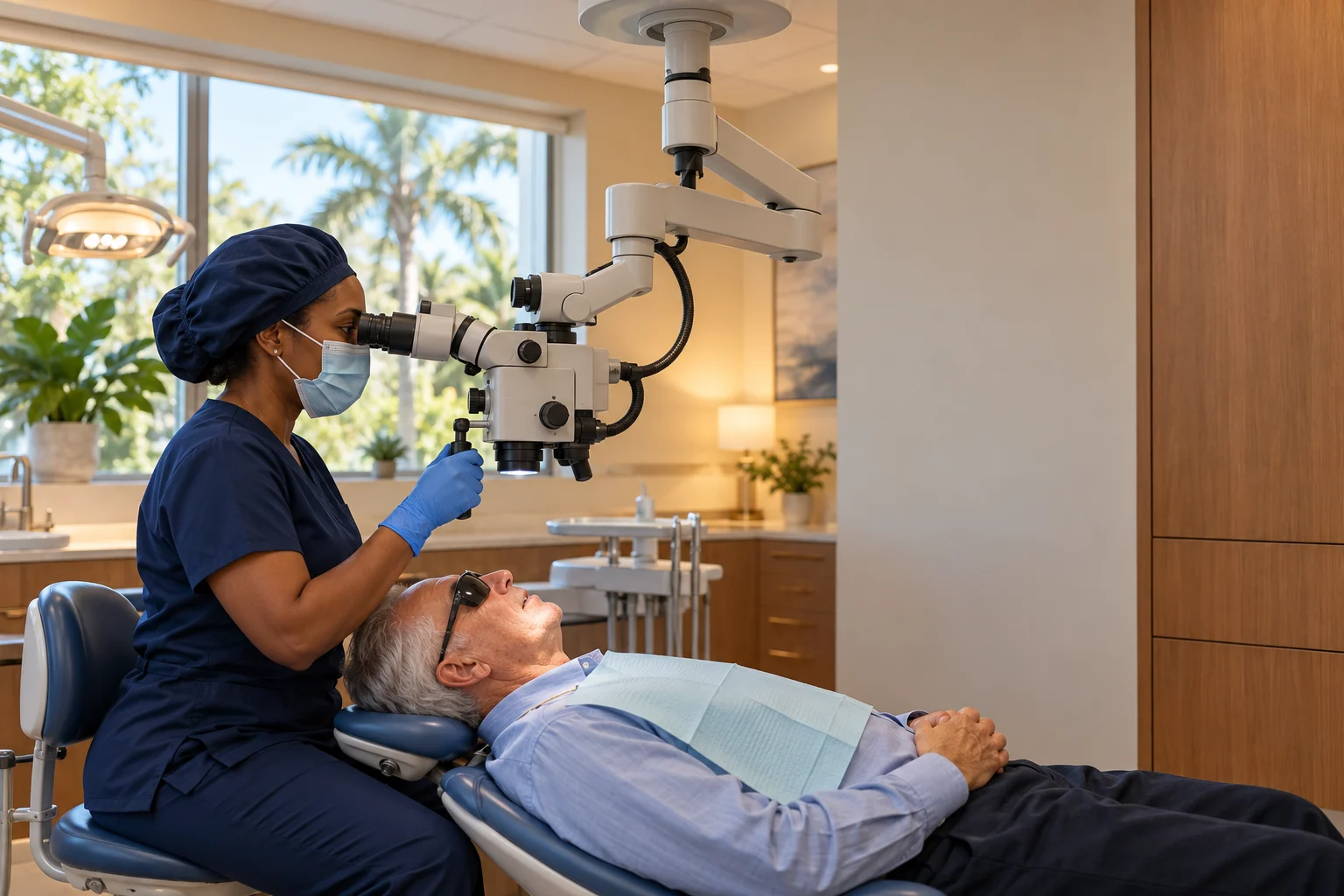
- Surgical operating microscopes high magnification for canal identification, crack detection, and microsurgery. Under the microscope, we find the second mesiobuccal (MB2) canal in upper molars, a narrow canal that is often missed without magnification.4
- 3D CBCT (cone-beam CT, a low-dose 3D X-ray that lets us see the tooth and bone from every angle) imaging cone-beam CT scans for three-dimensional views of root anatomy, periapical lesions, and cracks invisible on 2D X-rays. Laboratory imaging studies show CBCT detects small periapical bone defects more accurately than standard 2D X-rays.5
- Electronic apex locators precisely determine the length of each root canal for accurate filling
- Nickel-titanium rotary instrumentation flexible, efficient canal shaping systems
- Ultrasonic irrigation activates disinfecting solutions to reach areas hand instruments cannot
- The Wand computer-assisted anesthesia gentler, more precise anesthetic delivery
Research supports strong outcomes for endodontic treatment performed by specialists. A retrospective chart review published in Oral Surgery, Oral Medicine, Oral Pathology, Oral Radiology, and Endodontics compared teeth treated by general dentists with teeth treated by endodontists and found a 5-year survival of 98.1% for the specialist-treated teeth (155 teeth) versus 89.7% for those treated by general dentists (195 teeth), a difference the authors reported as statistically significant.6 Separately, systematic-review evidence has identified the clinical factors that most improve the outcome of a first-time root canal, including the absence of a pre-existing periapical lesion, a well-sealed root filling, and a good final restoration.3 These findings reflect the value of advanced training, specialized equipment, and high case volume in endodontic care.
Frequently Asked Questions: Endodontists
Is an endodontist different from a regular dentist?
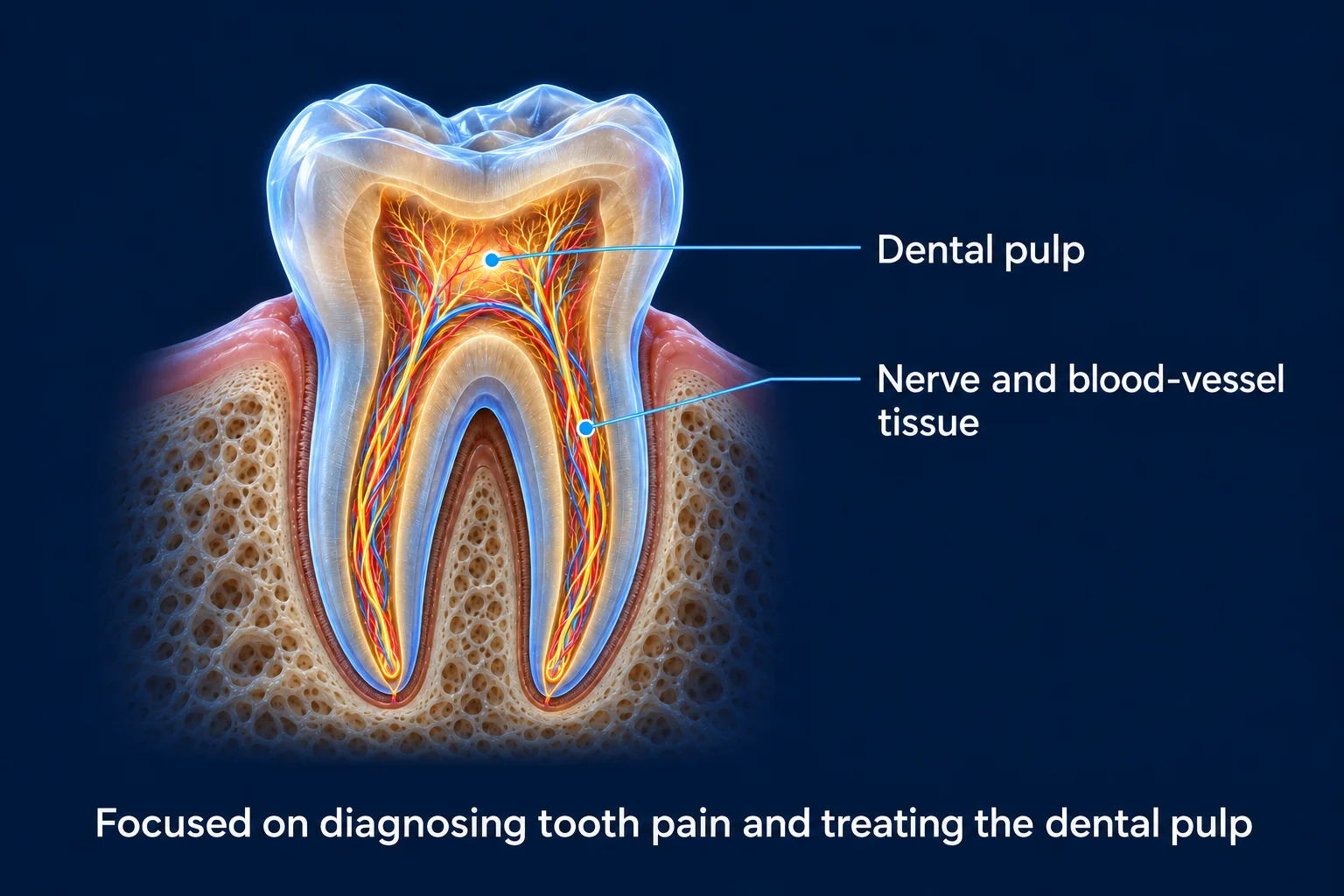
Yes. Both hold dental degrees, but an endodontist has completed an additional two to three years of full-time specialist residency training focused exclusively on diagnosing tooth pain and treating diseases of the dental pulp (the nerve and blood-vessel tissue inside a tooth). Endodontists also perform many more root canals per week than general dentists, which builds a level of procedural depth that a general practice cannot match.
How much more training does an endodontist have?
After completing a four-year dental school program, endodontists complete two to three additional years of a highly competitive post-graduate residency. During that time, they perform hundreds of supervised cases covering complex root canal anatomy, microsurgery, trauma management, and pain diagnosis before practicing independently.
Do I need a referral to see an endodontist?
Not always. You can contact MFE directly, especially in an emergency or if you do not have a regular dentist. That said, a referral from your general dentist is often recommended because your dentist can coordinate restorative care (the crown or buildup needed after the root canal) and some insurance plans require a referral for specialist coverage.
What conditions does an endodontist treat?
Endodontists treat root canal infections and inflammation, perform root canal retreatments when a previous treatment has failed, perform apicoectomies (endodontic microsurgery at the root tip), manage dental trauma such as knocked-out or displaced teeth, and diagnose complex or hard-to-locate tooth pain.
Works Cited
- American Association of Endodontists. What Is an Endodontist? (Patient and professional resources on endodontic training and case volume.) Chicago: American Association of Endodontists; 2024.
- Sarnadas M, Marques JA, Baptista IP, Santos JM. Impact of periodontal attachment loss on the outcome of endodontic microsurgery: a systematic review and meta-analysis. Medicina (Kaunas). 2021;57(9):922. doi:10.3390/medicina57090922 Systematic Review
- Ng YL, Mann V, Rahbaran S, Lewsey J, Gulabivala K. Outcome of primary root canal treatment: systematic review of the literature. Part 2. Influence of clinical factors. Int Endod J. 2008;41(1):6-31. doi:10.1111/j.1365-2591.2007.01323.x Systematic Review
- Sujith R, Dhananjaya K, Chaurasia VR, Kasigari D, Veerabhadrappa AC, Naik S. Microscope magnification and ultrasonic precision guidance for location and negotiation of second mesiobuccal canal: an in vivo study. J Int Soc Prev Community Dent. 2014;4(Suppl 3):S209-S212. doi:10.4103/2231-0762.149045 Prospective Study
- Stavropoulos A, Wenzel A. Accuracy of cone beam dental CT, intraoral digital and conventional film radiography for the detection of periapical lesions. An ex vivo study in pig jaws. Clin Oral Investig. 2007;11(1):101-106. doi:10.1007/s00784-006-0078-8
- Alley BS, Kitchens GG, Alley LW, Eleazer PD. A comparison of survival of teeth following endodontic treatment performed by general dentists or by specialists. Oral Surg Oral Med Oral Pathol Oral Radiol Endod. 2004;98(1):115-118. doi:10.1016/j.tripleo.2004.01.004