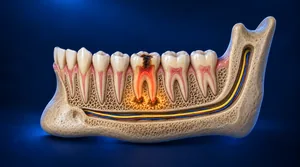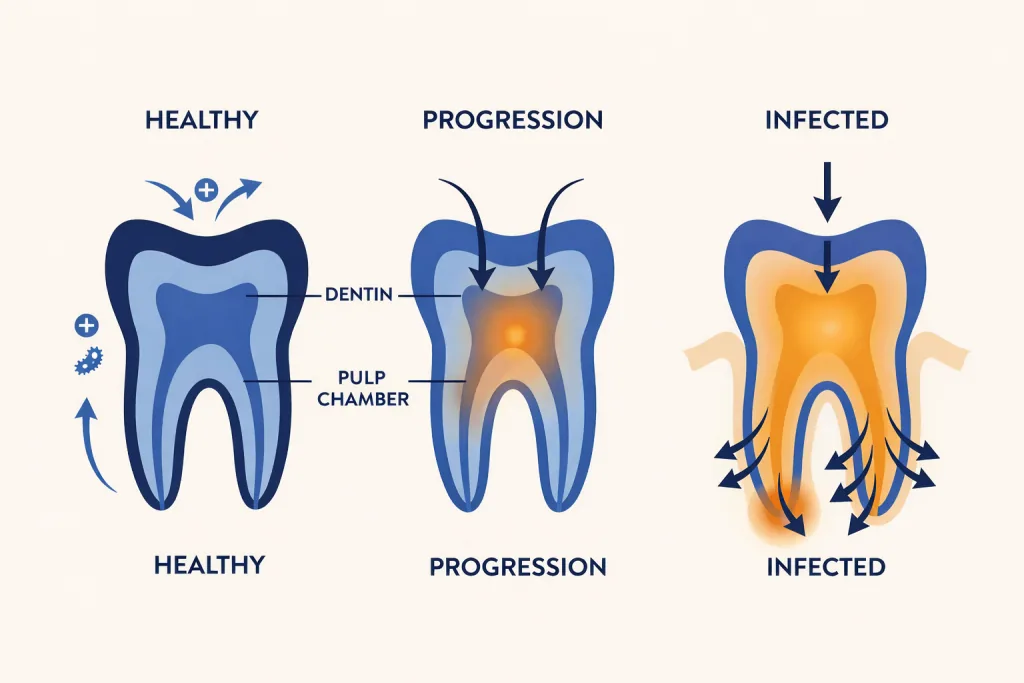
A tooth infection is not just a dental inconvenience, it is a bacterial infection of the soft tissue and root canal system inside the tooth, with the potential to spread beyond the mouth if left untreated.1 Every year, patients arrive at Mid-Florida Endodontics across our Florida locations after trying to wait out symptoms that have steadily worsened over days or weeks.
Knowing the warning signs, and understanding which ones require same-day evaluation, can be the difference between a straightforward root canal and a serious medical situation.
Signs of a Tooth Infection. By Urgency Level
Facial Swelling Spreading to Jaw, Cheek, or Neck
Swelling that is spreading beyond the immediate area of the tooth, particularly toward the throat, neck, or under the jaw, indicates the infection has moved into the fascial spaces. Periapical infection from a back tooth can travel into the submandibular and parapharyngeal spaces, the most commonly observed route of serious spread.5 This can compromise the airway and is a true dental emergency. Go to the nearest emergency room immediately if you experience difficulty swallowing or breathing alongside swelling.
Signs of Sepsis
A tooth abscess can lead to sepsis, the body’s extreme, life-threatening response to an infection.67 Signs of sepsis can include fever, shivering, or feeling very cold; a high heart rate or weak pulse; shortness of breath; confusion or disorientation; clammy or sweaty skin; and extreme pain or discomfort.7 Sepsis is a medical emergency: go to the emergency room right away.
Fever Alongside Tooth Pain
A fever (temperature above 100.4°F / 38°C) accompanying tooth pain indicates the infection has begun to affect your systemic health. Dental infections that cause fever or malaise are spreading beyond the local tooth, and current guidelines reserve antibiotics for exactly this situation of systemic involvement, always alongside dental treatment rather than instead of it.4 Seek same-day evaluation, not a routine appointment.

Difficulty Swallowing or Opening Your Mouth
Trismus (difficulty opening the jaw) or dysphagia (difficulty swallowing) alongside a dental infection indicates deep space spread, a potentially life-threatening condition called Ludwig’s angina. Among hospitalized patients with deep neck infections of dental origin, a delay in removing the infected tooth is linked to more surgical interventions and longer intensive-care stays, which is why this combination of signs cannot wait.5 This requires immediate emergency department evaluation.
Severe, Throbbing, Spontaneous Tooth Pain
Throbbing pain that comes and goes without any trigger, especially pain that wakes you at night or has been present for an extended period, is one of the clearest signs of an infected dental pulp (the soft living tissue, nerves and blood vessels, inside a tooth) or abscess. The root canal system itself becomes colonized by bacteria, which is why this kind of pain reflects an infection rather than simple irritation.2 This requires endodontic treatment (treatment focused on the inside of the tooth, most commonly root canal therapy), not just pain management.
Lingering Cold Sensitivity or Severe Heat Sensitivity
Cold sensitivity alone is not necessarily a sign of infection, it signals inflammation. Brief cold sensitivity that resolves quickly may reflect reversible pulpitis (early, reversible inflammation of the tooth’s inner nerve tissue), where the pulp (the soft living tissue inside the tooth, containing nerves and blood vessels) is irritated but may still heal.
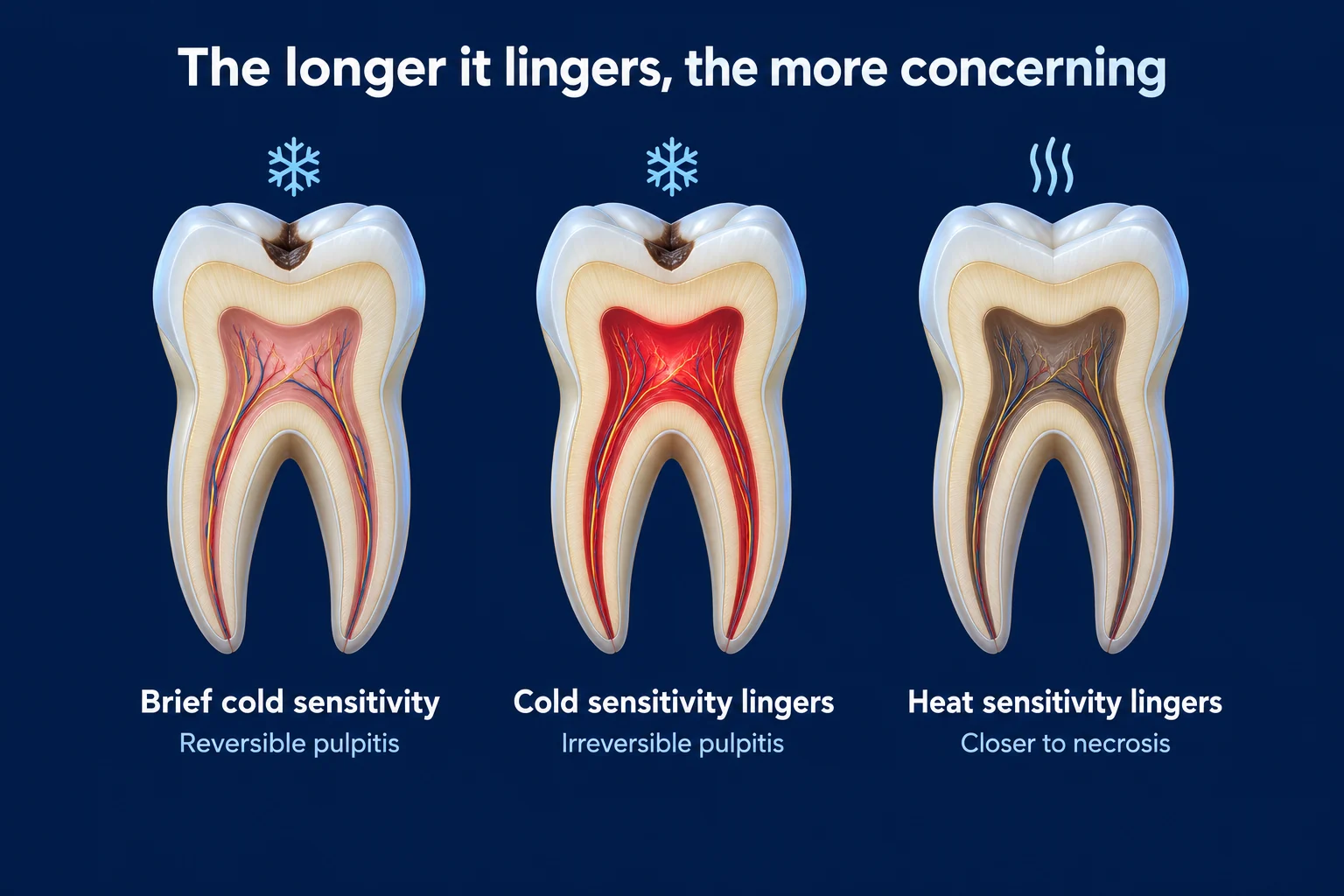
However, when cold sensitivity lingers well after the cold is removed, this is a warning sign the pulp may be irreversibly inflamed. The longer the discomfort lingers, the more concerning it tends to be: the pulp may be so inflamed it can no longer heal itself, a condition called irreversible pulpitis (severe inflammation of the tooth’s inner tissue, too damaged to heal on its own). Root canal treatment is needed whether or not a bacterial infection is fully established yet. Heat sensitivity that lingers or worsens is an additional red flag, typically indicating the pulp is closer to necrosis (tissue death, when the living tissue inside a tooth dies due to infection or loss of blood supply). In advanced infection, cold may paradoxically relieve throbbing pain, a sign of pulp necrosis (death of the living tissue inside the tooth) and active abscess. A specialist can confirm which stage your tooth is in with pulp testing and imaging rather than symptoms alone.
Pimple-Like Bump on the Gum (Sinus Tract)
A small white or yellow bump on the gum near a painful tooth is called a sinus tract (sometimes called a fistula or dental “gum boil”). It forms when an abscess finds a path to drain through the gum tissue. While it may temporarily relieve pressure and pain, the underlying infection is still active. The abscess is polymicrobial and continues to involve the surrounding bone, so draining alone does not cure it.1 It requires root canal treatment.
Swollen or Tender Lymph Nodes Under the Jaw
Lymph nodes in the neck and under the jaw are part of the immune system’s response to infection. Swollen, tender nodes in these areas alongside tooth pain strongly suggest the infection is active and the body is fighting it. This is a systemic sign that the infection has extended beyond the tooth itself, and it is one of the signs that points toward needing antibiotics in addition to dental treatment.4
Foul Taste or Smell in the Mouth
A persistent bad taste or odor, particularly near one specific tooth or area of the mouth, can indicate a draining abscess or significant decay with bacterial accumulation. This is especially notable if it appears suddenly and is localized to one area.
Tooth Darkening or Discoloration
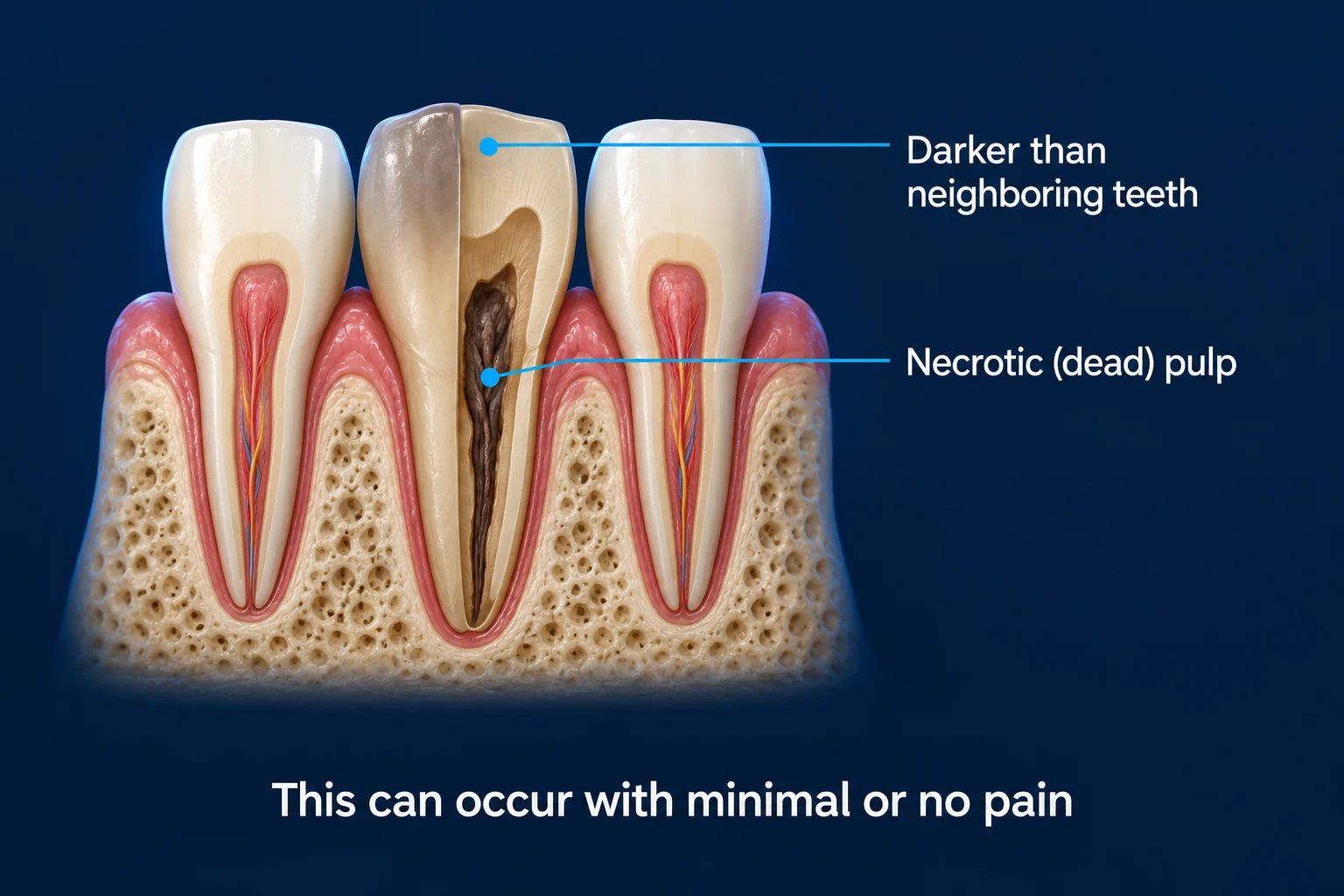
A tooth that has gradually turned gray, brown, or darker than neighboring teeth may have a necrotic (dead) pulp, often the result of a longstanding infection that has destroyed the nerve tissue. Surprisingly, this can occur with minimal or no pain, which is why it’s often missed without a dental exam.
What Happens Inside a Tooth When It Gets Infected?
Understanding the progression helps explain why early treatment is so important. A tooth infection typically develops in stages:
Reversible pulpitis
Bacteria irritate the pulp, causing inflammation. Pain is present but brief and triggered. At this stage, removing the decay and restoring the tooth may save the pulp.
Irreversible pulpitis
Inflammation has progressed to the point the pulp cannot recover. Spontaneous, lingering pain begins. Root canal treatment is required to save the tooth.
Pulp necrosis
The pulp tissue dies from the infection. Pain may temporarily decrease, but the infection has now spread to the bone surrounding the root tip.
periapical (relating to the area surrounding the very tip of a tooth’s root) abscess (a pocket of infection at the root tip of a tooth, caused by bacteria spreading from inside the tooth)
Infection forms a pocket at the root tip. Bone destruction occurs. Swelling, fever, and spreading infection become possible. Root canal or extraction is required. Because the source of the infection is inside the tooth, antibiotics by themselves do not resolve it; the canal must be cleaned or the tooth removed.3
Odontogenic (originating from a tooth, as in a dental infection that started inside a tooth) infections are the usual cause of deep neck infections, and the periapical infection of a back molar spreading into the submandibular and parapharyngeal spaces is the most commonly observed pathway. In a retrospective hospital study of 68 adults with these infections, a delay of more than three days before removing the infected tooth was associated with higher rates of mediastinitis, more surgical procedures, and longer intensive-care stays.5 The lesson for patients is consistent: dental infections do not resolve on their own, and prompt removal of the source by an endodontist or oral surgeon is what reduces the risk of serious local and systemic spread.
If you are experiencing these symptoms, an endodontist at a nearby MFE location can evaluate your tooth — often the same day. Find your nearest location
Works Cited
- Robertson D, Smith AJ. The microbiology of the acute dental abscess. J Med Microbiol. 2009;58(Pt 2):155-162. doi:10.1099/jmm.0.003517-0
- Siqueira JF Jr, Rôças IN. Clinical implications and microbiology of bacterial persistence after treatment procedures. J Endod. 2008;34(11):1291-1301. doi:10.1016/j.joen.2008.07.028
- Cope AL, Francis N, Wood F, Chestnutt IG. Systemic antibiotics for symptomatic apical periodontitis and acute apical abscess in adults. Cochrane Database Syst Rev. 2018;9(9):CD010136. doi:10.1002/14651858.CD010136.pub3 Systematic Review
- Lockhart PB, Tampi MP, Abt E, et al. Evidence-based clinical practice guideline on antibiotic use for the urgent management of pulpal- and periapical-related dental pain and intraoral swelling: a report from the American Dental Association. J Am Dent Assoc. 2019;150(11):906-921. doi:10.1016/j.adaj.2019.08.020 Clinical Practice Guideline
- Treviño-Gonzalez JL, Santos-Santillana KM, Cortes-Ponce JR, et al. Role of early extraction of odontogenic focus in deep neck infections. Med Oral Patol Oral Cir Bucal. 2023;28(1):e25-e31. doi:10.4317/medoral.25536
- Jevon P, Abdelrahman A, Pigadas N. Management of odontogenic infections and sepsis: an update. Br Dent J. 2020;229(6):363-370. doi:10.1038/s41415-020-2114-5 Narrative Review
- Centers for Disease Control and Prevention. About Sepsis. Updated August 17, 2026. Accessed September 28, 2026. cdc.gov