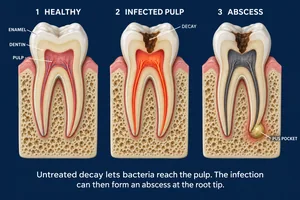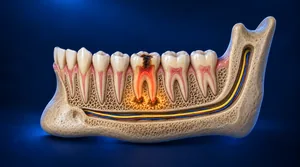
A dental abscess is one of the most painful and medically significant conditions in dentistry. Unlike a simple cavity or surface infection, an abscess involves a collection of bacteria and pus that is actively destroying the surrounding tooth structure and bone. In severe cases, it can spread beyond the mouth into the head and neck. Learn more about can a tooth infection spread to the rest of the body.
Two Types of Dental Abscess
Periapical Abscess
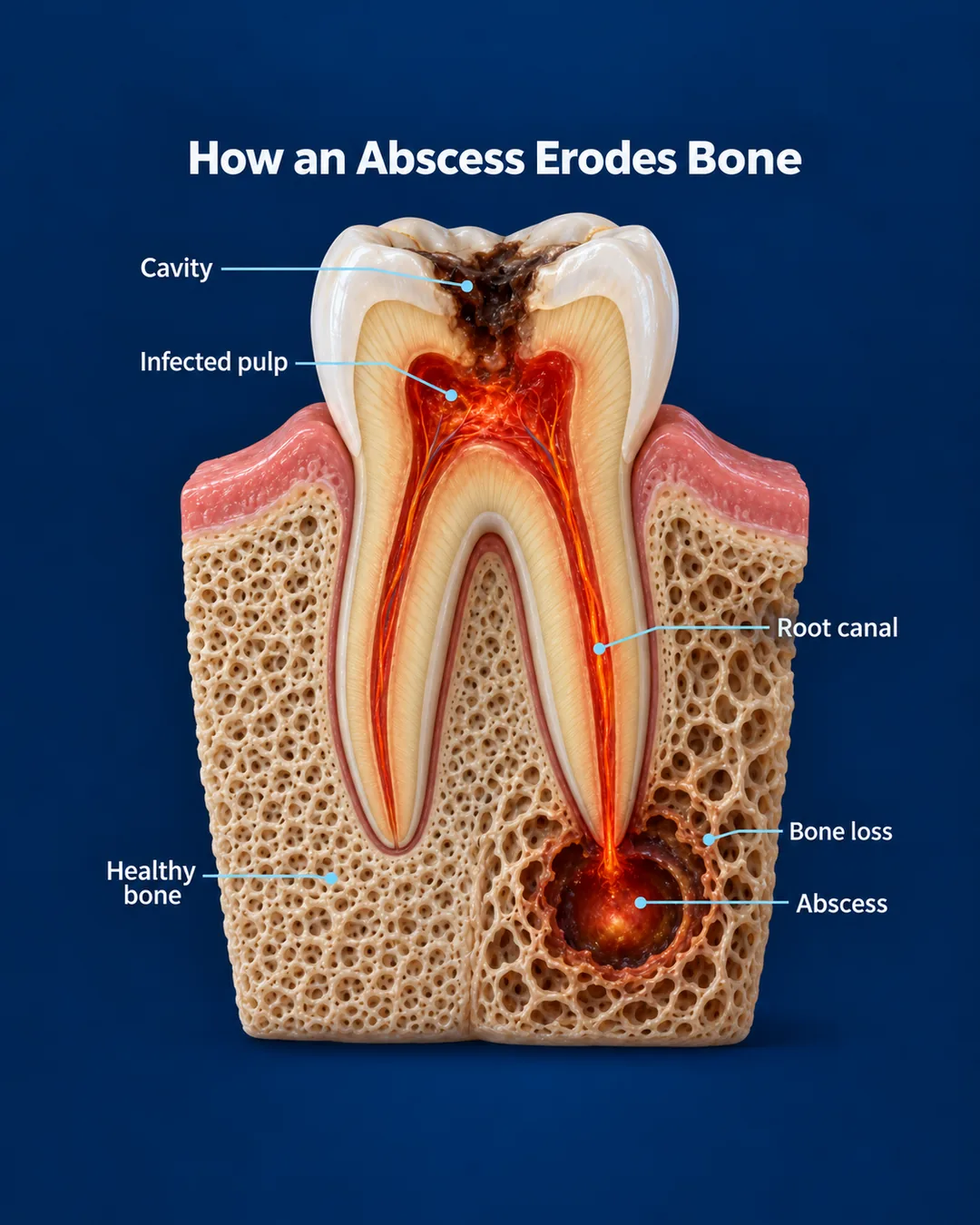
The most common type. It forms at the tip of the tooth root when bacteria infect the dental pulp (the soft living tissue, nerves and blood vessels, inside a tooth) through decay, crack, or trauma, and spread into the surrounding bone. The infection that drives an abscess usually persists inside the canal system until the source is removed.2 It is treated with root canal therapy to remove the infected pulp and eliminate the bacterial source.
Periodontal Abscess
Forms in the gum or bone alongside the root, usually associated with gum disease rather than pulp infection. The pulp (the soft living tissue inside the tooth, containing nerves and blood vessels) is often still vital. It is treated by a periodontist through gum cleaning, root planing, or surgical drainage, and may still require root canal therapy if the pulp becomes involved.
Symptoms of a Dental Abscess
A periapical abscess (a pocket of infection at the root tip of a tooth, caused by bacteria spreading from inside the tooth), the type treated by endodontists, typically produces:

- Severe, throbbing tooth pain often spontaneous, unrelenting, and worsening at night
- Prolonged sensitivity to cold or heat cold sensitivity that lingers well after the cold is removed can signal that the pulp is too inflamed to recover on its own (irreversible pulpitis), even before a frank infection is fully established. In late-stage abscesses, once the pulp has died, cold may temporarily ease the throbbing, a paradoxical sign your endodontist will look for
- Severe pain when biting or touching the tooth even light pressure can be hard to tolerate
- Swelling of the gum, cheek, or jaw may feel hard or fluctuant (fluid-filled)
- A pimple-like bump on the gum (sinus tract) indicates the abscess is draining; this temporarily reduces pressure but the infection persists
- Swollen lymph nodes under the jaw or in the neck, often tender
- Fever indicates systemic spread and calls for urgent medical attention
- Foul taste or smell especially if the abscess is draining into the mouth
- General malaise feeling unwell, headache, or fatigue can accompany a significant dental infection
Emergency Warning Signs. Go to the ER Immediately
If you have any of these signs, go to the ER immediately:
- Difficulty breathing or swallowing
- Swelling spreading to the neck or floor of the mouth
- Fever above 103°F
- Inability to open the jaw fully
- Rapidly worsening swelling over hours
These indicate the infection has spread beyond the dental structures and is a medical emergency.
How a Dental Abscess Is Treated
Diagnosis with 3D CBCT Imaging
Your endodontist takes three-dimensional images to assess the location and extent of the abscess, identify which tooth is involved, evaluate bone loss, and determine the appropriate treatment approach. Standard 2D X-rays often underestimate the size of periapical lesions; with CBCT, we see a more complete picture of the bone and root anatomy.6
Local Anesthesia
Anesthetizing an infected tooth can be more challenging because the low pH environment of infected tissue reduces anesthetic effectiveness. Experienced endodontic specialists use supplemental techniques, including intraligamentary and intraosseous injections, to achieve complete numbness even in acutely infected teeth. You should not feel pain during the procedure.
Root Canal Treatment
The endodontist accesses the pulp chamber (the hollow space inside the crown of the tooth that houses the nerve and blood vessels), removes all infected tissue, and thoroughly disinfects the canal system using antimicrobial irrigants before shaping the canals for filling. This eliminates the bacterial source of the abscess.2 Once the infection source is removed, the surrounding bone can begin to heal.1
Canal Sealing and Temporary Crown
The cleaned canals are filled with a biocompatible material (gutta-percha) and sealed. A temporary restoration is placed. In some more severe cases, a calcium hydroxide dressing is placed for a period of weeks before the final seal to maximize disinfection.
Antibiotics (When Indicated)
Not all abscesses require antibiotics. Current guidelines reserve them for cases with systemic involvement, such as fever, spreading swelling beyond the immediate tooth area, or spreading cellulitis (a spreading bacterial infection of the soft tissue; in dental contexts, this means infection has moved from the tooth into the face, jaw, or neck).3 Antibiotics help control bacterial spread, but they do not replace the root canal in eliminating the infection source.3 Find out whether antibiotics can cure a tooth infection on their own.
Follow-Up and Permanent Crown
Healing of the periapical bone is monitored with follow-up imaging over the months that follow. Most lesions that respond to treatment show clear signs of healing within the first year of successful root canal treatment.1 A permanent crown is then placed by your general dentist, and a well-fitted final restoration supports the long-term success of the tooth.4
What Happens If a Dental Abscess Is Left Untreated?
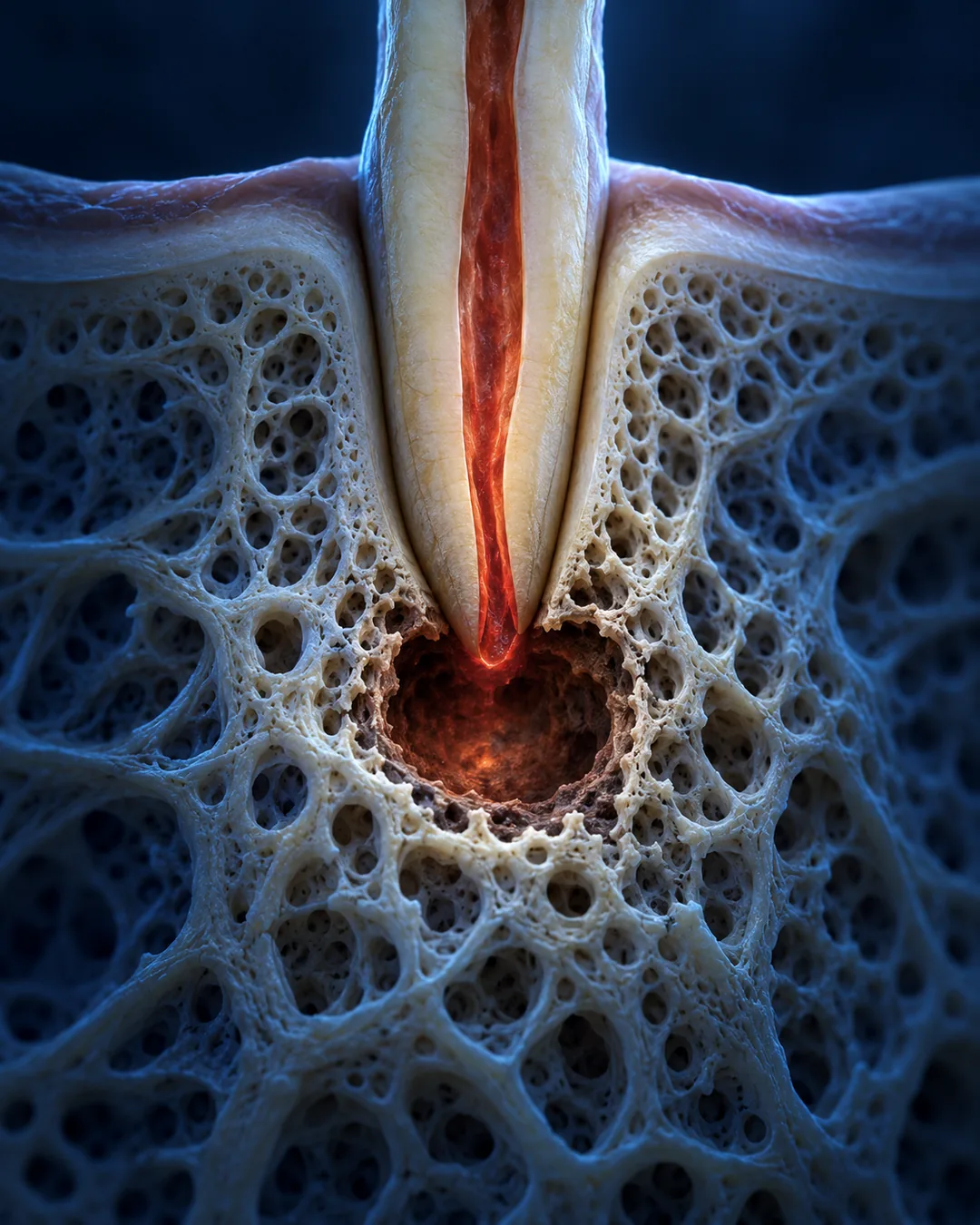
A dental abscess will not resolve without treatment. As it progresses, the infection erodes surrounding bone, may spread to adjacent teeth, and can track into facial spaces, causing cellulitis or Ludwig’s angina. These are serious infections that can threaten the airway. Deaths from untreated dental abscesses, while rare, do occur and are largely preventable with timely treatment. The good news is that when an abscessed tooth is treated promptly, the outlook is very good: large studies show that most teeth are retained for years after non-surgical root canal treatment.5 Here’s how long it is safe to leave a tooth infection untreated.
Root canal treatment is effective at resolving periapical abscesses and promoting bone healing. A prospective clinical study following treated roots for up to 4 years found that 88% of initially diseased roots showed signs of healing, with most healing visible within the first year and complete healing of larger lesions sometimes taking longer.1 A systematic review and meta-analysis of primary root canal treatment outcomes reached a similar conclusion: teeth with no preoperative periapical lesion, a well-extending root filling, and a sound coronal restoration have the most favorable outcomes.4
Abscess symptoms mean an active infection that needs prompt attention. MFE endodontists at multiple locations across Florida see these cases regularly, often the same day. Find your nearest location.
Works Cited
- Ørstavik D. Time-course and risk analyses of the development and healing of chronic apical periodontitis in man. Int Endod J. 1996;29(3):150-155. doi:10.1111/j.1365-2591.1996.tb01361.x Prospective Study
- Siqueira JF Jr. Aetiology of root canal treatment failure: why well-treated teeth can fail. Int Endod J. 2001;34(1):1-10. doi:10.1046/j.1365-2591.2001.00396.x
- Lockhart PB, Tampi MP, Abt E, et al. Evidence-based clinical practice guideline on antibiotic use for the urgent management of pulpal- and periapical-related dental pain and intraoral swelling: a report from the American Dental Association. J Am Dent Assoc. 2019;150(11):906-921. doi:10.1016/j.adaj.2019.08.020 Systematic Review
- Ng YL, Mann V, Rahbaran S, Lewsey J, Gulabivala K. Outcome of primary root canal treatment: systematic review of the literature. Part 2. Influence of clinical factors. Int Endod J. 2008;41(1):6-31. doi:10.1111/j.1365-2591.2007.01323.x Systematic Review
- Salehrabi R, Rotstein I. Endodontic treatment outcomes in a large patient population in the USA: an epidemiological study. J Endod. 2004;30(12):846-850. doi:10.1097/01.don.0000145031.04236.ca Prospective Study
- Aminoshariae A, Kulild JC, Syed A. Cone-beam computed tomography compared with intraoral radiographic lesions in endodontic outcome studies: a systematic review. J Endod. 2018;44(11):1626-1631. doi:10.1016/j.joen.2018.08.006 Systematic Review