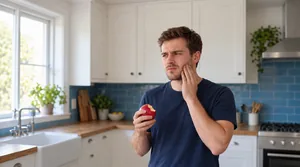
Cold sensitivity is one of the most common dental complaints, but it is not one symptom, it is several different symptoms that happen to feel similar. The key to understanding what yours means comes down to one question: how long does the pain last after you stop the cold?
At Mid-Florida Endodontics, cold stimulus response is one of the primary tools our specialists use to assess the health of the pulp. Here is what each response pattern means clinically, and why the duration of your response matters so much in reaching the right diagnosis.
What Your Cold Response Pattern Tells You
Brief Pain. Disappears Within Seconds
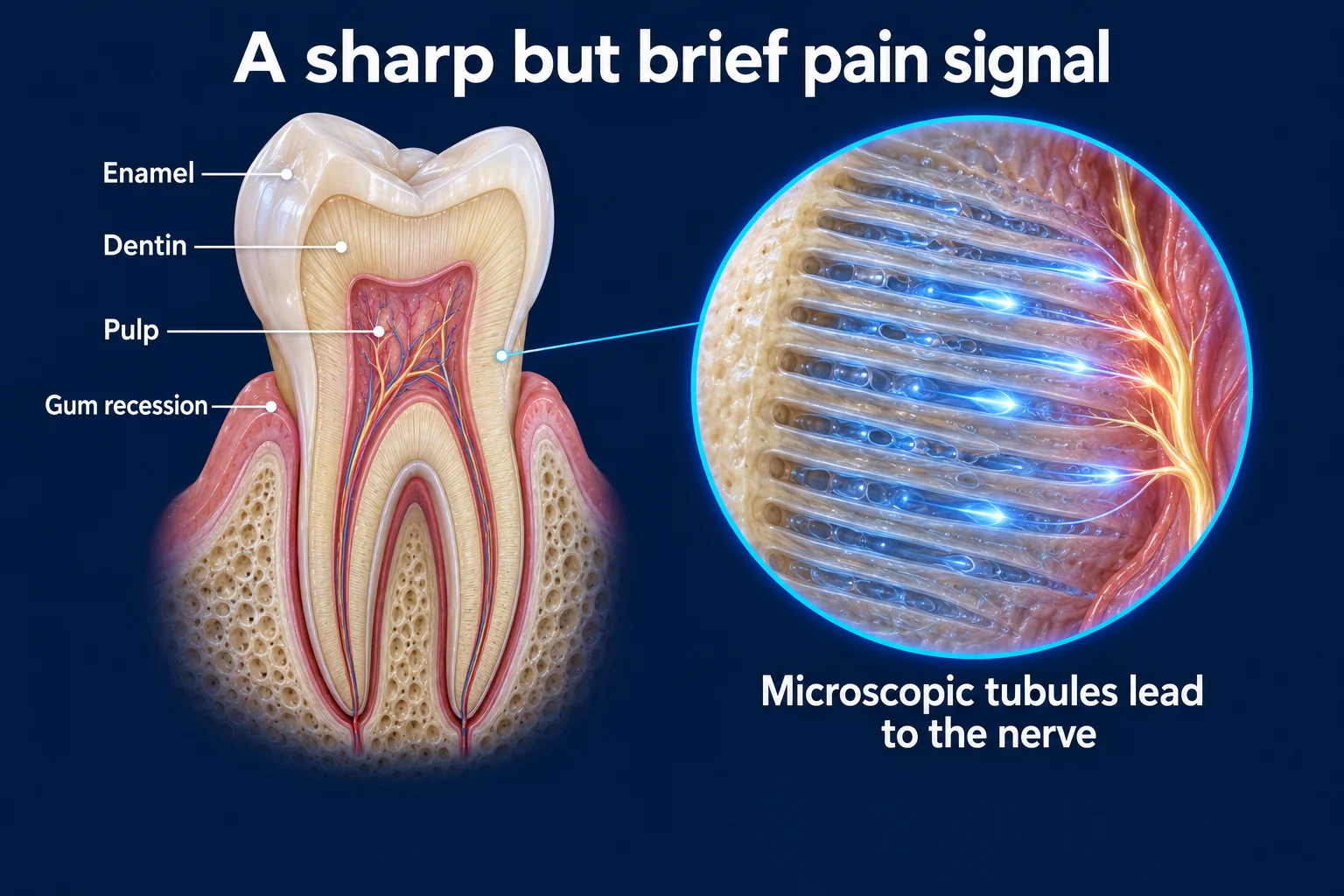
A sharp but short-lived pain that fades quickly when the cold stimulus is removed suggests the pulp is irritated but may still be in a reversible state.1 This is consistent with reversible pulpitis (inflammation of the living tissue inside the tooth), inflammation caused by a stimulus (like a cavity, a cracked area, or exposed dentin (the layer of tooth beneath the hard enamel (the hard outer shell of the tooth, the hardest substance in the human body), softer and more sensitive, containing microscopic channels that connect to the nerve) from recession) that the pulp can potentially recover from if the cause is addressed promptly. This doesn’t mean it can be ignored, but it is the most favorable presentation. See your general dentist to identify and treat the underlying cause before it has a chance to progress.
Lingering Pain. Persists After the Cold Is Removed
When cold sensitivity continues for a noticeable stretch after the cold is removed, the pulp has likely progressed beyond the reversible stage. The longer the sensitivity lingers, the more significant the finding tends to be, and in some cases it can persist for several minutes.15 This is irreversible pulpitis: the pulp is so severely inflamed that it can no longer recover on its own, regardless of whether bacteria have fully invaded yet. Root canal treatment is needed to remove the compromised pulp tissue and relieve the inflammation, and a well-performed treatment with a sound final restoration has a strong, well-documented record of saving the tooth.4 The longer this goes untreated, the more the inflammation progresses toward necrosis.
Cold Relieves the Pain (Paradoxical Response)
This is a counterintuitive but clinically significant finding: a tooth that has been throbbing and then feels temporarily better when cold water hits it suggests the pulp has died (necrosis) and an abscess may be forming. Cold transiently constricts blood vessels near the infection, briefly reducing pressure and pain.6 This response, combined with spontaneous throbbing pain, points strongly toward active infection that is no longer confined to the nerve tissue alone. Same-day evaluation is recommended so the source can be identified and addressed before it spreads further.

No Response to Cold at All
A previously sensitive tooth that no longer responds to cold isn’t necessarily healed, it may mean the pulp has died. necrotic (dead, referring to tissue that has lost its blood supply and died, most commonly the pulp inside an infected tooth) pulp tissue has no nerve function and therefore produces no cold response.3 If a tooth that used to be cold-sensitive has gone completely quiet, and especially if there is any history of trauma or a prior cavity near that tooth, it warrants a dental evaluation even in the absence of pain. A tooth can be silently infected for a long time before any other sign appears.
Common Causes: Why a Tooth Hurts When Cold Water Touches It
- Exposed dentin from gum recession root surfaces lack enamel protection and are highly cold-sensitive; often affects multiple teeth along the gumline
- Enamel erosion from acidic foods, drinks, or acid reflux thinning the enamel and exposing dentin beneath
- Deep or growing cavity decay approaching or reaching the pulp dramatically increases cold sensitivity
- Cracked tooth a crack can conduct cold stimulus directly toward the pulp; often presents as brief but intense sensitivity localized to one tooth
- Recent dental work new fillings and crowns can cause temporary sensitivity as the tooth settles, including a deep filling in a molar or other back tooth.8 This usually fades: in one trial of deep fillings in back teeth, no patient still reported sensitivity after one month.9
- Grinding (bruxism) wears down enamel over time, progressively exposing dentin and sensitizing teeth
- Pulp inflammation (pulpitis) whether reversible or irreversible, an inflamed pulp responds more intensely to cold than a healthy one, because inflammation lowers the firing threshold of the sensory nerves inside the tooth3
How Endodontists Use Cold Testing in Diagnosis
When you come to Mid-Florida Endodontics, a cold test is applied systematically, to the suspected tooth and to adjacent and opposing teeth for comparison. A healthy tooth responds briefly and mildly. A tooth with reversible pulpitis (early, reversible inflammation of the tooth’s inner nerve tissue) responds more intensely but briefly. A tooth with irreversible pulpitis (severe inflammation of the tooth’s inner tissue, too damaged to heal on its own) lingers. A necrotic tooth may not respond at all, or may respond paradoxically. When clinical criteria are applied carefully, this pattern of response corresponds well to the true condition of the pulp in most cases, which is why we lean on it.17
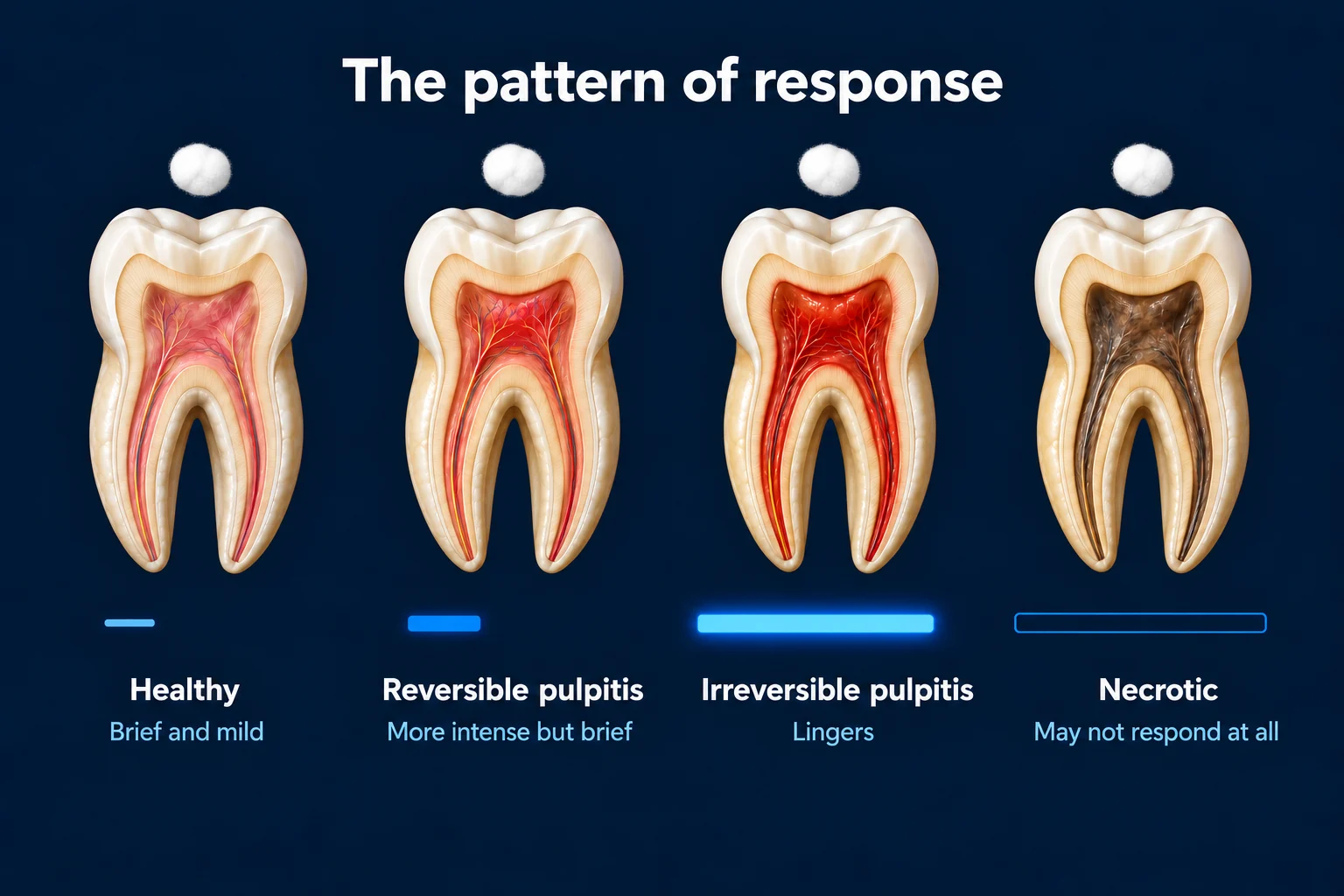
That said, no single test tells the whole story. The broader research base shows that any one symptom or test, used alone, has real limits, so a careful clinician never relies on cold response in isolation.2 This pattern, combined with 3D CBCT imaging, percussion testing (gently tapping on a tooth to check if the supporting structures are inflamed, a tender response indicates infection has spread beyond the tooth), and a full clinical examination, allows our specialists to classify the pulp condition accurately and recommend the appropriate treatment, whether that is monitoring, a simple restoration, or root canal treatment.
How to Fix a Tooth That Hurts With Cold Water
The fix depends on the cause. A quick, sharp pain that stops as soon as the cold is gone often comes from exposed dentin, the layer under the enamel. Treatment seals the tiny tubes in the dentin: a desensitizing toothpaste at home, or a varnish, sealer, or bonding agent your dentist applies in the office. When gum recession has exposed the root, gum surgery is sometimes an option.10 Exposed dentin can also cause pain when you eat sweets.

Pain that lingers after the cold is gone is usually a sign of inflammation inside the pulp;10 if that inflammation cannot heal, root canal treatment removes the inflamed tissue and relieves the pain.
When Should Cold Sensitivity Prompt a Call to Your Dentist?
- Cold sensitivity that has been present for more than two weeks without an obvious cause
- Cold sensitivity that is worsening over time rather than staying the same
- Cold sensitivity that lingers noticeably after the stimulus is removed
- Cold sensitivity in one specific tooth accompanied by any spontaneous pain
- Cold that relieves throbbing, seek same-day evaluation
Referral note: Your general dentist is the first stop for cold sensitivity evaluation. If findings suggest irreversible pulpitis or the source of pain is unclear, a referral to an endodontic specialist for comprehensive testing, including 3D CBCT imaging, is the appropriate next step. Some insurance plans require a referral for specialist coverage.
The duration and character of the cold response is a widely used clinical diagnostic criterion in endodontics. In a study published in the Journal of Endodontics comparing clinical and histologic diagnoses, carefully applied clinical criteria matched the true condition of the pulp in the large majority of teeth, especially for healthy and reversibly inflamed pulps, which supports cold testing as a meaningful guide to treatment decisions.1 It is worth noting, though, that a systematic review of pulp diagnosis found the overall evidence for any single sign, symptom, or test to be limited, which is why our specialists weigh cold response alongside imaging, percussion, and the full clinical picture rather than treating it as proof on its own.2
When Should You See an Endodontist for Cold Sensitivity?
Most cold sensitivity is handled well by your general dentist. A few patterns, though, point to a pulp problem that an endodontic specialist is best suited to diagnose and treat. Consider asking for an endodontic evaluation when the sensitivity fits any of these.
- Pain that lingers well after the cold is gone5
- Cold that relieves a throbbing ache rather than triggering sharp pain6
- Cold sensitivity in one tooth along with swelling, or pain when you bite down
- A tooth that aches on its own or keeps you up at night
An endodontic specialist confirms the diagnosis with focused testing, including 3D CBCT imaging, and explains your options clearly. These are the signs that root canal treatment may be needed to settle the inflammation and give the tooth its best chance to stay in place. A referral is preferred but not required, though some insurance plans require one. Find your nearest Mid-Florida Endodontics location when you are ready.
Works Cited
- Ricucci D, Loghin S, Siqueira JF Jr. Correlation between clinical and histologic pulp diagnoses. J Endod. 2014;40(12):1932-1939. doi:10.1016/j.joen.2014.08.010
- Mejàre IA, Axelsson S, Davidson T, et al. Diagnosis of the condition of the dental pulp: a systematic review. Int Endod J. 2012;45(7):597-613. doi:10.1111/j.1365-2591.2012.02016.x Systematic Review
- Byers MR, Närhi MV. Dental injury models: experimental tools for understanding neuroinflammatory interactions and polymodal nociceptor functions. Crit Rev Oral Biol Med. 1999;10(1):4-39. doi:10.1177/10454411990100010101
- Ng YL, Mann V, Rahbaran S, Lewsey J, Gulabivala K. Outcome of primary root canal treatment: systematic review of the literature. Part 2. Influence of clinical factors. Int Endod J. 2008;41(1):6-31. doi:10.1111/j.1365-2591.2007.01323.x Systematic Review
- Aguirre-López EC, Patiño-Marín N, Martínez-Castañón GA, et al. Levels of matrix metalloproteinase-8 and cold test in reversible and irreversible pulpitis. Medicine (Baltimore). 2020;99(52):e23782. doi:10.1097/MD.0000000000023782
- Cecic PA, Hartwell GR, Bellizzi R. Cold as a diagnostic aid in cases of irreversible pulpitis. Report of two cases. Oral Surg Oral Med Oral Pathol. 1983;56(6):647-650. doi:10.1016/0030-4220(83)90083-x
- Mainkar A, Kim SG. Diagnostic Accuracy of 5 Dental Pulp Tests: A Systematic Review and Meta-analysis. J Endod. 2018;44(5):694-702. doi:10.1016/j.joen.2018.01.021 Systematic Review
- Schenkel AB, Veitz-Keenan A. Dental cavity liners for Class I and Class II resin-based composite restorations. Cochrane Database Syst Rev. 2019;3(3):CD010526. doi:10.1002/14651858.CD010526.pub3 Systematic Review
- Maghaireh GA, Albashaireh ZS, Allouz HA. Postoperative sensitivity in posterior restorations restored with self-adhesive and conventional bulk-fill resin composites: a randomized clinical split-mouth trial. J Dent. 2023;137:104655. doi:10.1016/j.jdent.2023.104655 RCT
- Liu XX, Tenenbaum HC, Wilder RS, Quock R, Hewlett ER, Ren YF. Pathogenesis, diagnosis and management of dentin hypersensitivity: an evidence-based overview for dental practitioners. BMC Oral Health. 2020;20(1):220. doi:10.1186/s12903-020-01199-z Narrative Review