Dentistry is one of the few areas of healthcare where the cost of inaction is often higher, financially, biologically, and in terms of eventual pain, than the cost of acting early. This is not a sales tactic. It is a straightforward consequence of how dental disease progresses and what happens to treatment options at each stage, and it holds true across the range of conditions an endodontic specialist sees every week.
This article is the culmination of everything the Mid-Florida Endodontics educational library has covered over the past year, bringing together the key principles of why your teeth are worth protecting early, consistently, and proactively.
How Early Action Changes Every Outcome
Tooth Decay: The Window That Closes Stage by Stage
Enamel cavity identified at routine check-up
Fluoride treatment or small filling. Single appointment. No anesthesia needed in many cases. Total cost: minimal. Tooth preserved in near-original condition. No pain experienced. More on how tooth decay reaches the nerve.
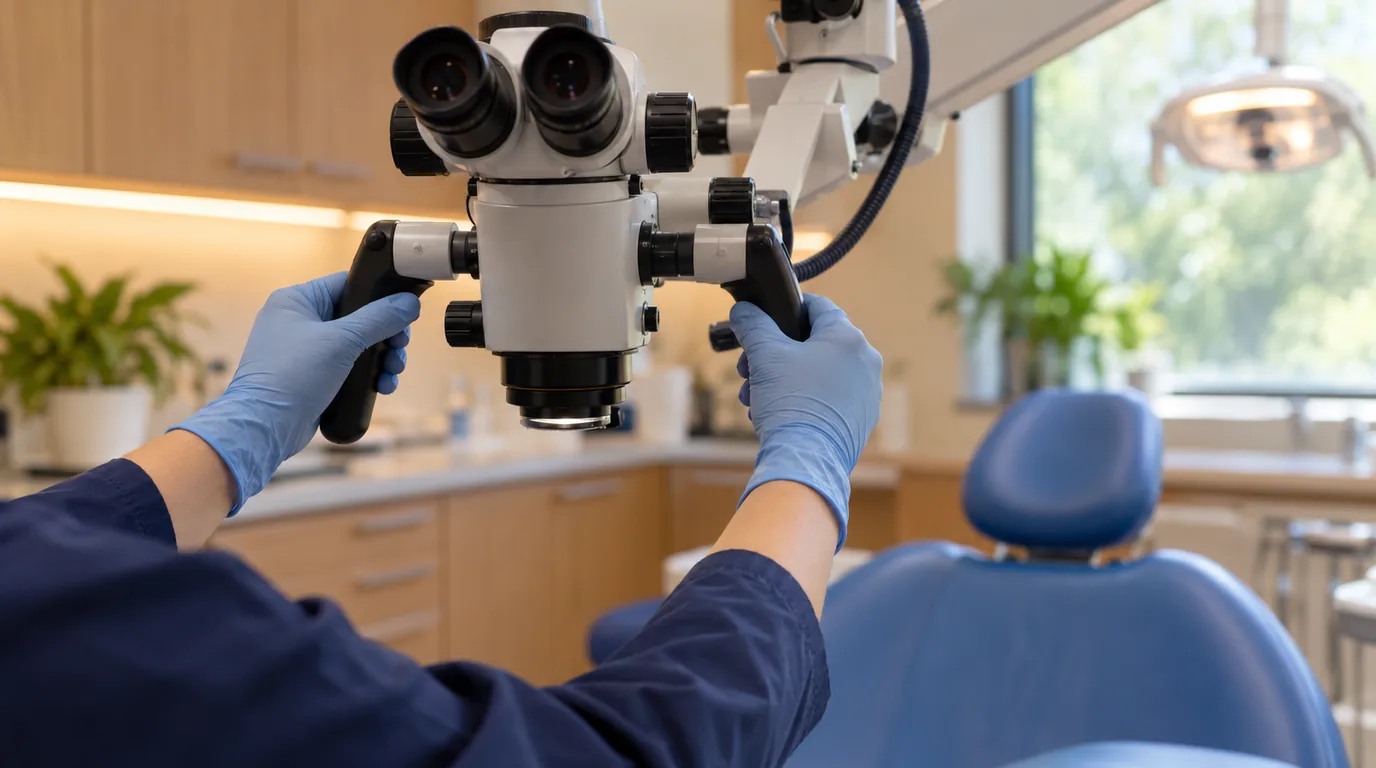
Same cavity left until symptomatic
Decay has reached the pulp. Root canal treatment required, followed by a crown. A good-quality crown that fully covers the tooth measurably improves long-term survival after root canal treatment2. Multiple appointments. Local anesthesia. Higher cost. A short recovery period. Tooth functional but structurally altered permanently. See signs you may need root canal therapy.
Cracked Tooth: A Race Against Propagation
Crack identified before reaching the pulp
Crown placed to stabilize the crack and prevent progression. Single restorative appointment with your general dentist. No root canal needed. When a cracked tooth does need root canal treatment, shallow probing depths are linked to a substantially better survival rate than deep ones, which is one reason early action matters3. Tooth saved with a favorable long-term prognosis.
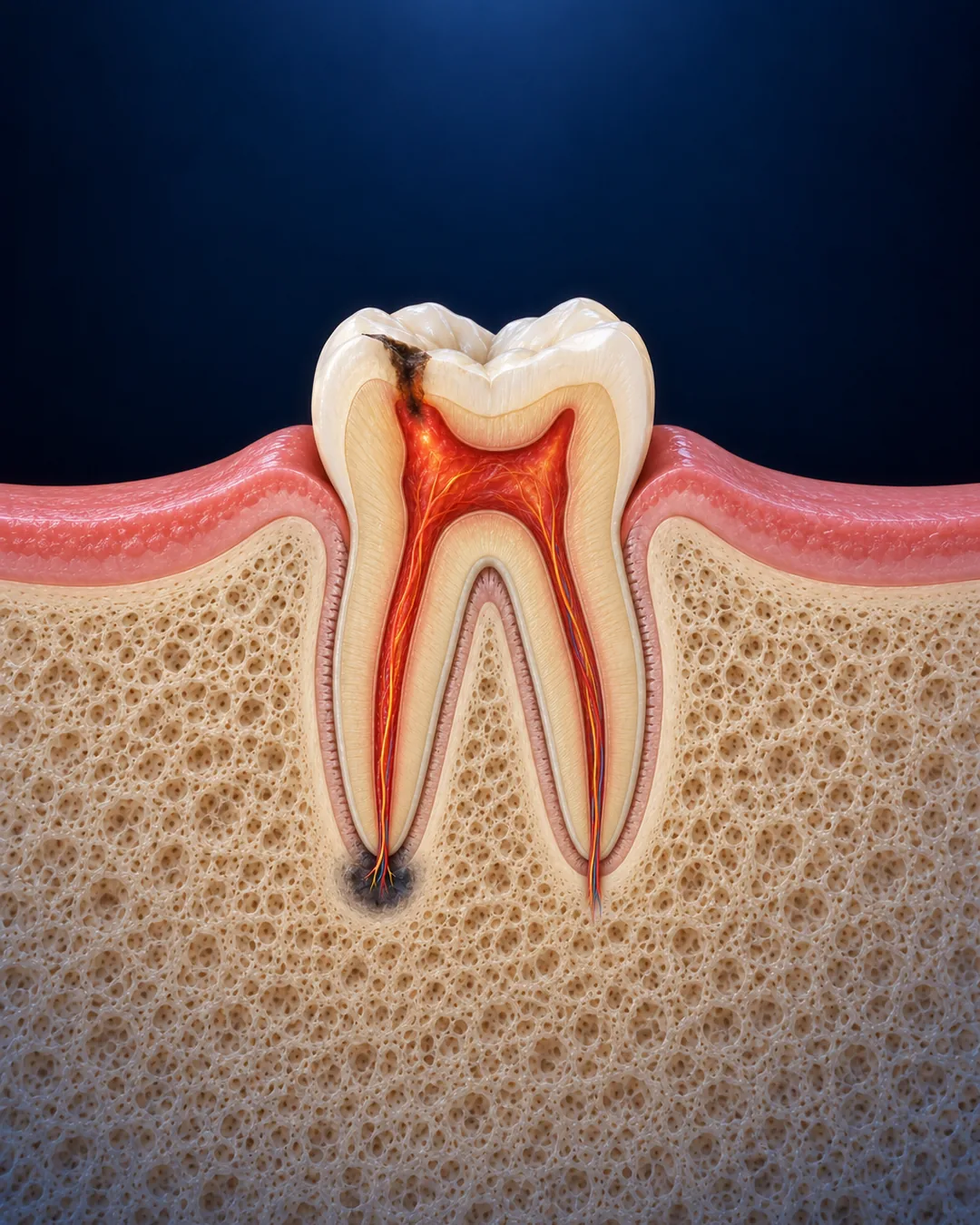
Same crack left until it reached the root
Vertical root fracture, tooth is now unsalvageable. Extraction required. Implant surgery, months of healing, significantly higher total cost. Natural tooth permanently lost.
Tooth Infection: From Manageable to Life-Threatening
Abscess identified and treated promptly
Root canal treatment, often in a single appointment. Localized bone loss typically heals over the following months. For most localized dental infections, definitive treatment is prioritized and antibiotics are reserved for cases with systemic involvement such as fever or spreading swelling5. Tooth saved with a favorable prognosis. Normal function restored after a short recovery.
Same abscess left for weeks to months
Extensive bone destruction. Possible facial cellulitis (a spreading bacterial infection of the soft tissue, in dental contexts, this means infection has moved from the tooth into the face, jaw, or neck) requiring antibiotics. Risk of spreading infection to the neck, chest, or bloodstream. Tooth may be unrestorable, extraction plus implant required. Higher total cost by a significant margin. In severe cases, hospitalization.
The Principles Behind Why Early Treatment Works
- Dental disease is progressive, not self-resolving.6 No dental condition, not a cavity, a crack, or an infection, heals without intervention. Time does not improve dental disease; it only allows it to progress to the next, more destructive stage. In a long-term observational study, the more advanced a cavity already was, the more likely it was to keep progressing to a cavitated lesion, rather than stay stable7.
- Each stage closes treatment options. The treatment available at each stage is directly determined by how far disease has progressed. Reversible options become irreversible. Tooth-preserving options become extraction-only. Early action keeps more options open.
- Smaller procedures have better outcomes. A filling placed before pulp involvement generally has a higher long-term success rate than a root canal placed after extensive infection. When decay reaches the edge of the pulp but the pulp is still healthy, conservative tooth-preserving treatment shows high success rates, which is why acting before the pulp is lost matters8. A crown placed on a crack before pulp involvement tends to succeed more often than one placed after root canal treatment. The earlier the intervention, the better the prognosis tends to be.
- Early treatment is often less expensive. The cost of dental care tends to escalate as disease progresses. A filling generally costs a fraction of a root canal. A root canal generally costs a fraction of an extraction plus implant. Acting early is often financially protective, not only medically protective.
- Pain is a late warning signal, not an early one. Much dental disease is painless in its early stages. Waiting for pain to develop before seeking treatment often means waiting until disease has already progressed to a more advanced, harder-to-treat stage.
- Regular dental care catches disease early. Routine check-ups and X-rays can find decay, cracks, and periapical (relating to the area surrounding the very tip of a tooth’s root) changes before symptoms develop. This is among the most effective early interventions available, and it costs far less than any treatment that follows a delayed diagnosis.
The Role of Endodontic Specialists in Tooth Preservation
When a tooth reaches the stage where the pulp is involved, or when symptoms suggest it may be heading there, endodontic intervention provides one of the best opportunities to stop the disease process and save the tooth. In a large U.S. study of more than 1.4 million treated teeth, 97% of teeth were still retained eight years after initial nonsurgical root canal treatment1. Across the broader literature, a saved and properly restored natural tooth shows long-term survival comparable to a single-tooth implant and better than a fixed bridge, which is a central reason endodontic specialists work to preserve the natural tooth whenever it is reasonable to do so4. Root canal treatment at Mid-Florida Endodontics is designed to do exactly that: eliminate infection, relieve pain, and restore a tooth to continued function. We break down what happens if you delay a root canal.

But the endodontist’s role is also diagnostic. Many patients arrive after months of poorly-localized or misidentified pain. Identifying the source accurately, and treating it before the window for saving the tooth closes, is one of the highest-value things an endodontic consultation can provide.
Working with your dental team: Your general dentist is the cornerstone of early detection, and routine check-ups and timely referrals are how most endodontic problems are caught before they become serious. When your dentist recommends treatment or refers you to a specialist, acting promptly is almost always the right decision. Some insurance plans require a referral for specialist coverage, so check your plan when scheduling.
A Year of Learning. The Message That Ties It All Together
Over the past twelve months, the Mid-Florida Endodontics educational library has covered 48 topics, from the first sign of tooth pain to the technology behind modern treatment, from what happens inside an infected tooth to why your natural tooth is worth every effort to save.
Every article points back to the same core truth: dental disease is predictable, progressive, and preventable in its consequences when caught and treated early. The single most important thing any patient can do for their long-term dental health is the same thing that applies to all of medicine: act early.
Mid-Florida Endodontics is here when you need us, at multiple locations across Florida. We handle complex diagnoses and the full range of endodontic care. Most of our offices offer same-day emergency care.
The relationship between treatment timing and dental outcomes is consistent across disease types and decades of research. Large outcome studies show that initial nonsurgical root canal treatment is a predictable procedure: 97% of teeth remained in function eight years afterward in a population of more than 1.4 million treated teeth1. Systematic reviews of root canal treatment identify the quality of the final coronal restoration as one of the clinical factors that significantly improves long-term success, underscoring why each disease stage is best addressed before the next one begins2. Comparative evidence further shows that a restored, root-canal-treated natural tooth survives at rates comparable to a single-tooth implant and better than a fixed bridge, supporting earlier, tooth-preserving intervention wherever it is reasonable4.
If something does not feel right with a tooth, the earlier you have it evaluated, the more options you have. An MFE endodontist at your nearest location can assess it quickly. Find a location near you.
Works Cited
- Salehrabi R, Rotstein I. Endodontic treatment outcomes in a large patient population in the USA: an epidemiological study. J Endod. 2004;30(12):846-850. doi:10.1097/01.don.0000145031.04236.ca Prospective Study
- Ng YL, Mann V, Rahbaran S, Lewsey J, Gulabivala K. Outcome of primary root canal treatment: systematic review of the literature. Part 2. Influence of clinical factors. Int Endod J. 2008;41(1):6-31. doi:10.1111/j.1365-2591.2007.01323.x Systematic Review
- Kang SH, Kim BS, Kim Y. Cracked teeth: distribution, characteristics, and survival after root canal treatment. J Endod. 2016;42(4):557-562. doi:10.1016/j.joen.2016.01.014 Prospective Study
- Torabinejad M, Anderson P, Bader J, et al. Outcomes of root canal treatment and restoration, implant-supported single crowns, fixed partial dentures, and extraction without replacement: a systematic review. J Prosthet Dent. 2007;98(4):285-311. doi:10.1016/S0022-3913(07)60102-4 Systematic Review
- Lockhart PB, Tampi MP, Abt E, et al. Evidence-based clinical practice guideline on antibiotic use for the urgent management of pulpal- and periapical-related dental pain and intraoral swelling: a report from the American Dental Association. J Am Dent Assoc. 2019;150(11):906-921. doi:10.1016/j.adaj.2019.08.020 Systematic Review
- Mejàre I, Källestål C, Stenlund H. Incidence and progression of approximal caries from 11 to 22 years of age in Sweden: a prospective radiographic study. Caries Res. 1999;33(2):93-100. doi:10.1159/000016502 Prospective Study
- Ferreira Zandoná A, Santiago E, Eckert GJ, et al. The natural history of dental caries lesions: a 4-year observational study. J Dent Res. 2012;91(9):841-846. doi:10.1177/0022034512455030 Prospective Study
- Cushley S, Duncan HF, Lappin MJ, et al. Efficacy of direct pulp capping for management of cariously exposed pulps in permanent teeth: a systematic review and meta-analysis. Int Endod J. 2021;54(4):556-571. doi:10.1111/iej.13449 Systematic Review