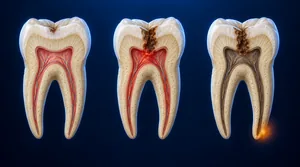
There is a common misconception that a root canal damages a tooth, or that extraction is somehow a cleaner solution. The opposite is true. Root canal treatment is a tooth-preserving procedure: it removes only what is diseased while keeping everything healthy in place. Understanding what root canal therapy does helps explain why endodontists, periodontists, and prosthodontists broadly agree that when a tooth is saveable, saving it is usually the better outcome. The published evidence supports this preference, with restored root canal treated teeth showing survival comparable to single-tooth implants over long follow-up periods.12
What Root Canal Treatment Actually Does to a Tooth
To understand why root canal treatment saves a tooth, it helps to understand what it removes versus what it preserves.
What is removed: The dental pulp (the soft living tissue, nerves and blood vessels, inside a tooth), the soft tissue containing nerves and blood vessels inside the tooth. Once a tooth is fully formed, the pulp (the soft living tissue inside the tooth, containing nerves and blood vessels) is no longer essential to its structural function. A tooth without pulp is nourished through the surrounding periodontal ligament (the thin layer of fibers connecting the tooth root to the jawbone, which acts as a shock absorber and contains pressure-sensitive nerve fibers) and continues to function normally.
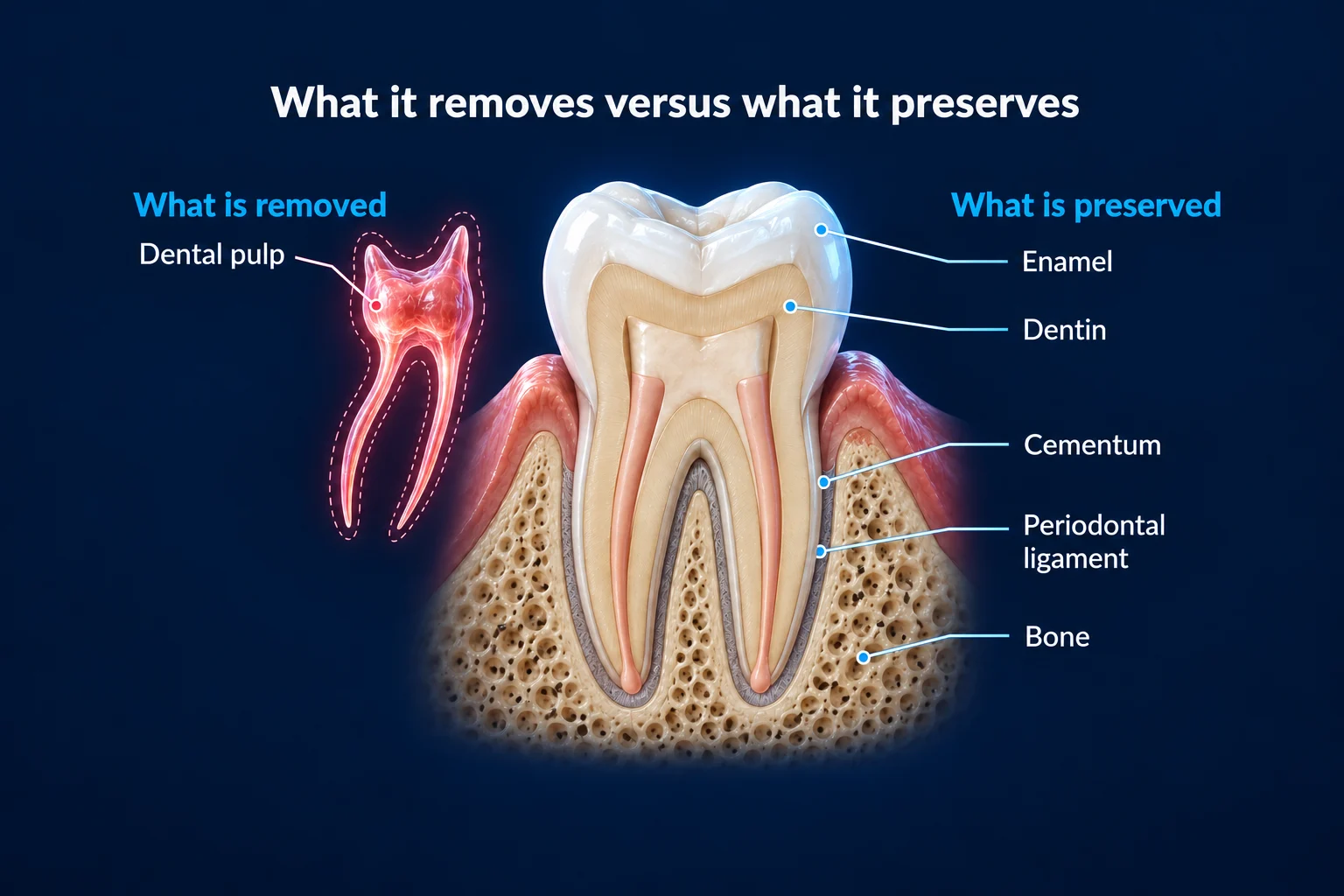
What is preserved: The entire outer tooth structure, enamel (the hard outer shell of the tooth, the hardest substance in the human body), dentin (the layer of tooth beneath the hard enamel, softer and more sensitive, containing microscopic channels that connect to the nerve). Cementum (the thin, bone-like layer covering the root surface of a tooth beneath the gumline), remains. The root stays in the bone. The periodontal ligament remains intact. The bone surrounding the root continues to receive stimulation from normal chewing forces. None of this is possible after extraction.
Six Reasons Your Natural Tooth Is Worth Saving
Preserves the Jawbone
The root of a tooth stimulates the surrounding bone every time you bite or chew. This stimulation signals the bone to maintain its density and volume. When a tooth is extracted, that stimulation disappears and the bone at the extraction site begins to resorb, shrinking in width and height over months to years. Root canal treatment keeps the root in place, preserving the bone architecture beneath it and supporting the long-term retention of the natural tooth.3
Prevents Neighboring Teeth from Shifting
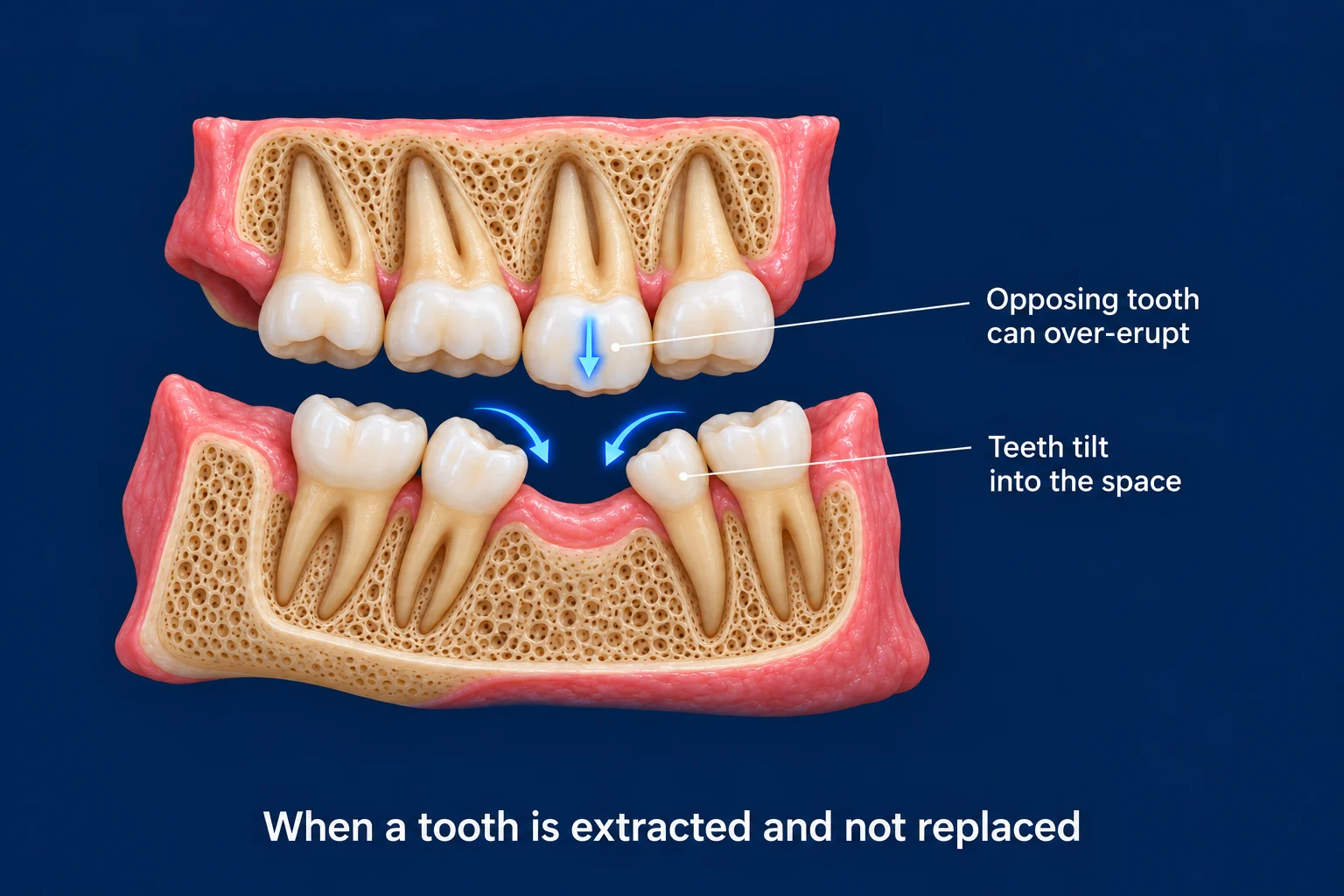
Teeth maintain their position in the arch partly because adjacent and opposing teeth provide physical boundaries. When a tooth is extracted and not replaced, the teeth on either side can gradually tilt into the space, and the opposing tooth can over-erupt. These shifts alter the bite, create new areas of abnormal wear, and can eventually require orthodontic correction to bring the bite back into alignment. Keeping the natural tooth in place through root canal treatment helps avoid this chain reaction before it ever begins, which is one reason saving a tooth early tends to protect the surrounding teeth as well.
Maintains Natural Biting Sensation
Natural teeth have a periodontal ligament, a thin, shock-absorbing layer of connective tissue between the root and the bone. This ligament contains proprioceptive nerve fibers that give you feedback about bite force and texture. Implants, bridges, and dentures lack this ligament and therefore lack this feedback, which is why many people describe chewing on a replacement tooth as feeling subtly different. Preserving the natural tooth keeps this built-in sensory feedback that tooth replacements cannot fully reproduce, helping you chew comfortably and protect the tooth from accidental overload.
Lower Long-Term Cost
Root canal treatment combined with a crown is often less expensive overall than the alternative of extraction followed by an implant, abutment, and crown. The replacement path commonly requires surgery and months of healing, and may involve bone grafting if bone loss has already occurred. In many cases the cost of saving a tooth compares favorably to the cost of replacing one, though the exact figures depend on your specific situation and coverage. Because a saved tooth also avoids the added steps and follow-up visits that a replacement can involve, the long-term value of preserving your own tooth often goes beyond the price of any single procedure.
Immediate Return to Function
Root canal treatment followed by a crown restores the tooth to full function without a surgical healing period. Implant treatment, by comparison, typically requires a period of osseointegration (the process where bone fuses to the implant surface) before the final crown can be placed, during which time chewing function on that side may be limited. When time matters, saving the natural tooth is often the faster path back to full function.
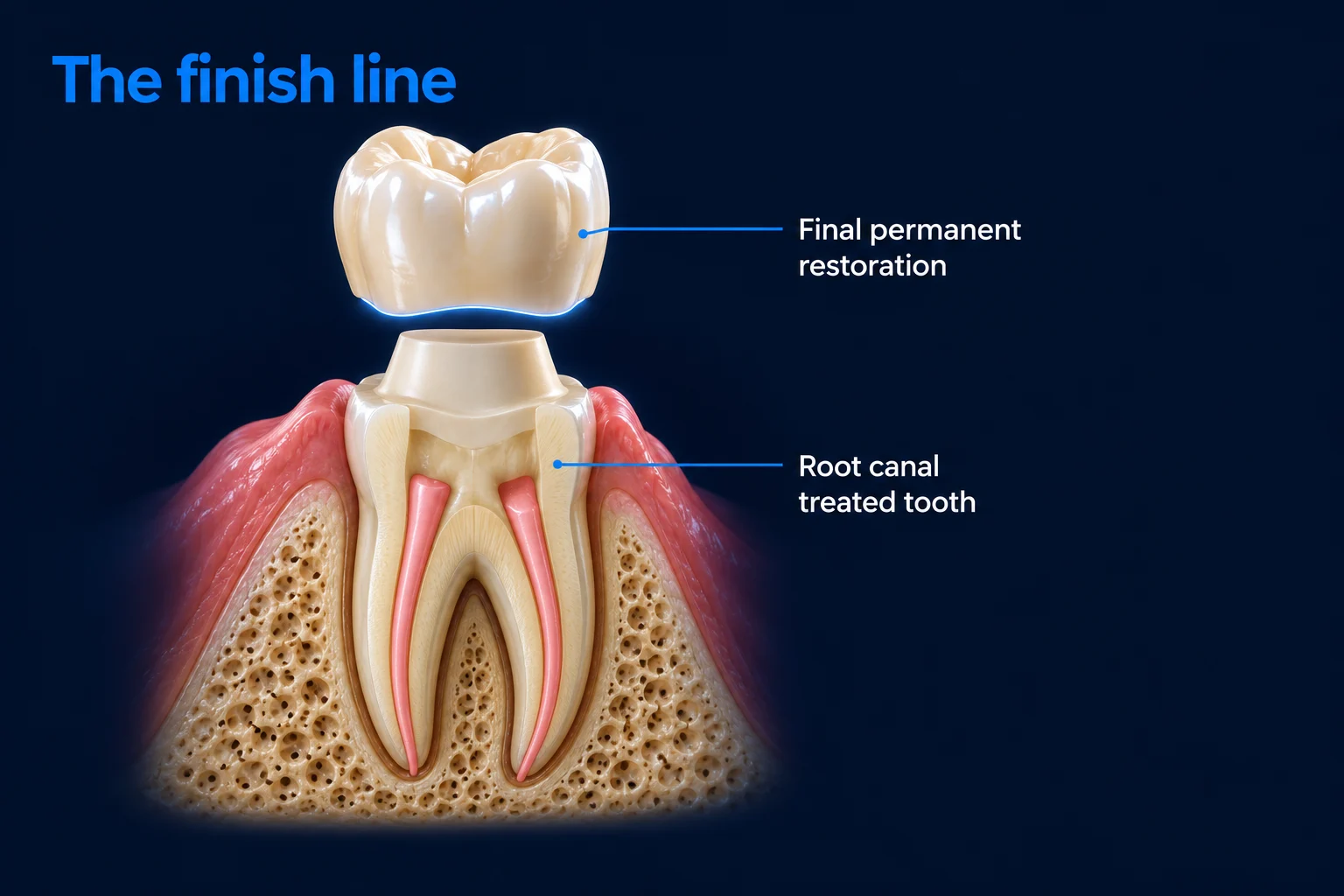
A Well-Treated Tooth Can Last for Years
Research consistently shows that root canal treated teeth restored with good coronal coverage have high long-term survival and retention rates, and large-population data found that most treated teeth remained in the mouth many years after treatment.45 A well-treated, well-restored natural tooth gives an excellent long-term outcome that no prosthetic can fully match.
Natural Tooth vs. Implant: What’s Actually Better?
Dental implants are remarkable when a tooth cannot be saved, but they are a replacement for a missing tooth, not an upgrade over a natural one. Here is an honest comparison:
Root Canal Treated Natural Tooth
- Preserves natural root and bone stimulation
- Periodontal ligament provides bite feedback
- No surgery required
- Functional within weeks
- Lower total cost in most cases
- High long-term survival with good coronal restoration
- Reversible if retreatment is ever needed
Dental Implant (When Tooth Is Lost)
- Requires surgical placement
- Healing period before final crown
- Higher total cost (implant + abutment + crown)
- May require bone graft if bone loss present
- Excellent long-term success in well-selected cases
- No periodontal ligament, different bite feel
- Best option when the natural tooth cannot be saved
The right answer to “implant or root canal?” is usually to save the tooth if it can be saved. Both options are excellent in the right situation, and published reviews found no significant difference in survival between a restored root canal treated tooth and a single-tooth implant.2 The implant option remains available if the tooth is eventually lost, but extracting a saveable tooth forecloses the natural tooth option permanently. If retreatment is ever needed later, contemporary nonsurgical retreatment also shows favorable healing and success rates.6
The comparative outcomes of root canal treatment versus tooth extraction and implant replacement have been extensively studied. A systematic review and meta-analysis published in the Journal of Prosthetic Dentistry compared root canal treatment and restoration against single-tooth implants, fixed partial dentures, and extraction without replacement, and concluded that root canal treated teeth and implant-supported crowns had similar long-term survival rates and both were superior to fixed partial dentures.1 The same body of evidence found that extraction without replacement led to poorer psychosocial outcomes, supporting a tooth-preservation-first approach in clinical decision making. Outcome quality for the natural tooth depends heavily on a sound restoration: pooled analyses found that a satisfactory coronal restoration significantly improves the success of root canal treatment.7
Works Cited
- Torabinejad M, Anderson P, Bader J, et al. Outcomes of root canal treatment and restoration, implant-supported single crowns, fixed partial dentures, and extraction without replacement: a systematic review. J Prosthet Dent. 2007;98(4):285-311. doi:10.1016/S0022-3913(07)60102-4 Systematic Review
- Iqbal MK, Kim S. For teeth requiring endodontic treatment, what are the differences in outcomes of restored endodontically treated teeth compared to implant-supported restorations? Int J Oral Maxillofac Implants. 2007;22 Suppl:96-116. Systematic Review
- Salehrabi R, Rotstein I. Endodontic treatment outcomes in a large patient population in the USA: an epidemiological study. J Endod. 2004;30(12):846-850. doi:10.1097/01.don.0000145031.04236.ca
- Fernández R, Cardona JA, Cadavid D, Álvarez LG, Restrepo FA. Survival of endodontically treated roots/teeth based on periapical health and retention: a 10-year retrospective cohort study. J Endod. 2017;43(12):2001-2008. doi:10.1016/j.joen.2017.08.003 Prospective Study
- Ng YL, Mann V, Rahbaran S, Lewsey J, Gulabivala K. Outcome of primary root canal treatment: systematic review of the literature. Part 1. Effects of study characteristics on probability of success. Int Endod J. 2007;40(12):921-939. doi:10.1111/j.1365-2591.2007.01322.x Systematic Review
- Sabeti M, Chung YJ, Aghamohammadi N, Khansari A, Pakzad R, Azarpazhooh A. Outcome of contemporary nonsurgical endodontic retreatment: a systematic review of randomized controlled trials and cohort studies. J Endod. 2024;50(4):414-433. doi:10.1016/j.joen.2024.01.013 Systematic Review
- Ng YL, Mann V, Rahbaran S, Lewsey J, Gulabivala K. Outcome of primary root canal treatment: systematic review of the literature. Part 2. Influence of clinical factors. Int Endod J. 2008;41(1):6-31. doi:10.1111/j.1365-2591.2007.01323.x Systematic Review