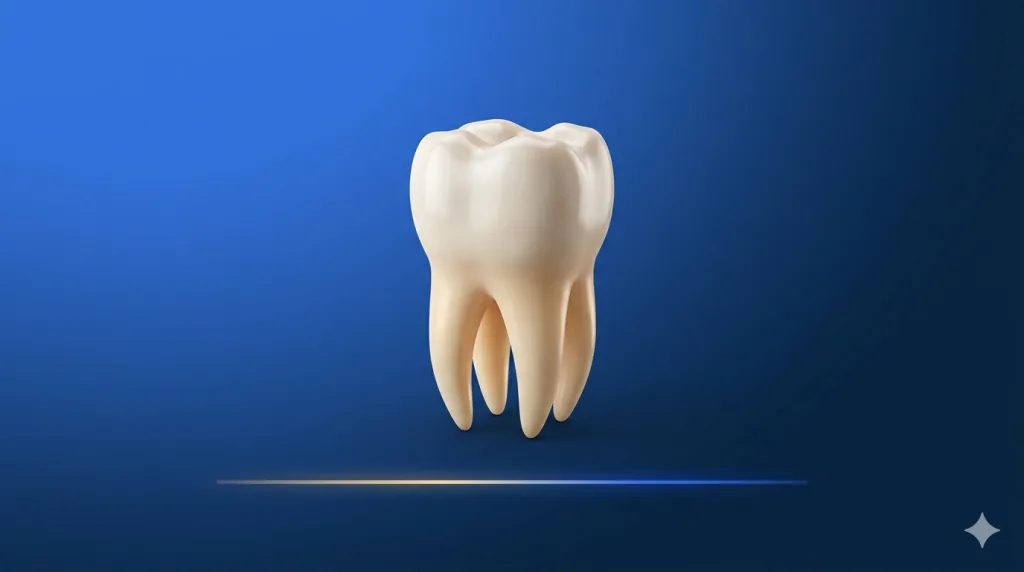
Root canal therapy is not just a short-term solution, it is designed to save your natural tooth permanently, and a restored treated tooth survives over the long term at rates comparable to replacing it with an implant or bridge.4 But like any dental treatment, its long-term success depends on what happens after the procedure just as much as the quality of the treatment itself. Find out what to expect during recovery after treatment. Learn whether a root canal hurts during treatment.
Here is what the research says about how long root canal treated teeth last, and what you can do to maximize the lifespan of your treated tooth.
10-Year Survival Rate (with crown)
Potential Lifespan With Proper Care
Failure Cause: No Crown Placed
What Does the Research Say?
Multiple large-scale studies following root canal treated teeth over 5, 10, and even 20 years consistently report excellent long-term outcomes when treatment is performed well and followed by appropriate restoration. One epidemiological study of more than 1.4 million treated teeth found that 97% were still in the mouth eight years after treatment,1 and a separate 10-year cohort reported that roughly 90% of treated roots and teeth were retained over that period.5 Pooled systematic-review data place typical success in the same high range.27
A key finding across the literature: teeth restored with full-coverage crowns after root canal treatment have significantly higher survival rates than teeth restored with only a filling.16 The crown is not optional for back teeth, it is essential to long-term success. When a tooth was lost after treatment, one large study found that 85% of those extracted teeth had never received full coronal coverage.1

Teeth treated by endodontic specialists often involve more complex anatomy, because difficult cases are frequently referred for specialty care. Endodontists complete additional training focused on locating, cleaning, and sealing the full canal system, and they treat these complex teeth using 3D imaging and surgical microscopes. The long-term outlook for a treated tooth depends most on a clean, well-sealed canal system and a sound final restoration rather than on any single factor.36
What Factors Affect How Long a Root Canal Lasts?
Placing a Permanent Crown
Root canal treated molars and premolars without crowns are significantly more likely to fracture and fail. The crown protects the brittle treated tooth from cracking under normal bite forces. A satisfactory coronal restoration is one of the conditions most strongly linked to a successful long-term result in the published evidence.6 Schedule the crown promptly after treatment, ideally within a few weeks, the sooner the better. Understand signs that may mean you need a retreatment.
Quality of the Root Canal Treatment
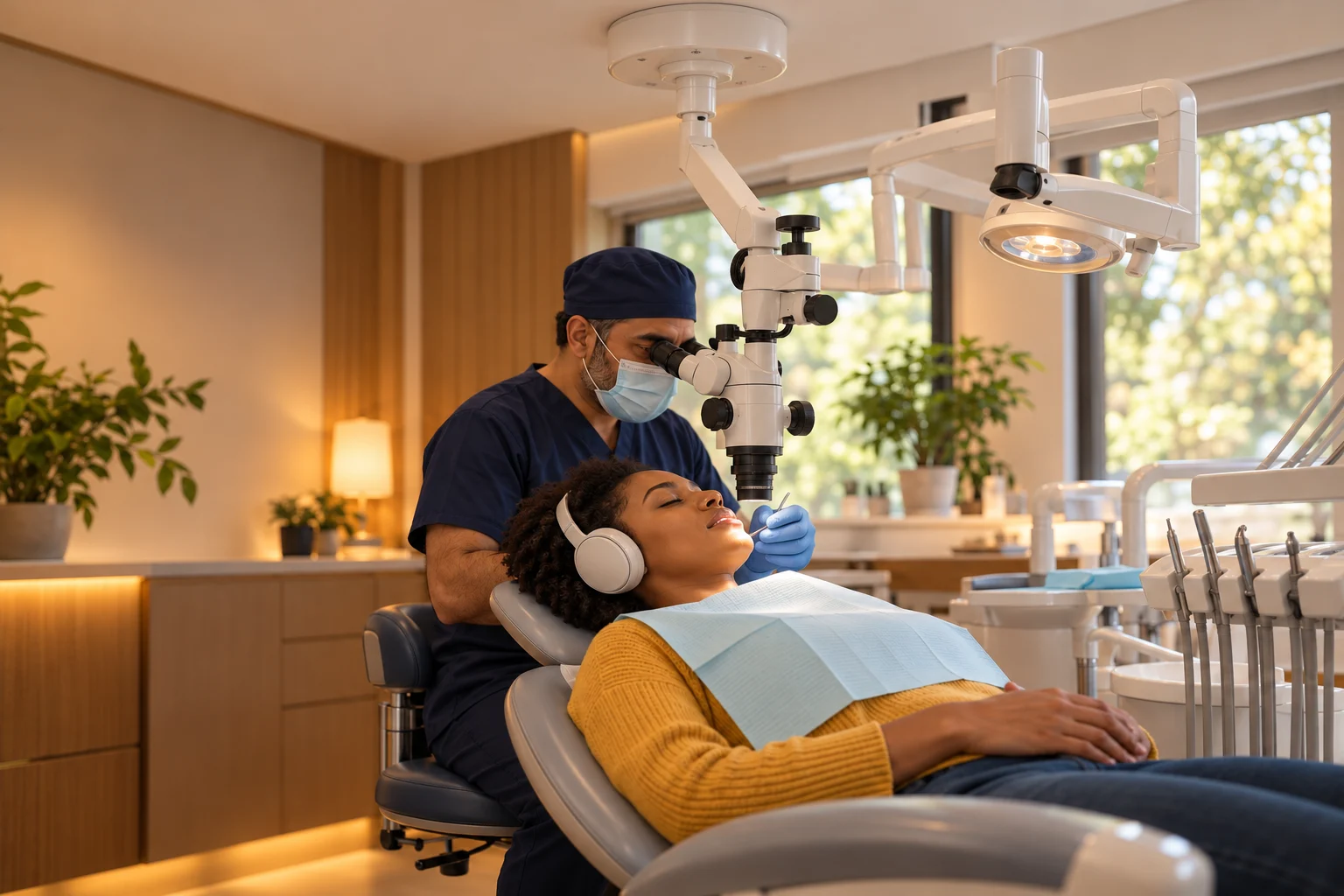
A root canal that leaves residual bacteria in incompletely cleaned canals, or that uses inadequate obturation (filling) materials, is at higher risk of reinfection. A dense root filling with no voids, extending close to the root tip, is among the factors that significantly improve the long-term outcome.6 Treatment by a trained endodontic specialist using 3D imaging and surgical microscopes maximizes the thoroughness of cleaning and sealing.
Coronal Seal Integrity
The restoration on top of the root canal (crown or filling) must maintain a leak-free seal. If the crown cracks, a filling degrades, or recurrent decay develops around the margin, bacteria can re-enter the canal system, potentially leading to reinfection years later.6 Regular dental checkups catch this early. Here’s why early treatment preserves more tooth structure.
Oral Hygiene and Dental Visits
A root canal treated tooth can still develop new decay around the crown margins or on other surfaces. Regular brushing, flossing, and professional cleanings protect the tooth from new disease. Routine dental X-rays can detect early problems long before symptoms develop, and most untoward events that do occur tend to appear within the first few years after treatment.1
Bruxism (Teeth Grinding)
Nighttime grinding puts significant cumulative stress on crowns and tooth structure. Patients who grind their teeth benefit from a custom night guard to protect both the crown and the tooth from fracture. Without protection, even a well-restored root canal treated tooth can eventually crack.

Tooth Location
Front teeth (incisors and canines) bear less chewing load and have simpler anatomy, giving them somewhat higher long-term success rates. Molars bear the greatest forces and have more complex canal systems, making crown placement especially critical for these teeth.
Signs a Root Canal May Need Retreatment
Even successful root canals can occasionally require retreatment years later. Signs that a previously treated tooth may have become reinfected include:
- Return of pain, sensitivity, or throbbing in a previously treated tooth
- New swelling or a pimple-like bump reappearing on the gum near the tooth
- A dark shadow reappearing on X-rays at the root tip
- The crown or filling has cracked, shifted, or visibly failed
Root canal retreatment, performed by an endodontic specialist, can often save the tooth again. Pooled outcome data show that retreated teeth heal at rates broadly similar to first-time treatment, and the earlier retreatment is sought, the better the prognosis.37
Long-term studies consistently support excellent survival rates for properly restored root canal treated teeth. A large epidemiological study of more than 1.4 million treated teeth, published in the Journal of Endodontics, found that 97% remained in the mouth eight years after treatment, and that among the small number of teeth later extracted, 85% had never received full coronal coverage.1 Systematic reviews reach the same conclusion: a sound, leak-free final restoration is one of the strongest predictors of a treated tooth lasting for years.67 (Salehrabi R, Rotstein I. Endodontic treatment outcomes in a large patient population in the USA. J Endod. 2004;30(12):846-850.)
Questions about how to protect a tooth that has already had root canal therapy? The endodontists at your nearest MFE location can review your restoration and advise on long-term care. Find a location near you.
Works Cited
- Salehrabi R, Rotstein I. Endodontic treatment outcomes in a large patient population in the USA: an epidemiological study. J Endod. 2004;30(12):846-850. doi:10.1097/01.don.0000145031.04236.ca
- Ng YL, Mann V, Rahbaran S, Lewsey J, Gulabivala K. Outcome of primary root canal treatment: systematic review of the literature. Part 1. Effects of study characteristics on probability of success. Int Endod J. 2007;40(12):921-939. doi:10.1111/j.1365-2591.2007.01322.x Systematic Review
- Friedman S, Mor C. The success of endodontic therapy, healing and functionality. J Calif Dent Assoc. 2004;32(6):493-503.
- Torabinejad M, Anderson P, Bader J, et al. Outcomes of root canal treatment and restoration, implant-supported single crowns, fixed partial dentures, and extraction without replacement: a systematic review. J Prosthet Dent. 2007;98(4):285-311. doi:10.1016/S0022-3913(07)60102-4 Systematic Review
- Fernández R, Cardona JA, Cadavid D, Álvarez LG, Restrepo FA. Survival of endodontically treated roots/teeth based on periapical health and retention: a 10-year retrospective cohort study. J Endod. 2017;43(12):2001-2008. doi:10.1016/j.joen.2017.08.003
- Ng YL, Mann V, Rahbaran S, Lewsey J, Gulabivala K. Outcome of primary root canal treatment: systematic review of the literature. Part 2. Influence of clinical factors. Int Endod J. 2008;41(1):6-31. doi:10.1111/j.1365-2591.2007.01323.x Systematic Review
- Brochado Martins JF, Georgiou AC, Nunes PD, et al. CBCT-assessed outcomes and prognostic factors of primary endodontic treatment and retreatment: a systematic review and meta-analysis. J Endod. 2025;51(6):687-706. doi:10.1016/j.joen.2025.03.004 Systematic Review