See an endodontic specialist for severe tooth pain when the pain is spontaneous (not triggered by eating or temperature), throbbing, waking you from sleep, or accompanied by swelling or fever. These are signs the pulp inside the tooth is irreversibly inflamed or infected and will not resolve on its own.
See an endodontic specialist for severe tooth pain when the pain is spontaneous (not just triggered), throbbing, preventing sleep, or accompanied by swelling or fever. These are signs the pulp inside the tooth is irreversibly inflamed or actively infected, a state that will not resolve on its own and requires root canal treatment to eliminate.1 The longer severe dental pain is left untreated, the more the infection progresses and the fewer options typically remain to save the tooth.
There is a difference between tooth pain and severe tooth pain. Mild sensitivity from a new filling or a bit of gum soreness can often wait for a scheduled appointment. Severe tooth pain, throbbing, spontaneous, keeping you awake, unresponsive to over-the-counter medication, is telling you something fundamentally different. It is a sign that the situation inside the tooth has passed the point where watchful waiting is appropriate, and a careful clinical and histologic study has shown that a clinical diagnosis of irreversible pulpitis matches the true state of the pulp in the large majority of cases.2
Signals That Mean See a Specialist. Not Just a General Dentist
Pain That Wakes You Up at Night
Throbbing tooth pain that intensifies when lying down and disrupts sleep is a hallmark of irreversible pulpitis (inflammation of the living tissue inside the tooth, too damaged to heal on its own) or dental abscess.1 The horizontal position increases intrapulpal pressure, amplifying the pain from an already-inflamed or infected tooth. This symptom reliably indicates the need for endodontic treatment (treatment focused on the inside of the tooth, most commonly root canal therapy).
Pain That Comes Without Any Trigger
Spontaneous pain, pain that appears while you are at rest, not eating or drinking, is one of the diagnostically significant signs of irreversible pulpitis or necrosis (tissue death, when the living tissue inside a tooth dies due to infection or loss of blood supply).1 A healthy or mildly irritated pulp does not typically produce spontaneous pain. When pain appears without provocation, the pulp’s inflammatory state has often crossed a threshold that warrants endodontic evaluation, and infection advancing into the pulp tissue is a common finding in teeth diagnosed with irreversible pulpitis.2
Pain Unresponsive to Over-the-Counter Medication
Ibuprofen and acetaminophen reduce inflammation and manage pain effectively for many dental conditions. When severe dental pain breaks through the maximum recommended dose of these medications, the inflammatory load is often beyond what pharmacological management alone can address. This is a signal that the source of pain, the infected or irreversibly inflamed pulp, needs to be removed, not only managed. Antibiotics alone are not a substitute for definitive dental treatment in these cases, and guidelines recommend reserving them for situations with systemic involvement such as fever or spreading swelling.3
Severe Pain That Started After General Dental Work
Dental procedures can sometimes irreversibly inflame a pulp that was already in a compromised state. If severe pain develops or significantly worsens in the days following a deep filling, crown preparation, or other dental work, and is not improving, a referral to an endodontist is appropriate. The procedure may have tipped an already-vulnerable pulp past the point of recovery, and the resulting symptoms tend to follow the pattern of irreversible pulpitis described in the diagnostic literature.1
Severe Pain With Swelling or Fever
The combination of severe tooth pain with visible facial swelling or fever means the infection has moved beyond the tooth itself. The acute dental abscess is usually polymicrobial, and a spreading infection can carry real morbidity if it is not addressed promptly.4 This warrants same-day endodontic evaluation at minimum, or emergency room care if swelling is spreading toward the neck or affecting breathing or swallowing.
Recurrent Severe Pain Despite Prior Treatment
A tooth that has received fillings, crowns, or other treatment and continues to produce severe pain may have an underlying pulp condition that those restorations could not address. Or a previously root canal treated tooth may have become reinfected. Persistent infection of the root canal system is a recognized cause of treatment that does not fully heal.5 An endodontic specialist, not just a general dentist, is the appropriate provider to evaluate persistent severe pain after treatment.
Why an Endodontic Specialist for Severe Tooth Pain?
- Endodontists are specifically trained in diagnosing and treating dental pain, including pain that is difficult to localize or has persisted through prior treatment
- Advanced diagnostic tools, 3D CBCT (cone-beam CT, a low-dose 3D X-ray that lets us see the tooth and bone from every angle) imaging, surgical microscopes, pulp vitality (whether the living tissue inside the tooth is still healthy and functioning) testing, allow precise identification of the pain source
- Same-day emergency appointments prioritize severe pain cases
- Experienced endodontists can achieve profound anesthesia even in acutely infected teeth, a technically challenging situation that requires specialist-level skills
- Treatment by endodontic specialists is associated with reliable long-term tooth survival in the published literature
What Happens When You Arrive With Severe Tooth Pain
At Mid-Florida Endodontics, a patient in severe pain is triaged promptly. Our first priority is getting you comfortable, both by beginning to manage pain immediately and by moving efficiently toward treatment. After a 3D CBCT scan and clinical evaluation, if root canal treatment is indicated, we aim to begin that appointment. For the majority of patients with severe acute dental pain, removing the inflamed or infected pulp through same-day root canal treatment is what relieves the pain at its source, because the diagnosis of irreversible pulpitis means the tissue cannot recover on its own.2
You do not need to have X-rays, insurance pre-authorization, or a referral in hand to be seen in a dental emergency, call us and we will work with you to get you in as quickly as possible and sort out the logistics in parallel.
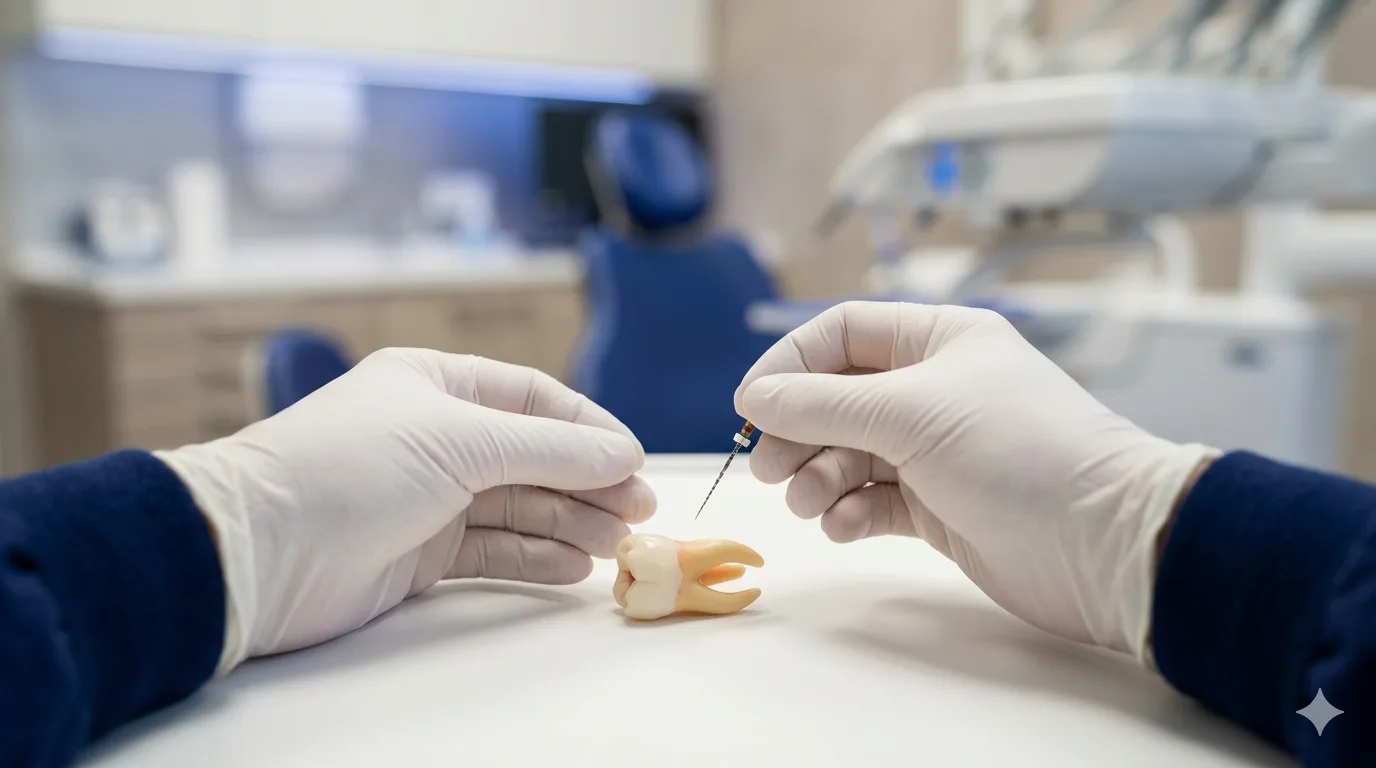
Spontaneous pain and sleep disruption are recognized clinical indicators of irreversible pulpitis. In a study published in the Journal of Endodontics, a clinical diagnosis of irreversible pulpitis matched the histologic state of the pulp in roughly 84% of teeth, while a diagnosis of a normal or reversibly inflamed pulp matched in about 97% of teeth, and infection reaching the pulp tissue was found in irreversibly inflamed pulps but never in healthy ones.2 This supports treating spontaneous, severe tooth pain as a reason for prompt specialist evaluation rather than watchful waiting, while recognizing that pulp diagnosis still benefits from a careful clinical examination.
Works Cited
- Levin LG, Law AS, Holland GR, Abbott PV, Roda RS. Identify and define all diagnostic terms for pulpal health and disease states. J Endod. 2009;35(12):1645-1657. doi:10.1016/j.joen.2009.09.032 Systematic Review
- Ricucci D, Loghin S, Siqueira JF. Correlation between clinical and histologic pulp diagnoses. J Endod. 2014;40(12):1932-1939. doi:10.1016/j.joen.2014.08.010 Prospective Study
- Lockhart PB, Tampi MP, Abt E, et al. Evidence-based clinical practice guideline on antibiotic use for the urgent management of pulpal- and periapical-related dental pain and intraoral swelling: a report from the American Dental Association. J Am Dent Assoc. 2019;150(11):906-921. doi:10.1016/j.adaj.2019.08.020 Systematic Review
- Robertson D, Smith AJ. The microbiology of the acute dental abscess. J Med Microbiol. 2009;58(Pt 2):155-162. doi:10.1099/jmm.0.003517-0
- Nair PN. Pathogenesis of apical periodontitis and the causes of endodontic failures. Crit Rev Oral Biol Med. 2004;15(6):348-381. doi:10.1177/154411130401500604