
Biting into food shouldn’t hurt. When it does, especially consistently, on the same tooth, it’s your body telling you something is wrong. The challenge is that several very different conditions can cause this symptom, from a simple bite adjustment to a tooth abscess that needs same-day treatment. More on the most common signs of a cracked tooth. We break down what a dental abscess feels like and how it is treated. See how to tell whether bite pain means you need a root canal.
Common Causes of Tooth Pain When Biting
Cracked Tooth Syndrome
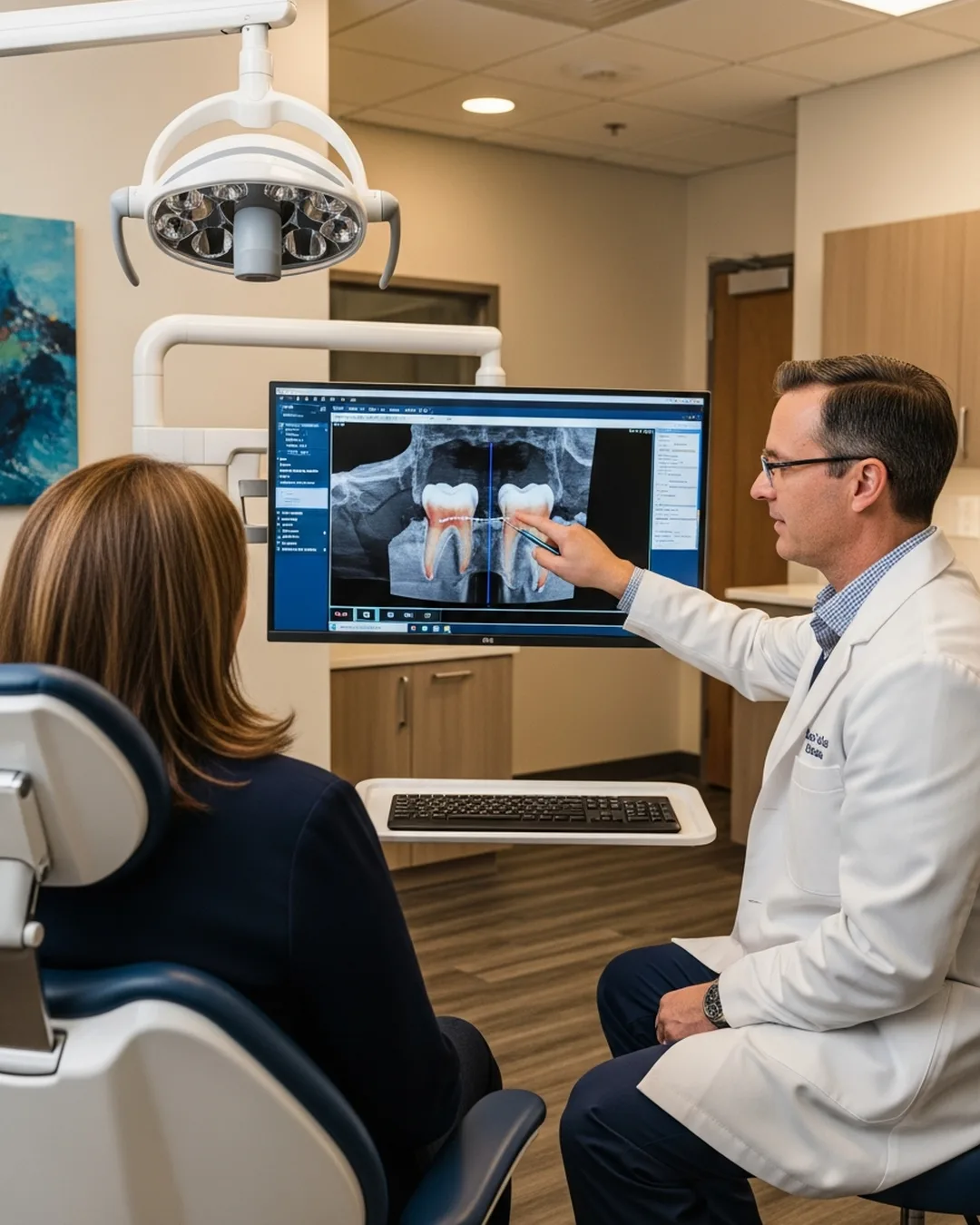
A crack in the tooth, often too small to see on an X-ray, can cause a sharp, momentary pain when biting in a specific direction or on a certain part of the tooth. A classic clue is pain that appears as you release the bite rather than while you press down.4 The crack flexes under pressure, stimulating the nerve. Cracked teeth don’t heal on their own. Depending on how far the crack extends, treatment ranges from a crown to a root canal to extraction. 3D CBCT (cone-beam CT, a low-dose 3D X-ray that lets us see the tooth and bone from every angle) imaging is often helpful to assess the extent of a crack and the bone around the root.
Dental Abscess / Pulp Infection
An infected tooth often causes severe pain when biting because pressure is transmitted to an inflamed or dying nerve, or to the abscess itself at the root tip. This pain is typically accompanied by other signs: spontaneous throbbing pain, sensitivity to heat, swollen gums, or a visible pimple-like bump on the gum. A root canal is needed to eliminate the infection and save the tooth. Learn whether a root canal hurts before you go.
Periapical Periodontitis
Inflammation or infection at the tip of the tooth root, called periapical (relating to the area surrounding the very tip of a tooth’s root) periodontitis (infection and inflammation at the root tip that has spread into the surrounding bone), causes the periodontal ligament to become acutely inflamed. The tooth becomes extremely tender to any biting pressure, even very light touch. This often occurs as a complication of an untreated pulp infection and requires endodontic treatment (treatment focused on the inside of the tooth, most commonly root canal therapy).
High or Loose Filling / Crown
A filling or crown that sits even slightly too high changes how your teeth come together. Over days to weeks, this uneven pressure can cause the tooth and surrounding ligament to ache, particularly when biting. The fix is usually quick: your dentist adjusts the filling height. If left unaddressed, prolonged bite imbalance can cause pulp damage over time.

Deep Cavity Approaching the pulp
Tooth decay that has reached or nearly reached the pulp chamber (the hollow space inside the crown of the tooth that houses the nerve and blood vessels) can cause significant pain with biting pressure. The pulp inside the tooth may be inflamed (pulpitis) even if the patient hasn’t noticed spontaneous pain yet. Catching this before the pulp becomes irreversibly damaged allows for a simpler restoration, but if decay has entered the pulp, a root canal is needed to clean out the infected tissue and seal the tooth. Decay can also make a tooth hurt with sweets.
Post-Treatment Sensitivity
Mild bite sensitivity for several days after a new filling, crown, or even cleaning is common and usually resolves on its own. The tooth and surrounding ligament need time to settle. If sensitivity persists beyond two weeks or worsens, contact your dentist, the restoration may need adjustment.
How Do Endodontists Diagnose the Cause?
Because multiple conditions produce similar symptoms, diagnosis requires more than a visual inspection. Cracked teeth in particular can be hard to pin down, since the symptoms vary so widely from person to person.2 At Mid-Florida Endodontics, our evaluation includes:
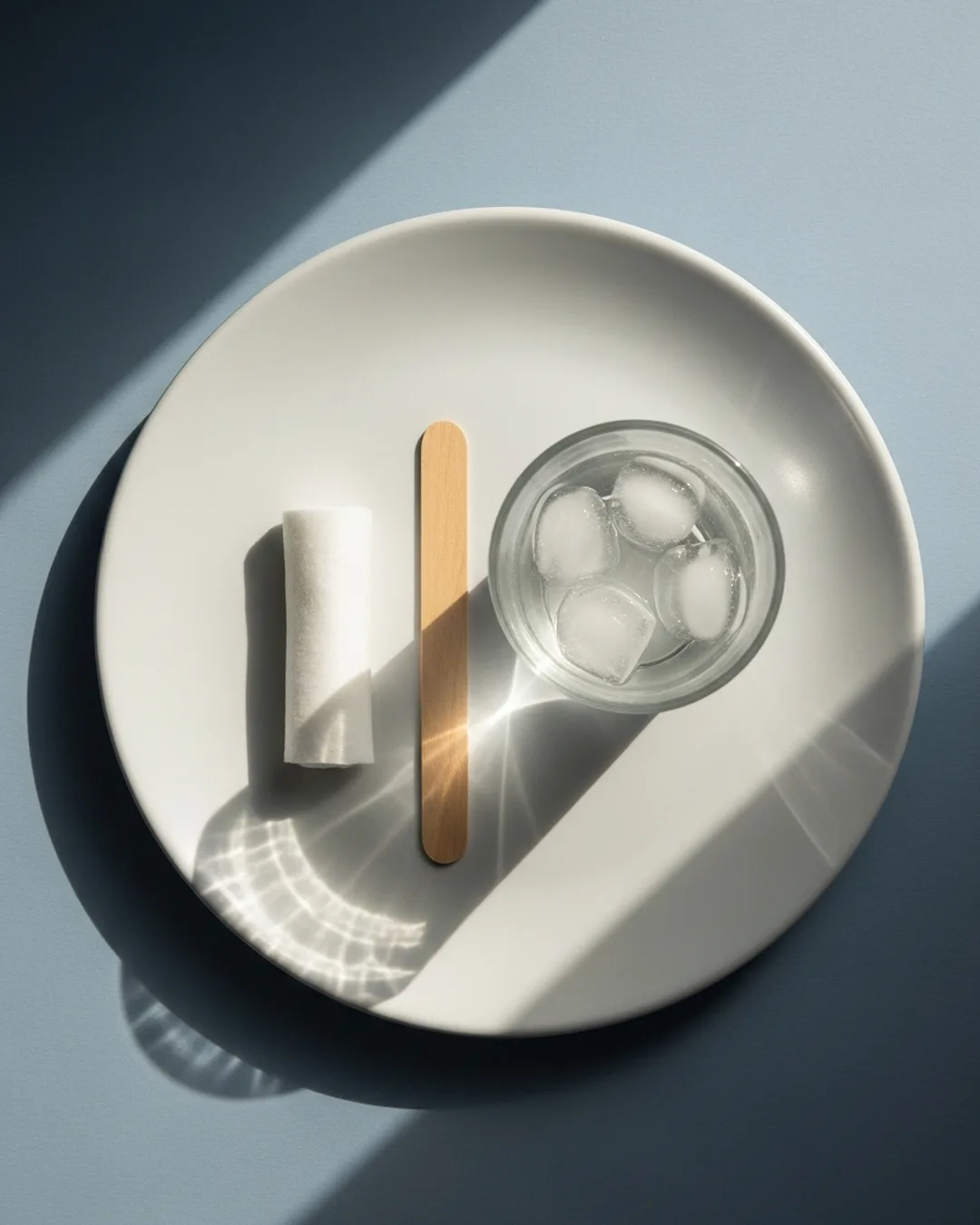
- Bite test (percussion): Tapping individual teeth and using a bite stick to isolate which tooth and which direction triggers pain. Pain that appears on release of the bite is a recognized clue to a cracked tooth.4
- Thermal testing: Applying cold or heat to assess pulp status, cold sensitivity that resolves quickly suggests reversible inflammation, while cold sensitivity that lingers well after the stimulus is removed points toward irreversible inflammation that may not settle on its own
- 3D CBCT imaging: Three-dimensional scans can reveal periapical infections, bone loss, and some crack-related changes that standard 2D X-rays miss
- Transillumination: Shining a light through the tooth to visualize cracks not visible under normal examination1
- Probing: Checking gum pocket depths around the tooth for signs of vertical root fracture. A deep, isolated pocket alongside a cracked tooth is linked to a poorer outlook for keeping it.3
This systematic approach helps us reach a clear, well-supported diagnosis, even for complex or long-standing cases.
When Should I See an Endodontist vs. My Regular Dentist?
See your general dentist first if pain is mild, recent, and coincides with a new filling or crown. They can adjust the bite and monitor the tooth.
See an endodontist, or ask for a referral, if:
- Pain when biting is severe, sharp, or has lasted more than a week
- You also have spontaneous or throbbing pain, heat sensitivity, or swelling
- Your general dentist has identified a crack or deep infection on imaging
- A previous treatment (filling or crown) hasn’t resolved the pain
A note on referrals: The recommended path is through your general dentist when possible. Your dentist coordinates your overall care, will handle the crown or restoration after any endodontic treatment, and can confirm the tooth is restorable before treatment begins. Some insurance plans also require a referral for specialist coverage. For emergencies, contact us directly, we will work with your dentist from there.
Cracked tooth syndrome is among the most diagnostically challenging conditions in endodontics because its symptoms vary so much from patient to patient.2 A characteristic feature is discomfort on chewing that eases once the biting pressure is withdrawn, which helps point an examiner toward the right tooth.4 When a cracked tooth does need root canal treatment, the outlook for keeping it is generally favorable: a 5-year clinical study reported a 2-year survival rate of about 90% after root canal therapy, with deep gum pocketing tied to a lower survival rate.3 A 2024 systematic review and meta-analysis further found that protecting a cracked tooth with full cuspal coverage, rather than a direct filling alone, was associated with a meaningfully lower risk of pulp complications and extraction.5
Bite pain that persists or worsens over a few days deserves a specialist evaluation. An MFE endodontist at your nearest location can identify the cause quickly. Find a location.
Works Cited
- Banerji S, Mehta SB, Millar BJ. Cracked tooth syndrome. Part 1: aetiology and diagnosis. Br Dent J. 2010;208(10):459-463. doi:10.1038/sj.bdj.2010.449
- Türp JC, Gobetti JP. The cracked tooth syndrome: an elusive diagnosis. J Am Dent Assoc. 1996;127(10):1502-1507. doi:10.14219/jada.archive.1996.0060
- Kang SH, Kim BS, Kim Y. Cracked teeth: distribution, characteristics, and survival after root canal treatment. J Endod. 2016;42(4):557-562. doi:10.1016/j.joen.2016.01.014
- Lynch CD, McConnell RJ. The cracked tooth syndrome. J Can Dent Assoc. 2002;68(8):470-475.
- Zhang S, Xu Y, Ma Y, Zhao W, Jin X, Fu B. The treatment outcomes of cracked teeth: a systematic review and meta-analysis. J Dent. 2024;142:104843. doi:10.1016/j.jdent.2024.104843 Systematic Review