Previously treated teeth
Root Canal Retreatment
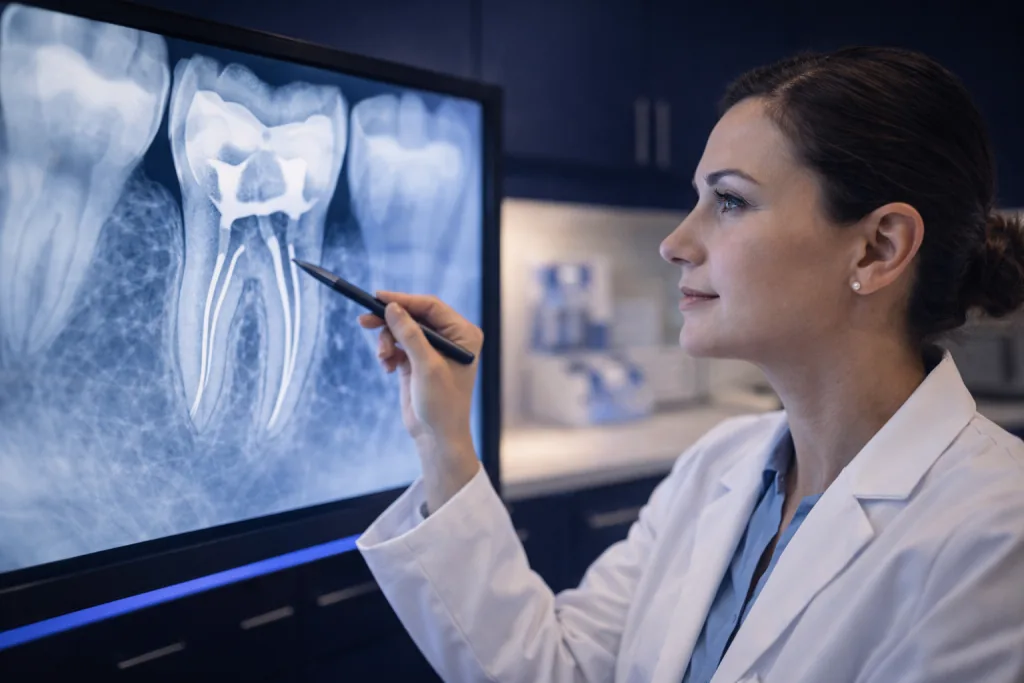
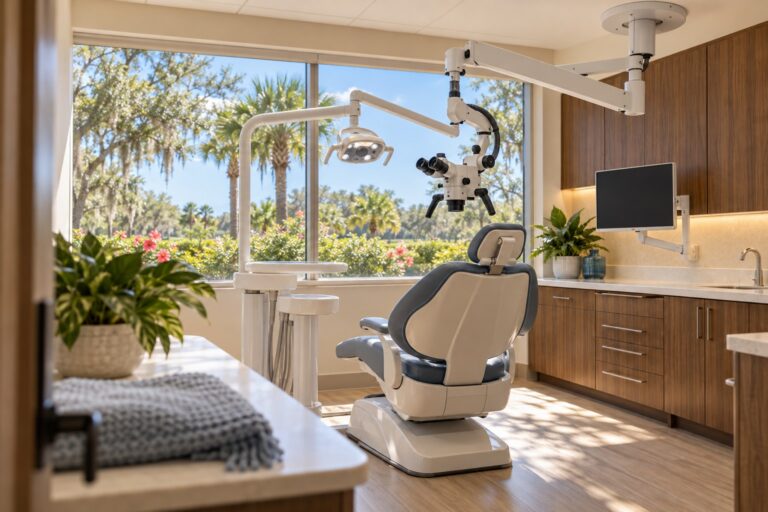
Root canal retreatment is the second look a tooth gets when an earlier treatment did not fully settle it. Your endodontist works under a surgical microscope with 3D CBCT imaging, looking for the cause: an extra canal, a hidden crack, or a seal that broke down. Your natural tooth stays in place.
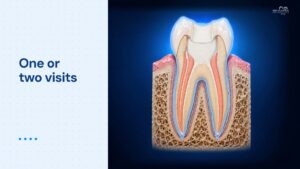
An endodontist can often treat a failed root canal and save your natural tooth. Retreatment reopens the tooth, removes the old filling material, cleans the canals again, and reseals them. One study followed over 4,700 retreated teeth. After five years, about 9 in 10 were still in place (Salehrabi and Rotstein, 2010).
See it step by step
What happens during root canal retreatment
When a treated tooth flares up again, retreatment is the chance to find out why and fix it. At Mid-Florida Endodontics, an endodontist uses 3D CBCT imaging and a surgical operating microscope to look for the cause: an extra canal, a hidden crack, or a seal that broke down. Correcting it lets most retreated teeth keep working for many years, without removing the tooth.
Why Would a Root Canal Need to Be Retreated?
Root canal treatment has a high long-term success rate, but a small percentage of teeth develop new problems or fail to fully heal. When symptoms return, or imaging reveals ongoing bone disease, retreatment is almost always the appropriate next step before considering extraction.
The most common reasons retreatment is needed:
Missed or Untreated Canal
The most common cause. Some teeth have additional canals not visible on standard 2D X-rays, particularly the MB2 canal in upper first molars. A canal left untreated harbors bacteria that perpetuate infection. 3D CBCT imaging at retreatment reliably identifies what was missed.
Canal Not Fully Cleaned or Sealed
If a canal was not cleaned to its full length, or if the obturation (the step where cleaned root canals are filled and sealed to prevent bacteria from re-entering) left voids, bacteria can survive and multiply over time. This is often detected on follow-up X-rays as a periapical (relating to the area surrounding the very tip of a tooth’s root) lesion (an area of infection and bone damage at the tip of a tooth’s root, visible on X-rays) that fails to resolve or enlarges.
Recontamination Through a Leaking Restoration
A crown or filling that fractures, leaks at the margins, or is delayed beyond the recommended window allows saliva and bacteria to re-enter the sealed canal system. This is one of the most preventable causes of retreatment, which is why prompt crown placement after root canal treatment is essential.
New Decay Reaching the Canal System
New cavities that breach the crown and reach the previously treated canal space introduce fresh bacterial contamination, requiring retreatment to re-sterilize the system.
Complex Anatomy Not Addressed Initially
Curved canals, calcified canals, or internal resorption (a process where the body’s own cells begin breaking down tooth structure, can affect the root from the inside or outside) can present challenges that were not fully managed in the initial treatment. Specialist retreatment with microscope visualization and 3D imaging specifically addresses these complexities.
What Are the Signs a Root Canal Has Failed?
- Pain or sensitivity in a tooth that had a root canal months or years ago
- Swelling or a recurring pimple-like bump on the gum near the treated tooth
- A periapical lesion (dark shadow at the root tip) visible on imaging that was not there before or has grown since treatment
- The tooth feels different when biting, tenderness or a change in sensation
- No symptoms at all, but routine imaging reveals a new or enlarging periapical lesion
Not all of these symptoms automatically mean retreatment, some represent normal healing variation. A consultation with our specialists, including 3D CBCT imaging, provides a definitive answer.
How Is Retreatment Different From the Original Root Canal?
| Factor | Initial Root Canal | Retreatment |
|---|---|---|
| Starting point | Untreated pulp tissue | Existing filling material must first be removed |
| Complexity | Variable | Often more technically demanding, calcified canals, posts, broken instruments possible |
| Imaging | CBCT + periapical X-ray | CBCT essential, identifies what original treatment missed |
| Time | 60-90 minutes typically | Often longer, one or two visits depending on complexity |
| Microscope use | Used on every case | Even more critical, retrieving posts, finding missed canals |
| Goal | Remove pulp, seal canals | Remove old material, re-clean, re-seal, resolve residual infection |
Retreatment usually starts by reopening the tooth through your crown. Then we take out the old filling, a rubber-like material called gutta-percha. Once the canals are cleared, our specialists use the surgical microscope to inspect the full canal system, identifying missed canals, removing separated instruments if present, and resolving any calcification or blockage. The canals are then re-cleaned, re-shaped, re-irrigated, and sealed again. The tooth then requires a new permanent restoration from your general dentist, the type will depend on your specific situation and what remains of the tooth structure.
What Are the Success Rates for Retreatment?
Retreatment vs. Extraction and Implant
Research consistently shows that successful retreatment produces outcomes comparable to implant replacement, with the significant advantage of preserving the natural tooth, the surrounding bone, and the proprioceptive function of the periodontal ligament (the thin layer of fibers connecting the tooth root to the jawbone, which acts as a shock absorber and contains pressure-sensitive nerve fibers). When retreatment is feasible, it is almost always the preferred first option over extraction. Extraction is permanent; retreatment preserves the option of keeping your natural tooth.
Success rates for retreatment vary depending on the reason for failure, the remaining tooth structure, and the complexity of the case. At Mid-Florida Endodontics, 3D CBCT imaging before retreatment allows us to give you an accurate prognosis assessment before treatment begins, so you can make an informed decision about whether retreatment is the right path for your specific tooth.

When Is Retreatment Not the Right Option?
Retreatment is not always appropriate. If the tooth has a vertical root fracture, insufficient remaining structure for a crown, or severe bone loss that compromises long-term prognosis, extraction may be the better outcome, with implant or bridge options discussed with your general dentist or oral surgeon afterward. Our specialists will give you a direct, honest assessment, we perform endodontic treatment only, and will not recommend retreatment when extraction and replacement is genuinely the superior option for your situation.
Frequently asked questions
What is root canal retreatment?
Why would a root canal need retreatment?
Is retreatment more painful than the first root canal?
How successful is root canal retreatment?
How long does a retreatment appointment take?
What are the alternatives to retreatment?
How long does a retreated tooth last?
Will my insurance cover retreatment?
Second chance for your treated tooth.
If your root canal is failing or the infection came back, retreatment saves your natural tooth in most cases.
Related care
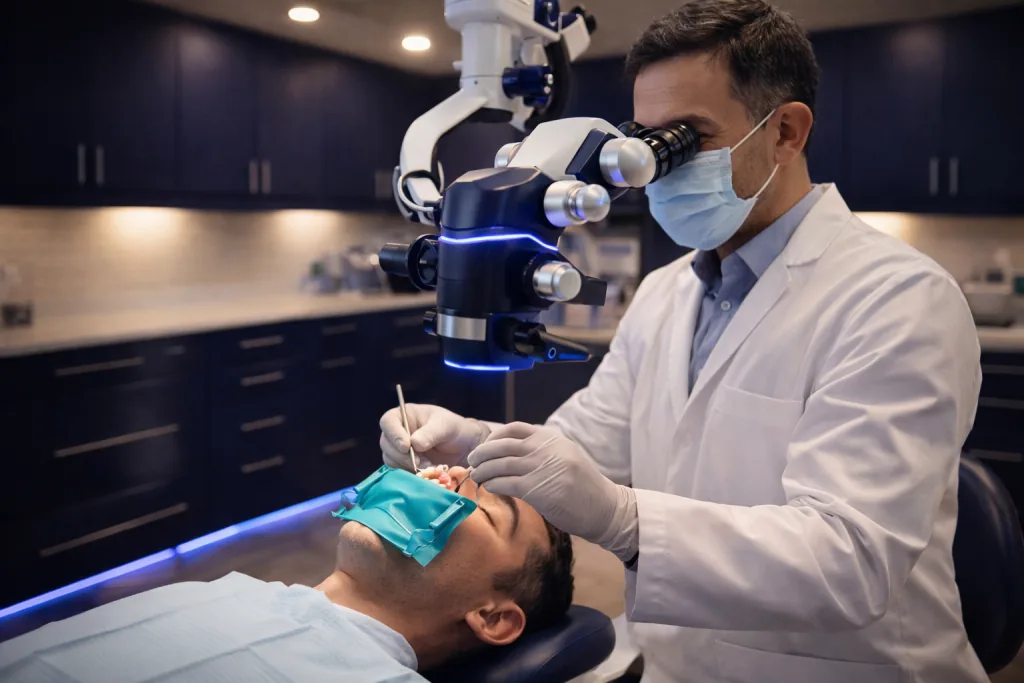
Root Canal Therapy
Root canal therapy is how a tooth with an infected nerve is saved instead of pulled. Your endodontist treats it under a surgical microscope with 3D CBCT imaging and rubber dam isolation, seeing every canal clearly. Your dentist can refer you, or you can call any of our offices directly. Learn more →
Apicoectomy (Periapical Surgery)
An apicoectomy is the option that keeps a treated tooth in place when infection at the root has not cleared. Your endodontist plans it from a 3D CBCT scan and works under a surgical microscope. You feel pressure but no pain under local anesthesia, and you are home resting within a couple of hours. Learn more →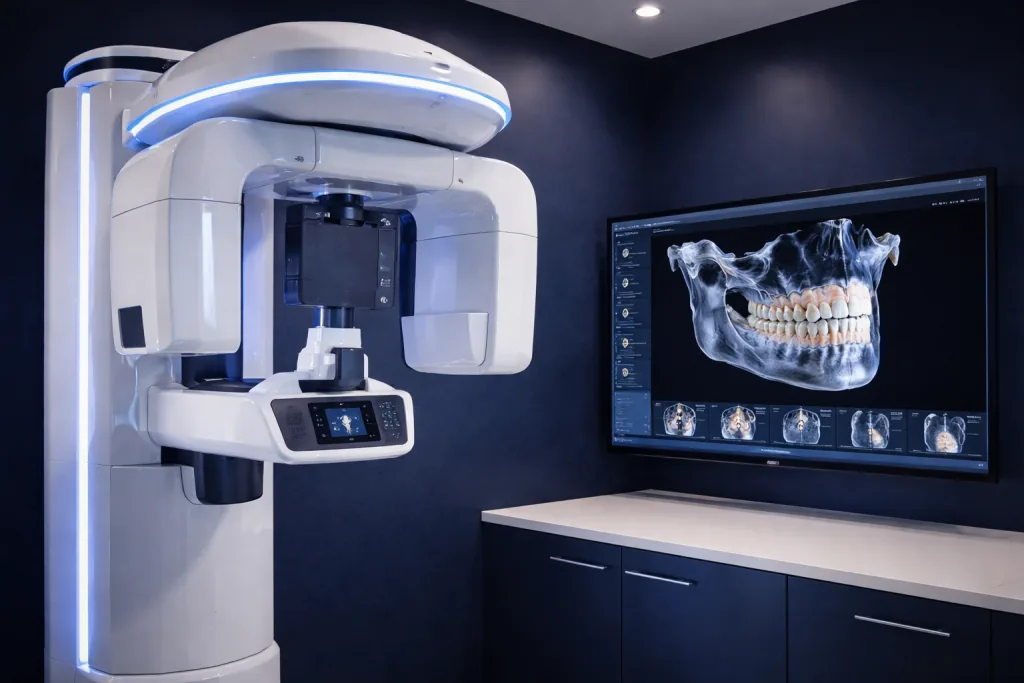
3D CBCT Imaging in Endodontics
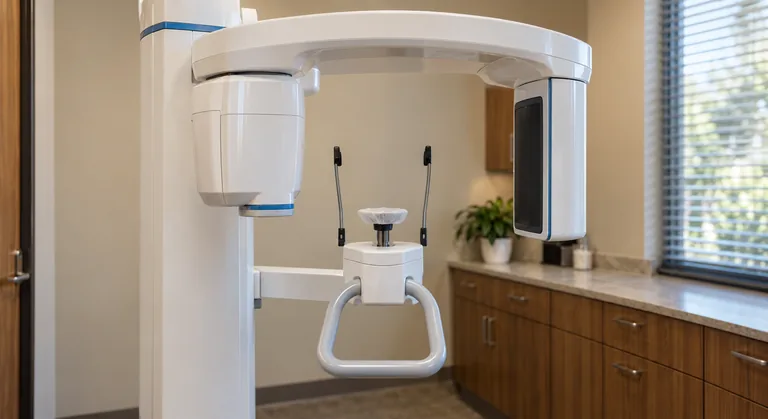
3D CBCT imaging happens during your appointment, without a separate visit and with no preparation on your part. You are positioned in the scanner, and it spins around your head. There is no tunnel, and the scan is done in seconds. Your endodontist then reviews the images with you before treatment begins. Learn more →Specialist Root Canal Retreatment near you
-
Root Canal Retreatment in Clermont
Learn more → -
Root Canal Retreatment in Daytona Beach
Learn more → -
Root Canal Retreatment in Dr. Phillips, Orlando
Learn more → -
Root Canal Retreatment in Kissimmee
Learn more → -
Root Canal Retreatment in Lake Nona, Orlando
Learn more → -
Root Canal Retreatment in Longwood
Learn more → -
Root Canal Retreatment in Maitland
Learn more → -
Root Canal Retreatment in Mount Dora
Learn more → -
Root Canal Retreatment in Orange City
Learn more → -
Root Canal Retreatment in The Villages
Learn more → -
Root Canal Retreatment in Waterford Lakes, Orlando
Learn more → -
Root Canal Retreatment in Winter Garden
Learn more →




From the blog
Keep reading.
-
 Recovery & Aftercare
 How Long Does a Root Canal Last?
How long does a root canal last? With proper restoration, root canal treated teeth can last a lifetime. Learn what affects longevity and how to protect your treated tooth in Florida. -
 Recovery & Aftercare
 Is Pain Normal After a Root Canal?
Is pain normal after a root canal? Mild soreness for 2-3 days is expected. Learn what's normal, what signals a problem, and when to call your Florida endodontist. -
 Procedures & Technology
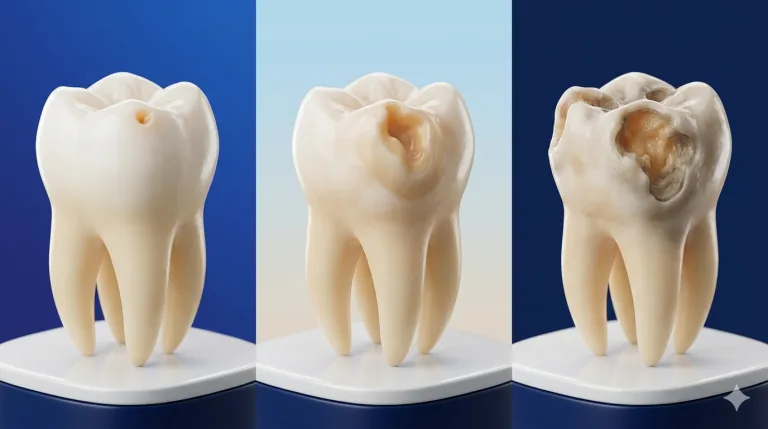
 What Happens If You Delay a Root Canal?
What happens if you delay a root canal? Infection spreads, bone is destroyed, and a treatable tooth can become unsalvageable. Learn the real cost of waiting from Florida's endodontists. -
 Root Canal Basics
 Does a Root Canal Hurt?
Does a root canal hurt? Modern root canal treatment is no more painful than a filling. Learn what to expect from Florida's root canal specialists. -
 Procedures & Technology
 Why Root Canal Treatment Saves Teeth
Why does root canal treatment save teeth? By removing infected tissue while preserving the natural tooth structure, root canals restore function and prevent bone loss. Learn more from Florida's endodontic specialists. -
 Recovery & Aftercare
 How Long Does Root Canal Recovery Take?
How long does root canal recovery take? Recovery takes up to a week on average. Full bone healing takes months. Learn what affects recovery time from Florida's endodontic specialists.