Root canal recovery has two distinct phases that patients often conflate: how long until you feel comfortable again, and how long until the tooth is fully healed. Understanding both helps set realistic expectations and ensures you take the right steps at each stage.
The Two Phases of Root Canal Recovery
Comfort Recovery (Days to About One Week)
This is what most people mean when they ask about recovery time. The anesthesia wears off within 2-4 hours. Most patients feel significantly better within 2 to 3 days, but soreness and tenderness for up to a week is completely within the normal range. Every patient is different. Cases with significant pre-existing infection or inflammation may take slightly longer to feel comfortable. Patients who cannot take NSAIDs due to medical conditions (blood thinners, kidney issues, GI concerns) may find tenderness persists longer, this is expected, and it does not mean something went wrong. The key signal throughout: overall improvement, not worsening.
Biological Healing (Weeks to Months)
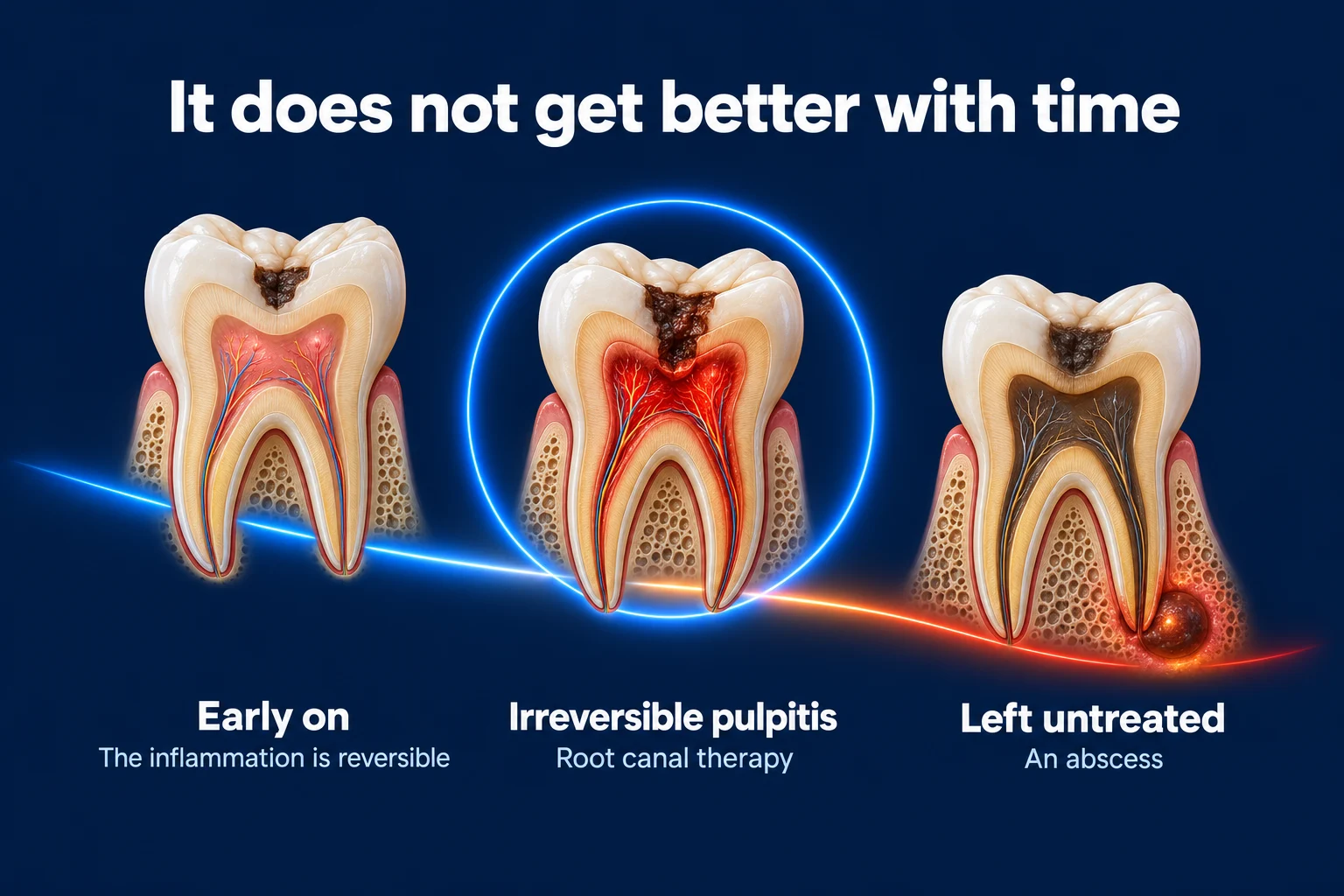
Even after you feel fine, healing continues beneath the surface. The periapical (relating to the area surrounding the very tip of a tooth’s root) tissues, the bone and ligament surrounding the root tip, were inflamed or infected prior to treatment and need time to fully regenerate. This phase is not felt by the patient in most cases, but it is monitored with follow-up radiographs. Long-term radiographic studies show that the majority of healing periapical lesions already show clear signs of repair by about one year, with smaller lesions resolving sooner and larger lesions from longstanding infections sometimes taking considerably longer to fully close.1 Patient comfort almost always returns well before this biological healing is complete on the radiograph.
Recovery Timeline by Stage
Anesthesia Wears Off
Numbness fades gradually. Mild soreness begins. Take ibuprofen proactively at this stage, before pain peaks.
Peak Discomfort
The first 24 hours are typically the most uncomfortable. Over-the-counter ibuprofen manages this well for most patients, take it proactively before anesthesia wears off. Patients who cannot take NSAIDs due to medical conditions should discuss alternatives with their endodontist ahead of time, as tenderness may last longer without anti-inflammatory support.
Most Patients Feeling Significantly Better
Most patients notice clear improvement by this point. However, if soreness and tenderness are still present at day 3, that is completely normal, don’t worry. The healing window extends to about a week for many patients. What matters is the overall trend: gradual improvement, not worsening.
Continued Healing. Some Tenderness Still Possible
Some patients are fully comfortable by this stage; others still notice mild bite tenderness or gum soreness. Both are within the normal range. Patients who cannot take anti-inflammatory medication may still feel some tenderness here, healing is still progressing. Avoid hard chewing on the treated side until your final restoration is placed. If there is no improvement at all by the end of the first week, or symptoms are worsening, contact your endodontist.
Crown Placement
Visit your general dentist for your final permanent restoration. This is a critical step, the temporary filling is not long-term protection. The restoration restores full strength and function, and a good-quality permanent restoration is one of the factors that measurably improves the long-term outcome of a treated tooth.3

Bone and Tissue Healing
Periapical bone regenerates around the root tip. Monitored with follow-up radiographs at 6 and 12 months. Patient is asymptomatic during this phase in successful cases. When the canal is well cleaned, sealed, and protected with a sound restoration, the great majority of treated roots and teeth stay healthy and in function over the long term.4
Factors That Affect How Long Recovery Takes
How to Speed Up Your Recovery
- Take ibuprofen at the first sign of soreness, before pain peaks
- Stick to soft foods for the first 48 hours and avoid the treated side
- Avoid smoking and alcohol in the first 48 hours
- Get adequate sleep, healing is faster with rest
- Schedule your final restoration appointment within 30 days, the sooner the better
- Attend your follow-up imaging appointment so healing is confirmed
- Contact your endodontist promptly if symptoms worsen after day 3, early intervention for any complications leads to faster resolution
Periapical healing following root canal treatment follows a predictable biological trajectory. A prospective radiographic study published in the International Endodontic Journal followed treated roots yearly and found that signs of healing were visible in the large majority of healing lesions within the first year, while complete resolution of some longstanding lesions required up to four years.1 In practice, patient symptoms typically resolve well ahead of complete radiographic healing, which is why feeling comfortable is not the same as being fully healed. Your endodontist confirms healing with follow-up imaging rather than by symptoms alone.
If something feels off after treatment, our teams across Florida are available for follow-up. Find your nearest MFE location.
Works Cited
- Ørstavik D. Time-course and risk analyses of the development and healing of chronic apical periodontitis in man. Int Endod J. 1996;29(3):150-155. doi:10.1111/j.1365-2591.1996.tb01361.x Prospective Study
- Sjögren U, Hagglund B, Sundqvist G, Wing K. Factors affecting the long-term results of endodontic treatment. J Endod. 1990;16(10):498-504. doi:10.1016/S0099-2399(07)80180-4 Prospective Study
- Ng YL, Mann V, Rahbaran S, Lewsey J, Gulabivala K. Outcome of primary root canal treatment: systematic review of the literature. Part 2. Influence of clinical factors. Int Endod J. 2008;41(1):6-31. doi:10.1111/j.1365-2591.2007.01323.x Systematic Review
- Fernández R, Cardona JA, Cadavid D, Álvarez LG, Restrepo FA. Survival of endodontically treated roots/teeth based on periapical health and retention: a 10-year retrospective cohort study. J Endod. 2017;43(12):2001-2008. doi:10.1016/j.joen.2017.08.003 Prospective Study
- Wu MK, R’oris A, Barkis D, Wesselink PR. Prevalence and extent of long oval canals in the apical third. Oral Surg Oral Med Oral Pathol Oral Radiol Endod. 2000;89(6):739-743. doi:10.1067/moe.2000.106344