When can you eat after a root canal?
You can eat as soon as the numbing medicine wears off. There is no waiting period past that. You are not waiting for the tooth. You are waiting for your lip, cheek, and tongue, which stay numb for a few hours and cannot feel pressure or heat.
Numbness fades on its own. Press your lip gently and sip a little cool water. If your lip feels normal and you can tell where the water is, you are ready to eat. If it still feels thick or absent, give it more time.
Two things get people into trouble while they are numb. Biting the inside of the cheek is the common one, and it can leave a sore spot that outlasts the tooth. Hot coffee or soup is the other, because numb tissue does not register heat until the skin is already burned. Both are avoidable by waiting.
For the hour by hour picture of the day after treatment, see what to expect after a root canal and how long recovery takes.
Can you eat rice after a root canal?
Yes. Rice is one of the better first meals after a root canal. It is soft, it needs little chewing, and it carries no crunch that could stress the tooth. Wait until the numbness is gone, let it cool to warm, and chew on the side away from the treated tooth.
Plain white rice, brown rice, sticky rice, congee, and rice porridge are all fine. Fried rice works too if it is soft. Pick out the crisp edges. Rice crackers and puffed rice snacks are crunchy, so save those for later.
Loose grains can drift into the space around a temporary filling. That is not harmful. Swish gently with warm water after the meal and it clears.
What can you eat after a root canal?
Anything soft and comfortable. For the first day or two, pick foods that need little chewing and that sit at a mild temperature. Most patients return to a normal diet within a couple of days. The only lasting limit is hard chewing on the treated tooth.
Easy first meals
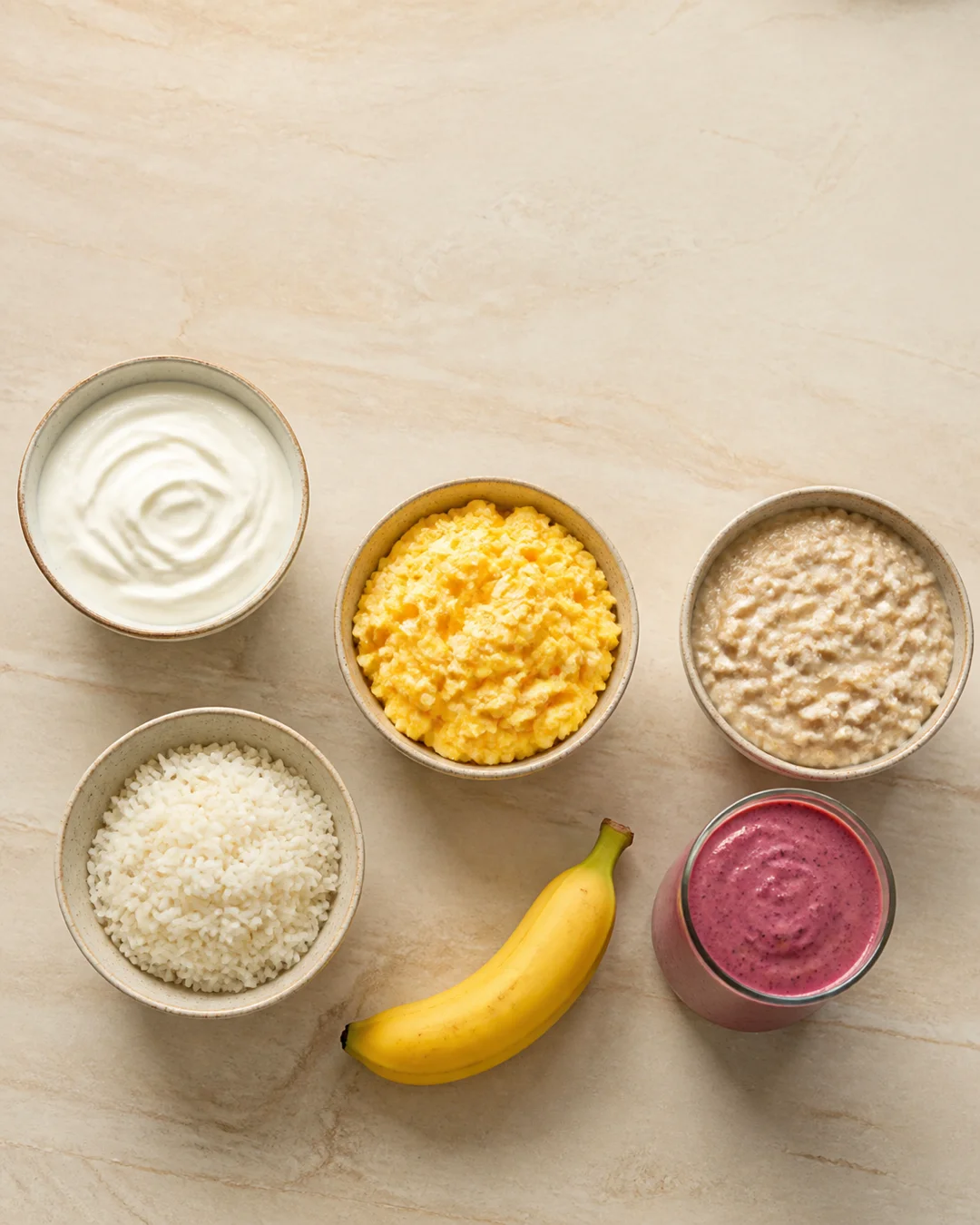
- Breakfast: scrambled eggs, oatmeal, yogurt, a smoothie, or soft pancakes.
- Lunch and dinner: soup, rice, pasta, mashed potatoes, cooked vegetables, flaky fish, shredded chicken, or beans.
- Snacks and sweets: applesauce, bananas, pudding, avocado, hummus, or ice cream once cold stops bothering the tooth.
Soft does not have to mean light. Eggs, beans, fish, yogurt, and smoothies all give you a real meal without asking much of your teeth. Eating well is more comfortable than skipping meals, and there is no reason to go hungry after a root canal.
Do you have to avoid straws?
No. The no straw rule belongs to tooth extractions, where suction can disturb a healing socket. A root canal leaves your tooth in place, so there is no socket to protect. Use a straw if you want one.
What about coffee and alcohol?
Coffee is fine once you can feel your lip again. Let it cool from steaming to warm for the first day, since the tooth can be sensitive to temperature. Dark drinks such as coffee, tea, and red wine can stain a temporary filling, and that stain leaves with the temporary. If you are taking medication for soreness, ask your provider before you drink alcohol.
What foods should you avoid after a root canal?
Avoid hard, crunchy, and sticky foods, and skip extreme temperatures for the first day or two. This is about the state the tooth is in afterward. Most treated teeth carry a temporary filling and have not been rebuilt yet, so they are not ready for full force.
Hard and crunchy
Ice, nuts, hard candy, popcorn kernels, crusty bread, raw carrots, and tortilla chips all put force on one small point. A tooth waiting for its crown is the wrong place for that. These foods come back after the permanent restoration is in.
Sticky and chewy
Caramel, taffy, chewing gum, gummy candy, and dried fruit pull as you chew. A temporary filling is made to come out easily, which is what makes it easy to pull loose. Keep sticky foods off that tooth until the temporary is replaced.
Hot and cold
Steaming soup, hot coffee, ice water, and ice cream can set off a short zing in the first day or two. Temperature sensitivity settles as the area calms down. Warm and cool are comfortable in the meantime.
How long do you need to eat soft foods?
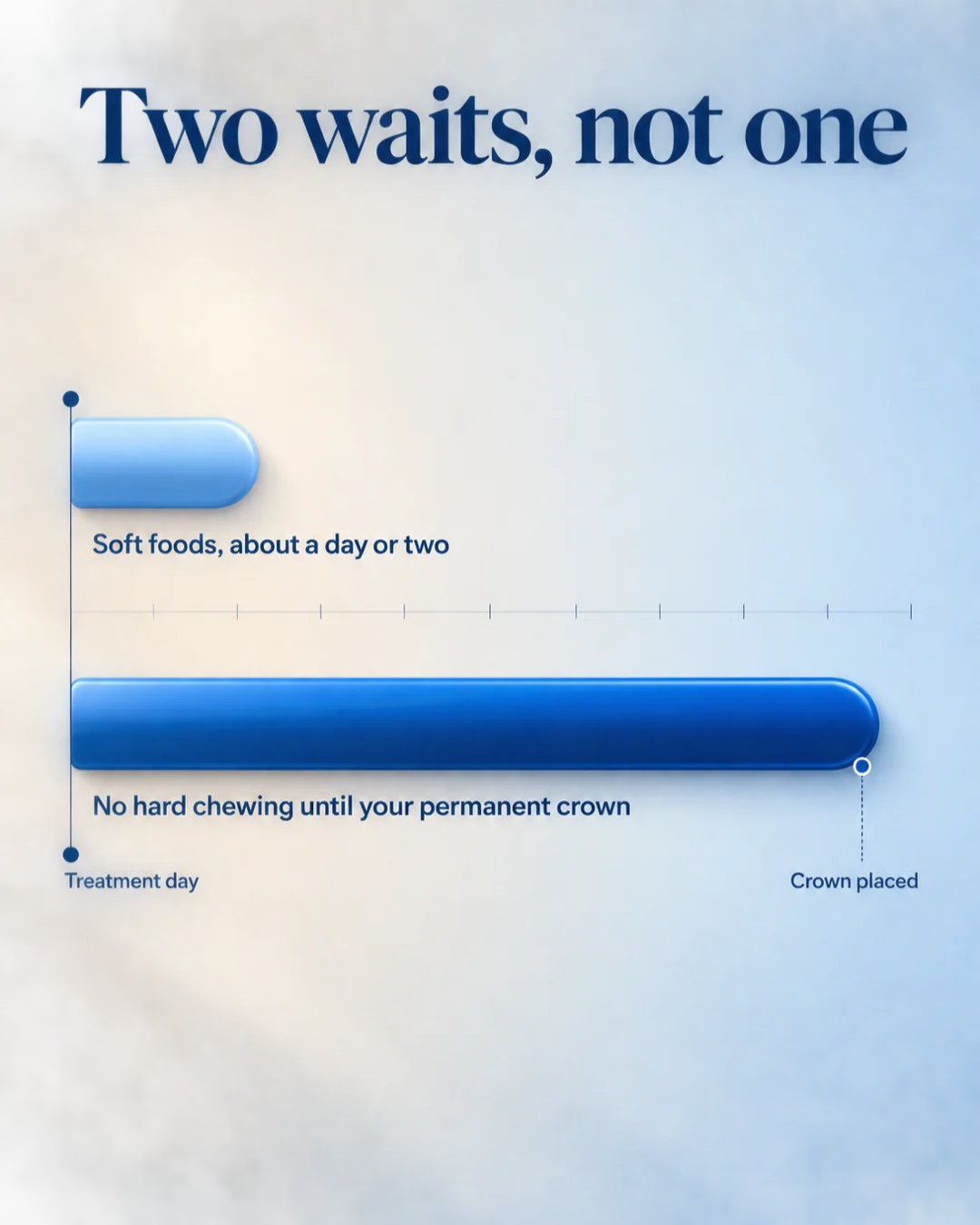
About a day or two, for comfort. Soreness around the tooth settles quickly, and once chewing feels normal you can eat what you like on the other side. There is a second clock running, though, and it is a longer one.
Soft foods are about comfort. Hard chewing on the treated tooth is about protection. The comfort limit ends in a couple of days. The protection limit ends when your general dentist places the permanent crown or filling. Between those two points you can eat a normal diet, and the treated tooth sits out the hard work.
Which side should you chew on?
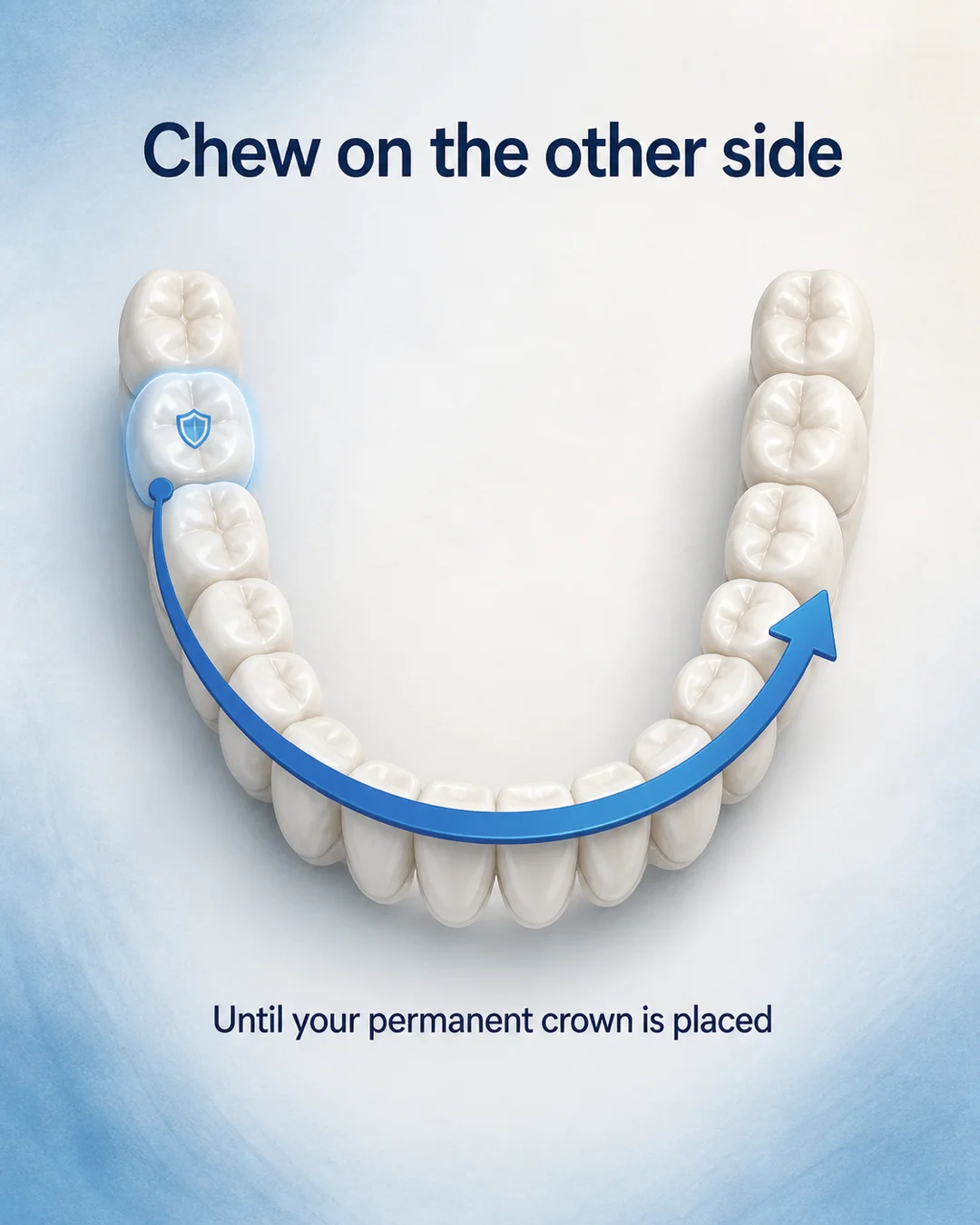
Chew on the opposite side from the treated tooth until your permanent crown or filling is placed. Food stays away from the temporary that way, and the tooth is not asked to take full biting force before it has been rebuilt. If you forget once, nothing is ruined. Move to the other side and carry on.
Cutting food into smaller pieces makes this easier than it sounds. So does picking foods that need no strong bite. Front teeth are the exception. If the treated tooth is a front tooth, avoid biting into apples, corn on the cob, and thick sandwiches, and use your back teeth instead.
When can you chew normally on that tooth again?
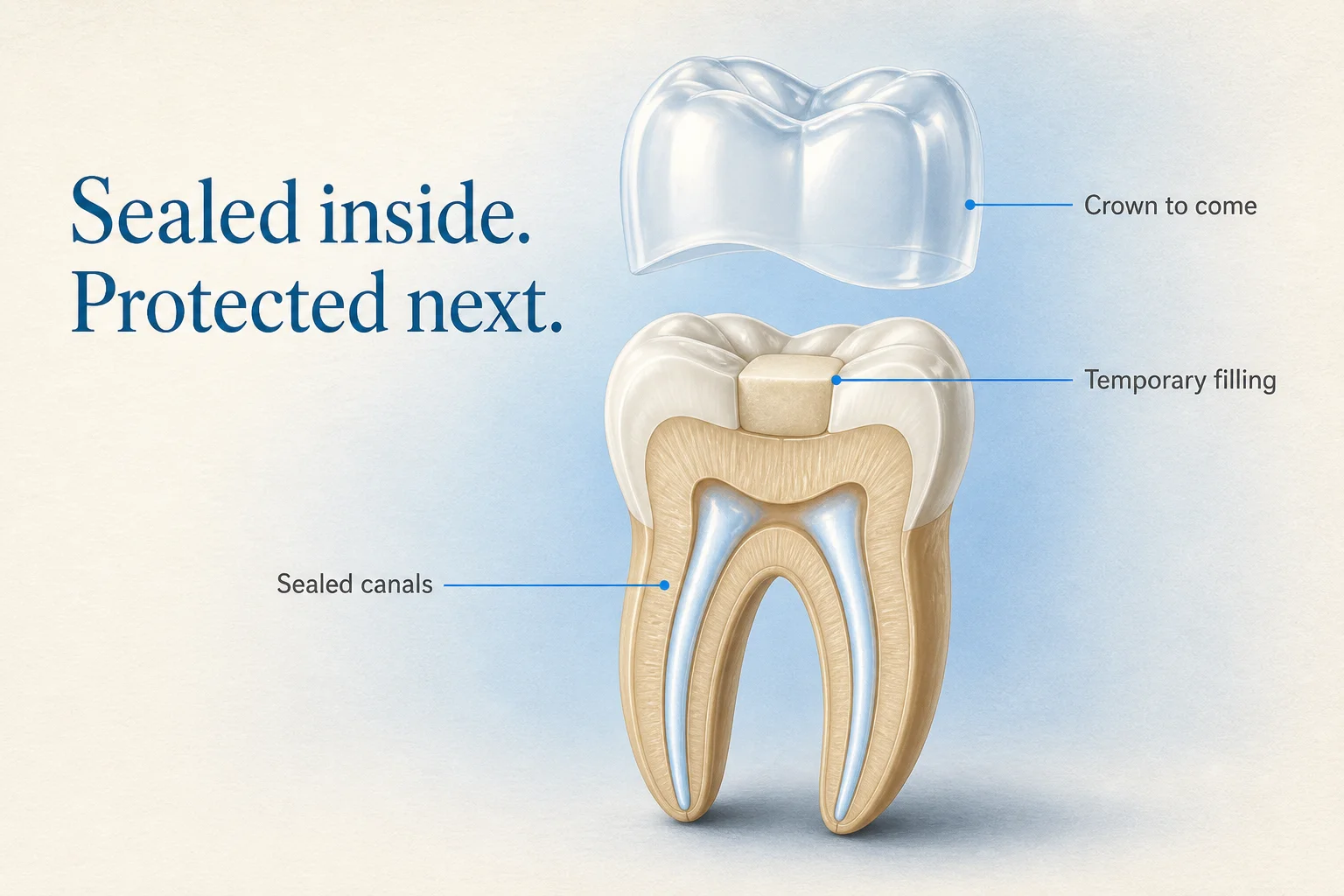
You can chew normally once your dentist places the permanent restoration (the crown or filling that rebuilds the tooth). Root canal therapy cleans and seals the inside of the tooth. It does not replace the tooth structure that decay, a crack, or treatment took away. The crown puts that strength back.
That is why hard chewing waits. Ask your general dentist to schedule the restoration appointment soon after your treatment. The stretch between the root canal and the crown is when the tooth has the least protection, so keep it short.
If your temporary filling comes out
Call your endodontist. This happens now and then, often during a meal, and it is fixable. Stop chewing on that side, keep the area clean, and rinse with warm salt water. A temporary is meant to be replaced, so a lost one is an appointment rather than an emergency.
Should you eat before your root canal appointment?
Yes, eat a normal meal before you come in. Your appointment takes a while, and your lip stays numb for a few hours afterward, so a meal beforehand keeps you comfortable. Skip it only if your endodontist told you otherwise, for example if you are scheduled for sedation (medicine that helps you relax during treatment). If you are unsure, call the office and ask.
When to call us about eating
Most eating questions settle themselves within a few days. Call your MFE office if any of these come up.
- The treated tooth feels tall or hits first when you close your bite.
- You cannot bite on that side at all after several days.
- The temporary filling comes out, cracks, or feels rough.
- A piece of the tooth breaks off while you are eating.
- Swelling makes it hard to open your mouth or swallow.
A tooth that feels tall is common and quick to fix. We smooth the bite in a few minutes, and eating gets comfortable again.
Pain questions that are not about food live on is pain normal after a root canal. The comfort of treatment itself is covered on does a root canal hurt.
This page is general education, not a diagnosis. Follow the instructions your endodontist gave you, and call your nearest MFE location with any question about your own treatment.