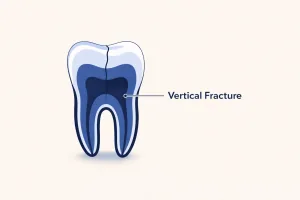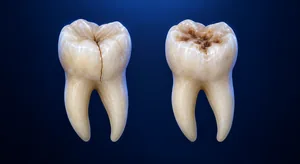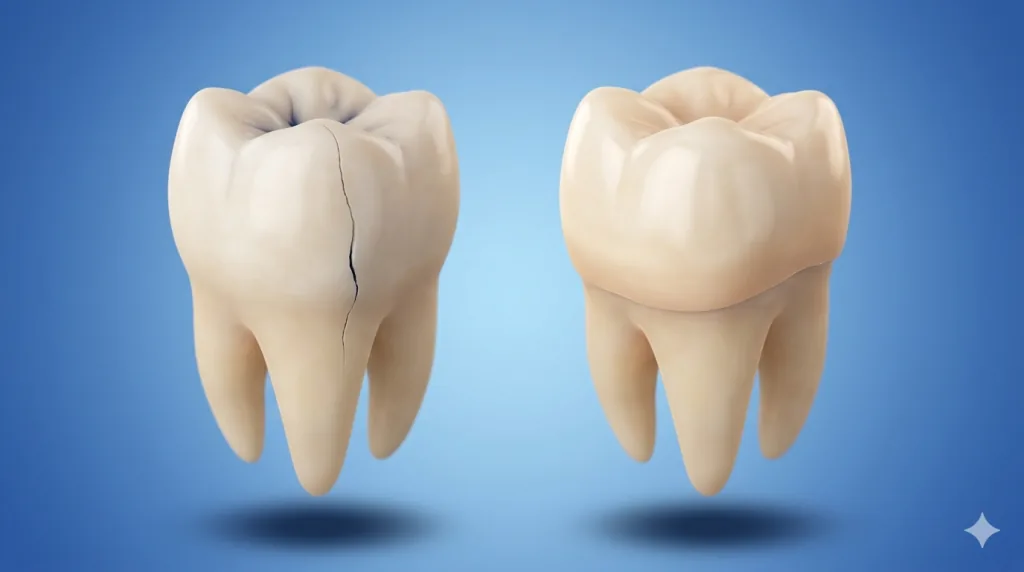
It’s a question we hear often: “If I’m careful about what I eat, will this crack eventually go away?” The honest answer is no. But the more important answer is that what you do next has enormous consequences for whether you keep the tooth. See how to tell whether you have a crack or a cavity.
The difference between a tooth that is saved with a crown and a tooth that is extracted often comes down to how quickly a crack is treated. Because cracked teeth produce a wide range of symptoms that do not form a single reliable pattern, an accurate diagnosis from a specialist matters.1 Here is what you need to know.
Why Teeth Cannot Heal Themselves
Bone has a rich blood supply and contains living cells, osteoblasts, that continuously repair microscopic damage. Tooth enamel, by contrast, is the hardest substance in the human body but also the most biologically inert. It is produced by cells called ameloblasts that are lost after the tooth erupts. Once enamel is damaged, there is no cellular mechanism to repair it. This is why the dental literature describes prevention, diagnosis, and restorative treatment, never spontaneous healing, as the options for a cracked tooth.2
Dentin, the layer beneath enamel, is slightly more dynamic, odontoblast cells lining the pulp (the soft living tissue inside the tooth, containing nerves and blood vessels) can produce small amounts of reparative dentin in response to mild irritation. But this response is limited and slow, and provides no structural repair of a crack. A crack in dentin is permanent.
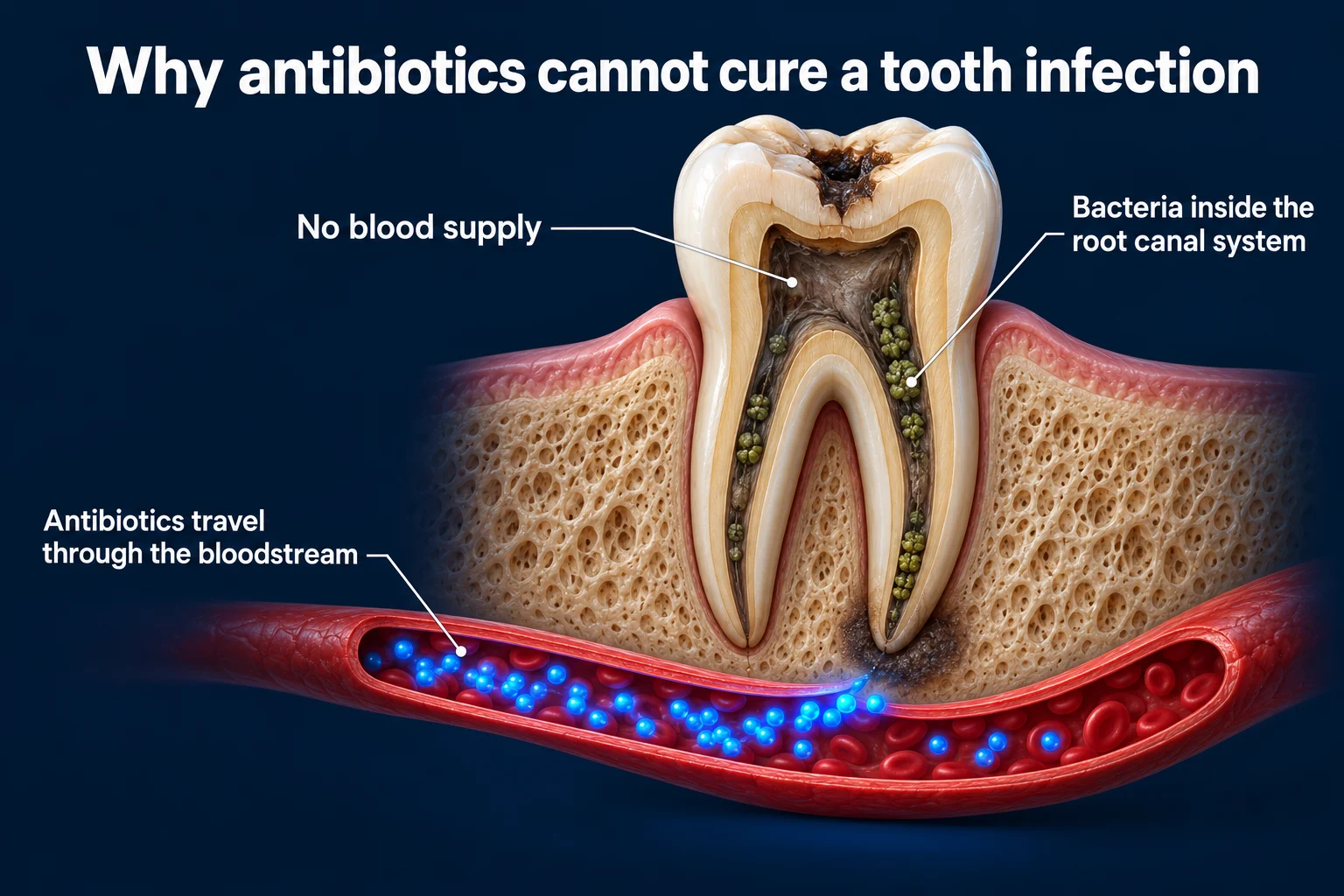
What Actually Happens to an Untreated Crack
Without treatment, two things can happen to a cracked tooth:
Best case
The crack remains stable. This is possible if the tooth receives no significant chewing load, the crack is small and superficial, and no bacteria enter the crack. However, “stable” is not the same as “healed”, the crack is still there and can propagate at any time. For a crack with no symptoms, careful monitoring without restorative treatment can be a reasonable option, but the tooth still needs ongoing professional review.5
More commonly
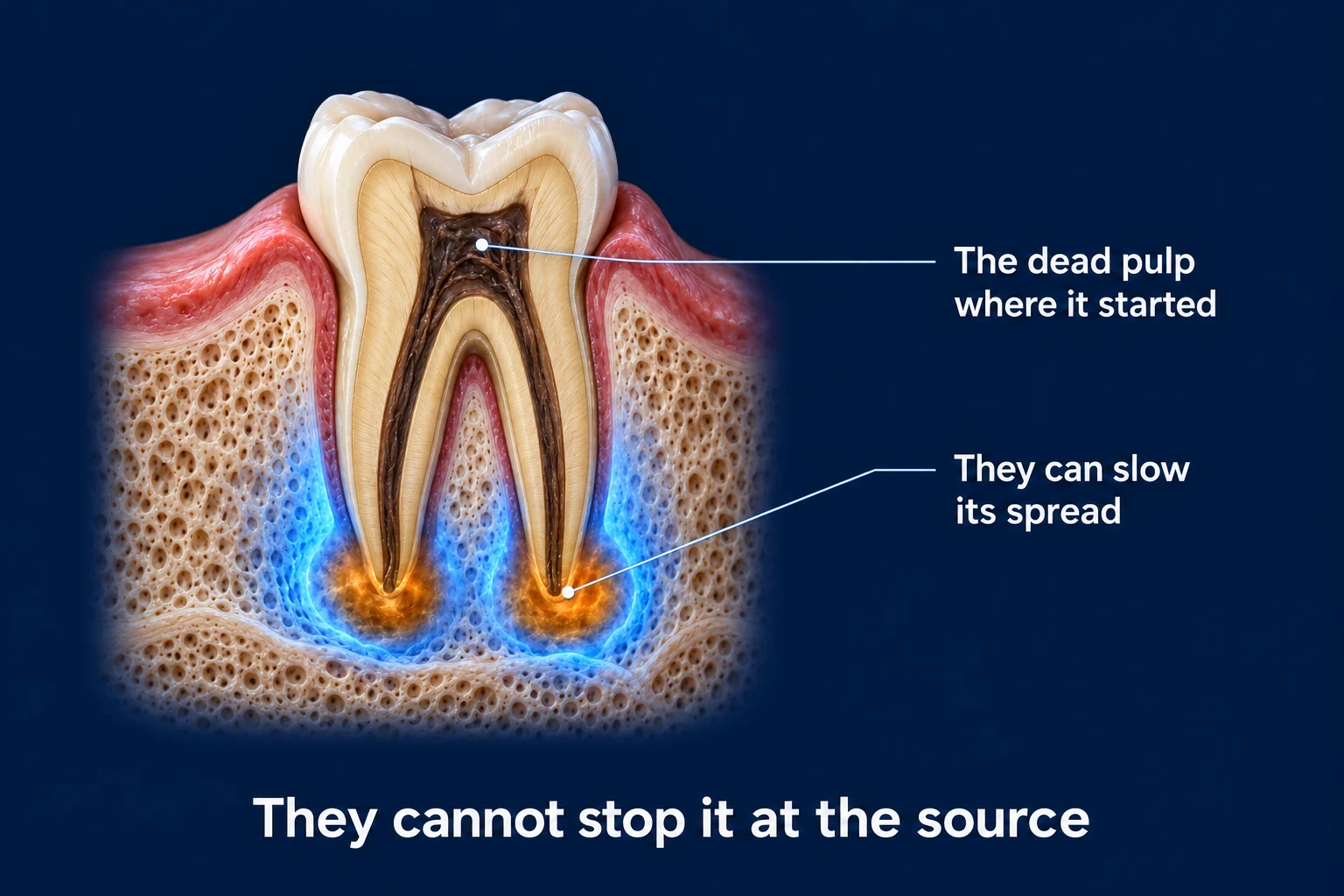
The crack propagates. Every time you chew, the crack flexes. Over weeks to months, this mechanical cycling drives the crack deeper, from enamel into dentin, from dentin toward the pulp, and eventually from the crown down through the root. Once a crack reaches the root, the tooth usually cannot be saved.1
Early vs. Late Treatment. The Difference It Makes
Treated Early (Crack Above Pulp)
- Crown stabilizes the crack and stops propagation
- Pulp is protected from bacteria
- Root canal often not needed
- Tooth has a strong long-term prognosis
- Single appointment in most cases
Treated Late (Crack Reached Pulp or Root)
- Pulp inflamed or infected, root canal required
- If crack reaches root: extraction likely needed
- Higher cost, longer treatment timeline
- Bone loss may complicate future implant
- Neighboring teeth at risk from spreading infection
Treatment Options by Crack Type
No Treatment Required
Microscopic cracks in enamel only. The American Association of Endodontists classifies craze lines as the mildest of five crack types, and they need no clinical treatment.1 Cosmetic bonding can improve appearance if visible.
Crown Placement
A dental crown encircles the tooth and prevents the crack from flexing and propagating under bite forces. This is the primary treatment for cracked tooth syndrome when the pulp is still healthy. Pooled outcome data show that full-crown (cuspal-coverage) restorations lower the risk of pulpal complications and tooth extraction compared with direct fillings that do not cover the cusps.5 The crown does not “fix” the crack, it immobilizes it and protects the tooth from further damage. Read how treatment for a fractured tooth is decided.
Root Canal Treatment + Crown
When the crack has allowed bacteria or mechanical irritation to damage the pulp to the point it can no longer recover, root canal treatment removes the compromised pulp tissue before the crown is placed. In follow-up studies, cracked teeth treated this way show high survival, with one cohort reporting a 2-year survival of 90% after root canal treatment and pooled data showing roughly 84% survival at 5 years.34 The crown then protects the root canal treated tooth for the long term.
Extraction
A vertical root fracture or complete tooth split that has propagated into the root cannot be restored. Extraction is necessary, followed by implant or bridge placement for tooth replacement.

Can You Slow a Crack from Worsening While You Wait for an Appointment?
While there is no way to heal a crack at home, you can reduce the risk of it worsening:
- Avoid chewing on the affected side until evaluated
- Avoid hard, crunchy, or sticky foods entirely
- If you grind your teeth at night, wear any existing night guard
- Avoid extreme temperature foods that cause the crack to flex from thermal (relating to temperature, heat or cold) expansion
- Do not attempt to bond or “glue” the tooth yourself, this does not work and complicates professional treatment
Long-term outcome studies of cracked teeth point to one consistent theme: how a crack is restored shapes whether the tooth survives. A 2024 systematic review and meta-analysis in the Journal of Dentistry pooled 27 studies and found that cracked teeth with a still-healthy pulp had tooth-survival rates of about 93% to 98% over 1 to 6 years, while direct fillings that did not cover the cusps carried a markedly higher risk of pulpal complications and extraction than full-crown restorations.5 The authors strongly recommend full-crown (cuspal-coverage) restorations for symptomatic cracked teeth, which underscores why a symptomatic crack should be evaluated and protected early rather than watched at home.
Waiting to see if a cracked tooth improves on its own usually makes it worse. An endodontist at your nearest MFE location can assess whether your tooth is still saveable. Find a location near you.
Works Cited
- Kahler W. The cracked tooth conundrum: terminology, classification, diagnosis, and management. Am J Dent. 2008;21(5):275-282. PMID 19024251.
- Lubisich EB, Hilton TJ, Ferracane J. Cracked teeth: a review of the literature. J Esthet Restor Dent. 2010;22(3):158-167. doi:10.1111/j.1708-8240.2010.00330.x
- Kang SH, Kim BS, Kim Y. Cracked teeth: distribution, characteristics, and survival after root canal treatment. J Endod. 2016;42(4):557-562. doi:10.1016/j.joen.2016.01.014 Prospective Study
- Leong DJX, de Souza NN, Sultana R, Yap AU. Outcomes of endodontically treated cracked teeth: a systematic review and meta-analysis. Clin Oral Investig. 2020;24(1):465-473. doi:10.1007/s00784-019-03139-w Systematic Review
- Zhang S, Xu Y, Ma Y, Zhao W, Jin X, Fu B. The treatment outcomes of cracked teeth: a systematic review and meta-analysis. J Dent. 2024;142:104843. doi:10.1016/j.jdent.2024.104843 Systematic Review