A tooth that hurts when chewing is most often caused by a cracked tooth, an inflamed or infected pulp (the soft tissue, nerves, and blood vessels inside the tooth), or a loose or high filling. The character of the pain (sharp during chewing versus dull on release) points toward different causes. Pain lasting more than a week warrants evaluation.
A tooth that hurts when chewing is most commonly caused by a cracked tooth, an inflamed or infected dental pulp (the soft living tissue, nerves and blood vessels, inside a tooth), a loose or high filling or crown, or inflammation of the ligament surrounding the root (periodontal ligament). The character of the pain, sharp vs. dull, momentary vs. lingering, during biting vs. on release, gives important clues about the underlying cause. Pain with chewing that persists for more than a week or worsens over time always warrants professional evaluation.
Chewing is something you do hundreds of times a day without a second thought, until it hurts. Tooth pain with chewing is one of the most common reasons patients call our offices across Florida, and while the causes vary widely, the diagnostic approach is methodical and usually leads to a clear answer.
Here is a breakdown of the most likely causes, and what each one feels like, so you can come to your appointment informed.
Common Causes of Pain When Chewing
Cracked Tooth
The classic presentation: sharp pain triggered by biting in a specific direction, often with a distinctive pain on releasing the bite (the “rebound” sign). The crack flexes under pressure, stimulating the nerve inside.1 Pain may be brief but intense, hard to reproduce consistently, and difficult to localize to a specific tooth.1 3D imaging and specialized bite testing are often used to help confirm the diagnosis. When a cracked tooth is caught and restored early with full-coverage protection, the long-term outlook is favorable.2 Read how to tell a cracked tooth from a cavity. We break down signs your tooth may need root canal therapy.
Inflamed or Irreversibly Damaged Pulp
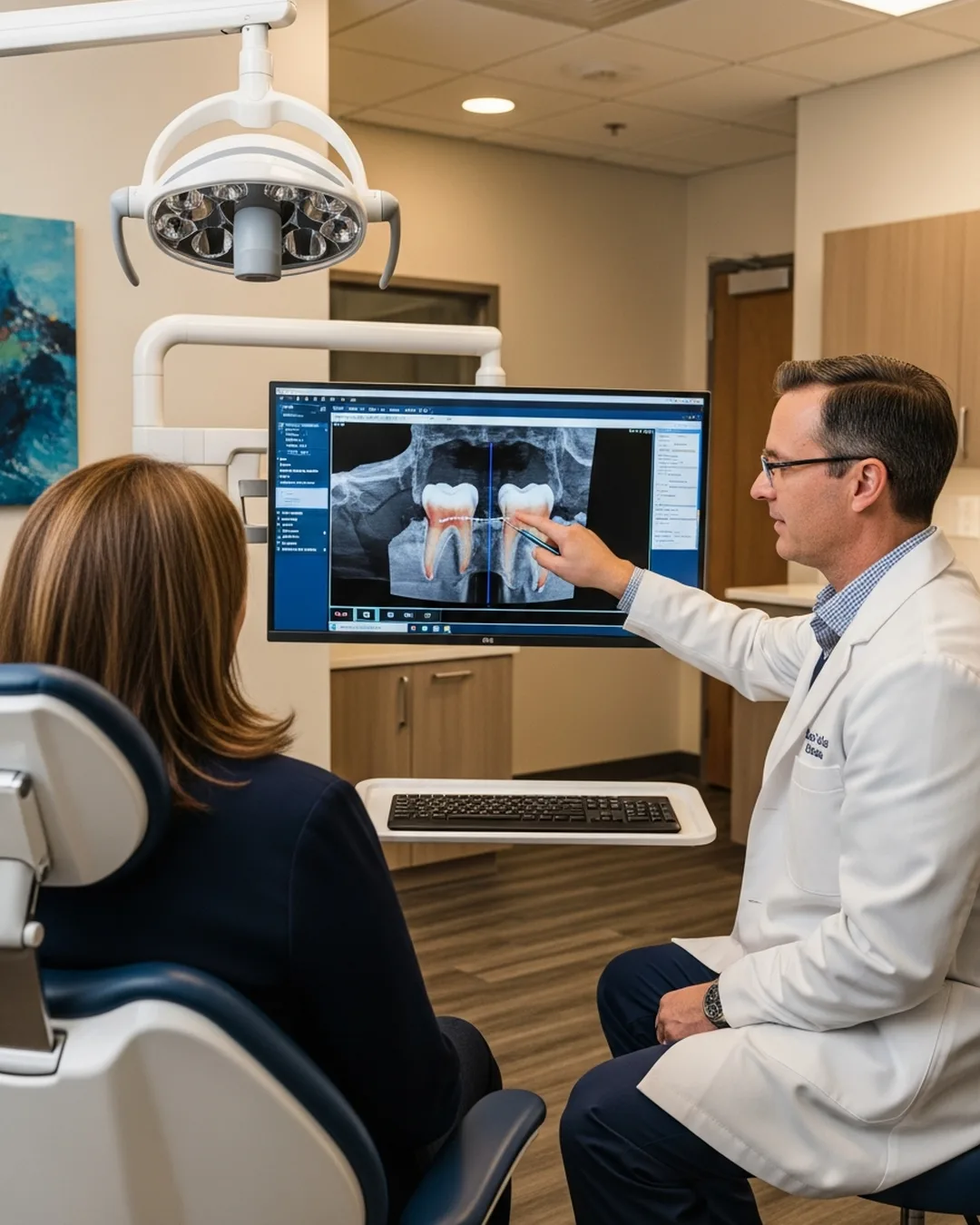
When the pulp (the soft living tissue inside the tooth, containing nerves and blood vessels) inside the tooth becomes inflamed, from deep decay, a crack, or trauma, chewing pressure transmits through the tooth and aggravates the inflamed tissue. If the pulp is only mildly inflamed (reversible pulpitis), symptoms may settle once the irritant is removed. If the inflammation has progressed to the point the pulp can no longer heal (irreversible pulpitis), root canal treatment is needed to relieve it.3 Find out what a cracked tooth feels like.
Periapical Periodontitis (Inflamed Root Tip Area)
When infection or inflammation spreads to the area surrounding the root tip, the periodontal ligament (the thin layer of fibers connecting the tooth root to the jawbone, acts as a shock absorber and contains pressure-sensitive nerve fibers) becomes acutely inflamed. The tooth feels tender to even the lightest touch or bite. This typically accompanies a necrotic (dead, referring to tissue that has lost its blood supply and died, most commonly the pulp inside an infected tooth) pulp and is a clear indicator that endodontic treatment (treatment focused on the inside of the tooth, most commonly root canal therapy) is needed.3
High, Loose, or Failed Restoration
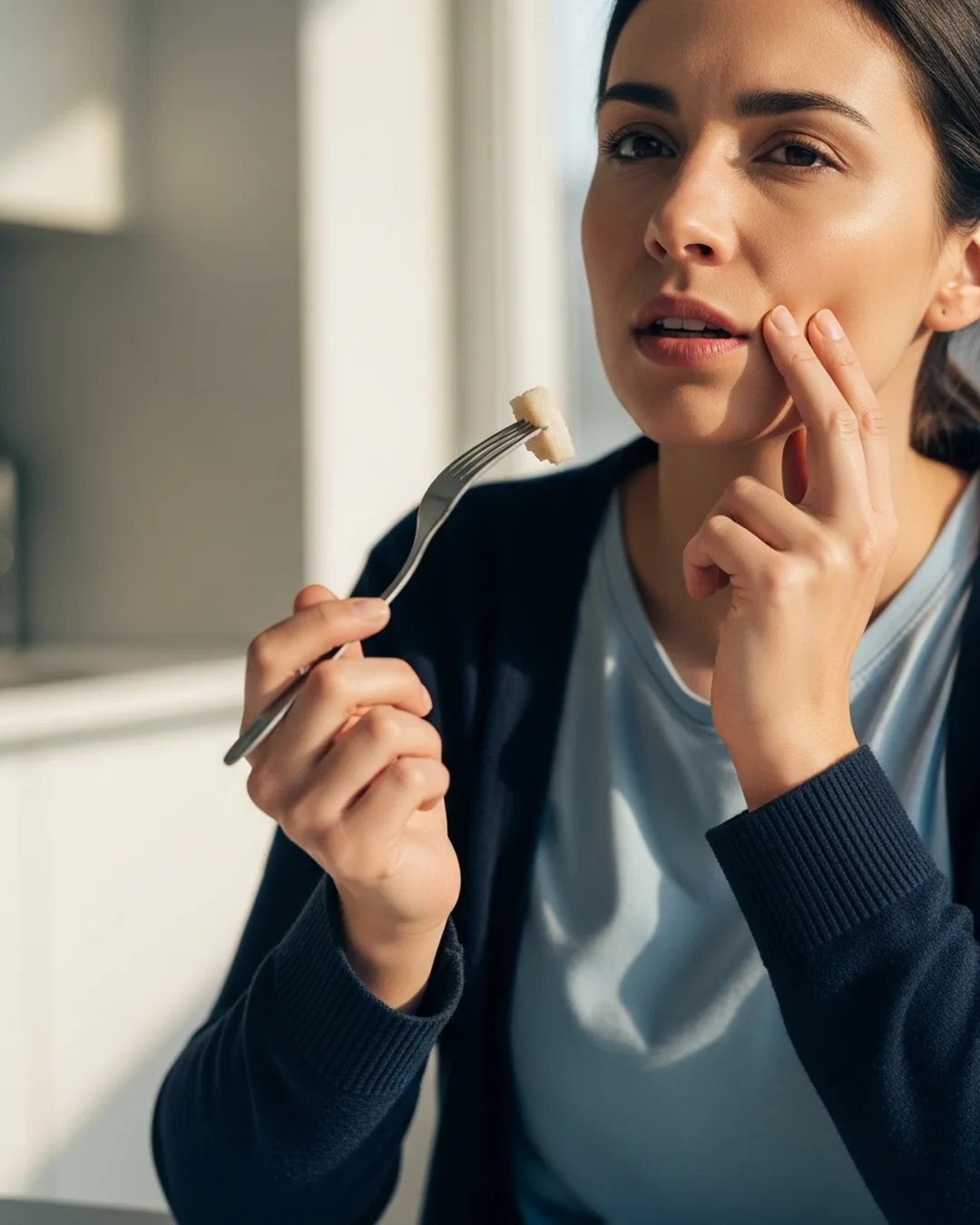
A crown or filling that sits even fractionally too high changes how opposing teeth come together. The targeted tooth absorbs more force than it should with every bite, causing the periodontal ligament to become sore and inflamed. The fix is often a quick adjustment, but left unaddressed, the continued stress can lead to pulp inflammation over time. Cracks themselves are commonly found in heavily restored teeth and in molars, which carry the heaviest chewing loads.4
Deep Decay Approaching or Entering the Pulp
Significant tooth decay that has reached the inner layers of the tooth causes chewing discomfort because the compromised tooth structure transmits pressure differently, and the nearby pulp may be inflamed. If decay has not yet reached the pulp, a deep restoration may suffice. If it has, root canal treatment is needed.3
Post-Treatment Soreness
Mild chewing sensitivity for several days after a new filling, crown, or root canal is normal and expected. The tooth and surrounding ligament need time to settle. If chewing pain persists beyond two weeks or worsens rather than improving, contact your dentist or endodontist, the restoration may need adjustment or further evaluation.
The Rebound Test: A Key Self-Assessment
Does Your Tooth Hurt When You Release the Bite?
- Bite down firmly on the painful tooth and hold for 3-5 seconds.
- Release the bite completely.
- Note: does the pain occur during the bite, upon release, or both?
Pain primarily on release is a recognized feature of cracked tooth syndrome, the crack is flexing open as bite pressure is removed, briefly stimulating the nerve.1 This pattern, especially when bite sticks can isolate the pain to one cusp, is what endodontists use to help localize a crack before imaging confirms it. Because cracked teeth can be hard to reproduce on demand and difficult to pinpoint, a careful, repeated examination is often part of reaching the diagnosis.1
When Chewing Pain Means You Need an Endodontist
See your general dentist if pain is mild and began shortly after a recent restoration. They can adjust the bite and monitor.
Ask for an endodontic referral if:
- Chewing pain has persisted for more than one to two weeks
- Your dentist’s X-rays are normal but pain continues
- You also have cold sensitivity, spontaneous pain, or swelling
- The tooth had a large filling or previous dental work
- Pain is severe or getting progressively worse
A note on referrals: Working through your general dentist for a referral is the recommended approach. Your dentist is the quarterback of your dental team, they will restore the tooth after any root canal, and need to confirm the tooth is restorable before treatment begins. Some insurance plans also require a referral for specialist visits to be covered. For emergencies or urgent situations, contact us directly.
Pain provoked by biting, and pain felt as bite pressure is released, is a recognized diagnostic feature of cracked tooth syndrome described in the clinical literature.1 Because a cracked tooth can be difficult to reproduce and localize, endodontists combine a focused history, bite testing, and imaging to reach the diagnosis. Outcomes for cracked teeth are encouraging when they are managed appropriately: a systematic review and meta-analysis of cracked-tooth treatment reported high tooth-survival rates and found that full-coverage (full-crown) restorations significantly lowered the risk of extraction compared with restorations that did not cover the cusps.5 A long-term clinical study similarly found that early placement of a full-coverage crown was associated with a higher cracked-tooth survival rate.2 For cracked teeth that require root canal treatment, reported survival is favorable as well, with one study showing a 2-year survival of 90% after treatment4 and a separate review estimating roughly 84% survival at 5 years.6
Chewing pain that keeps coming back is a sign something needs attention. An MFE endodontist at your nearest location can get to the cause. Find a location near you.
Works Cited
- Banerji S, Mehta SB, Millar BJ. Cracked tooth syndrome. Part 1: aetiology and diagnosis. Br Dent J. 2010;208(10):459-463. doi:10.1038/sj.bdj.2010.449
- de Toubes KMS, Soares CJ, Soares RV, et al. The correlation of crack lines and definitive restorations with the survival and success rates of cracked teeth: a long-term retrospective clinical study. J Endod. 2021;48(2):190-199. doi:10.1016/j.joen.2021.10.010
- Levin LG, Law AS, Holland GR, Abbott PV, Roda RS. Identify and define all diagnostic terms for pulpal health and disease states. J Endod. 2009;35(12):1645-1657. doi:10.1016/j.joen.2009.09.032
- Kang SH, Kim BS, Kim Y. Cracked teeth: distribution, characteristics, and survival after root canal treatment. J Endod. 2016;42(4):557-562. doi:10.1016/j.joen.2016.01.014
- Zhang S, Xu Y, Ma Y, Zhao W, Jin X, Fu B. The treatment outcomes of cracked teeth: a systematic review and meta-analysis. J Dent. 2024;142:104843. doi:10.1016/j.jdent.2024.104843 Systematic Review
- Leong DJX, de Souza NN, Sultana R, Yap AU. Outcomes of endodontically treated cracked teeth: a systematic review and meta-analysis. Clin Oral Investig. 2020;24(1):465-473. doi:10.1007/s00784-019-03139-w Systematic Review